What should you check?
Start with the recipe’s specified milk, then compare the variant and storage instructions on the pack you plan to buy.
| Priority |
What to check |
Your needs |
| Recipe fit |
Check whether the recipe specifies whole milk, allows a substitution or is written for semi-skimmed milk. Milk components can affect a bake’s structure, flavour and browning, as King Arthur Baking explains. |
I’m making a milk-led filling and want to follow its whole-milk ingredient list; for muffins, I can choose a recipe formulated with semi-skimmed milk. |
| Milk type |
Read the product name and nutrition panel for the exact whole or semi-skimmed variant. Do not treat full-cream powder as a lower-fat option merely because it is a different format. |
Reducing the fat contributed by milk matters to me, but I still need the milk type to suit the recipe. |
| Storage |
Compare pack size, the date label, refrigeration directions and the period stated for use after opening. A longer unopened life does not replace the after-opening instruction. |
My baking is spread across several days, so I want a pack I can store correctly and use within its labelled period. |
| Ingredients |
Check the current pack’s ingredients and allergen declaration, including when choosing a powdered product. Milk is an allergen identified by the Food Standards Agency. |
I’m baking for guests and need to check that the ingredients suit their requirements before making or serving the recipe. |
Relevant brand ranges
These examples illustrate milk variants and formats to compare; a brand name alone does not determine whether a particular pack suits your recipe.
Cravendale
A filtered-milk range with whole and semi-skimmed variants for different recipes and baking schedules.
- Waitrose’s listings for the cited Cravendale whole and semi-skimmed products state up to three weeks unopened and seven days after opening.
- Filtered describes the format, not its fat level. Choose the whole or semi-skimmed variant separately and follow the instructions on its pack.
Tesco
Tesco Groceries lists standard, filtered and long-life UHT options in its whole-milk category.
- The listed formats give shoppers different storage and preparation choices to investigate for a baking plan.
- A whole-milk category listing does not identify a lower-fat substitute or establish the instructions for every pack; check the individual product label.
M&S
M&S describes its whole milk as sourced from M&S Select Farms.
- The cited M&S whole-milk product gives a refrigeration range of 0°C to +5°C and says it is best consumed within three days of opening.
- It is a whole-milk option, not a semi-skimmed substitute; check the recipe and the current pack before choosing it.
Waitrose
The cited Waitrose products include filtered whole milk and Essential semi-skimmed milk.
- The listings distinguish their after-opening instructions: seven days for the cited filtered whole milk and three days for the cited Essential semi-skimmed milk.
- Those periods apply to the specified products, not every Waitrose milk. Check the variant and its pack instructions.
Joybuy product options
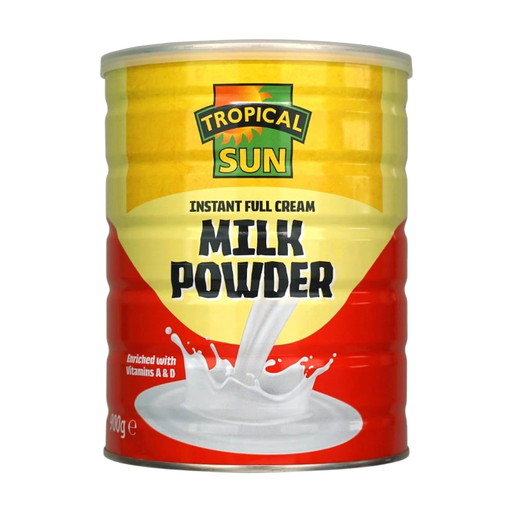
This full-cream milk powder is a dry-format option for baking with milk; it is not a semi-skimmed choice. If your recipe specifies liquid whole milk, check its preparation instructions and whether a reconstituted milk suits that recipe.
 No image available
Tropical Sun Full Cream Milk Powder 900g
Consider this dry milk format if you can prepare it as directed and the resulting milk suits your baking recipe. The product name identifies it as instant full-cream milk powder enriched with vitamins A and D; it is not a lower-fat milk variant. Check the current pack’s preparation directions and allergen declaration before use.
Joybuy
Questions about baking with milk
Is whole milk the lower-fat choice for Christmas baking?
No. Semi-skimmed is the lower-fat variant of the two. Choose it when reducing the fat contributed by milk is your priority and the recipe allows it; check the nutrition panel of the exact pack you buy.
Can I replace whole milk with semi-skimmed in every recipe?
No single substitution rule covers every bake. Good Food’s basic muffin recipe uses semi-skimmed milk, whereas its crème pâtissière recipe specifies whole milk. Follow your chosen recipe or an alternative provided by its author.
Which milk should I use for crème pâtissière?
Use whole milk if your recipe specifies it. Good Food’s crème pâtissière recipe calls for 500ml whole milk, so using semi-skimmed would be a change to that ingredient list.
How should I plan milk for several days of baking?
Check the chosen pack’s date label, refrigeration directions and after-opening instruction against your baking schedule. GOV.UK distinguishes use-by dates, which relate to safety, from best-before dates, which relate to quality; neither replaces the pack’s storage directions.
What if someone eating the bake has a milk allergy?
Do not assume a whole-milk, semi-skimmed or full-cream milk-powder recipe is suitable. Milk is an allergen identified by the Food Standards Agency; check the current ingredients and allergen information, and choose a recipe and ingredients that meet the guest’s requirements.


