Guests avoiding alcohol
Offer a separate drink whose stated ABV meets their requirement. Check the exact pack rather than assuming a tonic or a low-alcohol ready-to-drink product will suit them.


For Christmas dinner, choose the finished drink or base by its stated alcohol by volume (ABV) if reducing alcohol is the goal: an ordinary or light mixer does not remove alcohol from a spirit already poured. Keep drinks for guests avoiding alcohol separate from low-alcohol options, and check the exact label and serving size before pouring.
The most useful starting point is whether a guest wants to avoid alcohol, reduce it or simply choose a different mixer.
Offer a separate drink whose stated ABV meets their requirement. Check the exact pack rather than assuming a tonic or a low-alcohol ready-to-drink product will suit them.
A lower-ABV finished drink or base addresses the alcohol in the serve. Adding more mixer to the same measure of spirit changes its dilution, not the amount of spirit poured.
Light or slimline tonic may suit a preference about mixer calories or sweetness. Make that choice separately from the ABV of any spirit or aperitif served with it.
Choose when: a guest wants a serve without a regular alcoholic base.
Check: the stated ABV still needs to meet that guest’s requirement, especially if complete avoidance matters.
Choose when: a guest wants to reduce alcohol rather than avoid it completely.
Bear in mind: Drinkaware says low-alcohol drinks still contain alcohol and can be up to 1.2% ABV.
Choose when: the preference concerns the mixer’s nutrition or flavour, while the guest still wants a regular spirit.
Bear in mind: changing the mixer does not change the alcohol units in the spirit already poured.
Decide on the alcohol content of each serve first, then compare mixers for nutrition, flavour and format.
| Priority | What to check | Your needs |
|---|---|---|
| Stated ABV | Read the ABV on the exact ready-to-drink product or base. Drinkaware says low-alcohol drinks can contain up to 1.2% ABV. | If I’m serving someone who wants to avoid alcohol, I need to know whether the labelled ABV meets their requirement. |
| Spirit measure | Check both the spirit’s ABV and the volume poured. The NHS calculates units as ABV (%) × volume (ml) ÷ 1,000. | For a guest reducing alcohol, I want to change the alcoholic pour or base, not just add more mixer. |
| Mixer nutrition | Compare calories and sugars per 100ml on the mixers’ nutrition panels; check the alcoholic base separately. | I may prefer a light tonic, but I don’t want its label to stand in for an alcohol-content check. |
| Flavour and format | Consider tonic, soda, ginger ale or a finished drink, then check pack size against the number of serves planned. Sainsbury’s mixer listings and Fentimans’ range show several of these formats. | Not everyone at the table wants tonic; I’d like a distinct option for guests who prefer another flavour. |
A different mixer can change the drink’s flavour or nutrition, but the alcohol in the measured spirit remains.
Choose the mixer and alcoholic base separately. If reducing alcohol is the aim, check the base’s ABV and the amount poured.
Drinkaware says low-alcohol drinks still contain alcohol and can be up to 1.2% ABV. That distinction matters when a guest wants to avoid it completely.
Ask what the guest needs and check the numerical ABV on the exact pack before serving.
Tonic will not suit every flavour preference. Retailer and Fentimans ranges also include options such as soda and ginger ale.
Set out a non-tonic choice and keep its label available so guests can check the ingredients.
These ranges can help you plan different serves; check the individual product label rather than relying on a brand or category name.
Offers tonic choices as well as a separately listed low-alcohol ready-to-drink G&T.
A tonic and slimline tonic reference for comparing mixer formats.
Provides a range of tonic flavours and non-tonic mixer types.
A reference for traditional tonic, soda and ginger ale formats.
A retailer reference for comparing tonic, slimline and other mixer categories.
Lists mixers separately from low- and no-alcohol drinks.
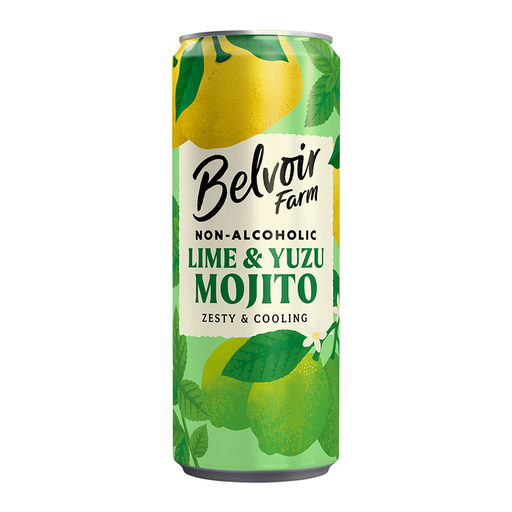
This canned mojito-style drink is a separate Christmas dinner serve, rather than a mixer to add to a spirit.
 No image available
For a guest who wants a drink without a spirit-based mix, this is a 250ml lime-and-yuzu mojito-style can. Check the exact pack’s ABV if complete alcohol avoidance matters.
No. A light or slimline mixer does not remove alcohol from a spirit already poured. Check the spirit’s ABV and measure, or choose a finished drink or base with a suitable stated ABV.
Drinkaware says a low-alcohol drink can contain up to 1.2% ABV, so it is not a default choice for someone avoiding alcohol completely. Read the numerical ABV on the product you intend to serve.
Choose a separate finished drink or base whose labelled ABV meets that guest’s requirement, and check the exact pack before serving. Do not substitute a low-alcohol ready-to-drink product without confirming that its ABV is acceptable to them.
The NHS calculates alcohol units as ABV (%) × volume (ml) ÷ 1,000. Apply that calculation to the alcoholic component poured; adding more tonic does not remove its units.
Soda or ginger ale gives guests a non-tonic mixer choice; Sainsbury’s listings and Fentimans’ range include both. Check the chosen product’s ingredients and the ABV of the finished serve or any base added to it.