Hosts making topped party bites
A plain or lightly salted cake gives you one base for several sweet and savoury combinations. Compare its fat content before adding toppings, then consider each finished bite on its own ingredients.


For a Christmas party with both sweet and savoury toppings, start with plain or lightly salted rice cakes: the listed examples from M&S, Kallo, Sainsbury's and Tesco contain 2.5–2.9g fat per 100g and leave the flavour choice to your toppings. Compare the finished bites separately, and check each current pack's allergen statement before serving guests.
A plain or lightly salted cake gives you one base for several sweet and savoury combinations. Compare its fat content before adding toppings, then consider each finished bite on its own ingredients.
Look for a gluten-free label on the exact pack you plan to serve. If a guest has an allergy, check the separate allergen and precautionary statements too.
Plain and lightly salted options come in different pack sizes. Check how many cakes you need for the toppings you plan to make, alongside the current label and pack size.
Choose the cake for its role on the table first: a neutral topping base and a ready-flavoured snack solve different serving needs.
| Priority | What to check | Your needs |
|---|---|---|
| Fat content | Compare fat per 100g on the exact variant, rather than relying on calories or fat per cake. Listed plain and lightly salted examples from M&S, Kallo, Sainsbury's and Tesco contain 2.5–2.9g per 100g. | I want to compare the rice-cake bases on the same measure before choosing party toppings. |
| Flavour | Check whether the cake is plain, lightly salted or flavoured. For a sweet option, also read the ingredients and sugars per 100g; Kallo lists 14.4g sugars per 100g for its Blueberry & Vanilla variety. | One neutral base would let me offer both sweet and savoury toppings; a flavoured cake makes more sense if I plan to serve it on its own. |
| Allergens | Read the exact pack's allergen and precautionary statements separately from its vegan or gluten-free labelling. Kallo lists possible milk, sesame and soya cross-contact on relevant lightly salted cakes; Sainsbury's gives a milk-allergy warning for its plain and lightly salted cakes. | Guests with allergies need a check against the particular cakes and toppings being served, not an assumption based on a dietary label. |
| Serving texture | Check storage instructions and close opened packs airtight. M&S and Tesco give airtight-storage guidance for their lightly salted cakes; add wet toppings close to serving. | I want cakes that stay crisp while guests are eating, without preparing every topped bite too early. |
Cakes of different sizes can be difficult to compare using a per-cake figure alone. A low-looking calorie count also does not tell you the fat content.
Use fat per 100g to compare packs, then check the serving figure for the number of cakes you intend to put out.
Spreads, chocolate and other toppings add their own fat, sugar, salt and allergens to a finished party bite.
Choose the base and toppings separately, and make ingredient information clear when offering several combinations.
Kallo gives precautionary milk, sesame and soya information for relevant cakes. Sainsbury's says its plain and lightly salted rice cakes are not suitable for customers with a milk allergy because of manufacturing methods.
Read the current label for each product and check its suitability against the guest's stated requirements before serving.
Rice cakes can lose the crisp texture that makes them useful as a party base once they have been opened and left exposed.
Open what you need for the first serving, keep the rest airtight and assemble bites with wet toppings near serving time.
Preparing too many topped cakes early can also leave you with more uneaten food.
These examples help distinguish particular varieties; a brand name alone does not establish the nutrition or allergen details of every product it makes.
Kallo's Lightly Salted and Organic Lightly Salted wholegrain rice cakes are neutral options for toppings.
Its Lightly Salted Rice Cakes offer a wholegrain option for a topping base.
Tesco Lightly Salted Rice Cakes 130g are made with brown rice and sea salt.
Its plain and lightly salted wholegrain rice cakes are listed in 135g packs.
Salt & Vinegar Jumbo cakes are a ready-flavoured snack rather than a neutral base for mixed toppings.
These options cover a lightly salted cake for topping and an apple-and-cinnamon cake to serve as a flavoured snack. Choose according to how you plan to serve them, rather than treating the two flavours as interchangeable.
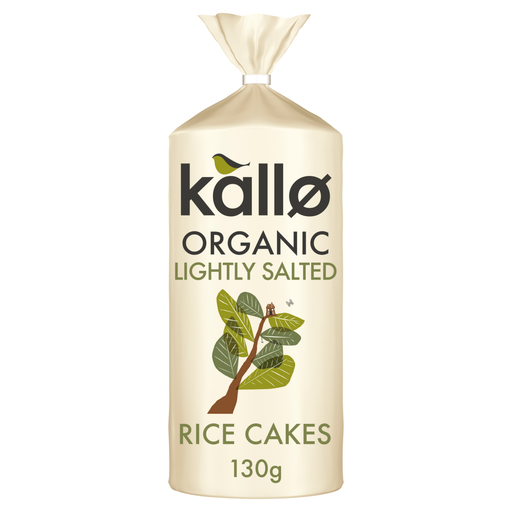 No image available
The lightly salted variety gives you a base for sweet or savoury toppings. Tesco lists 2.7g fat per 100g for Kallo Organic Lightly Salted 130g and precautionary information for milk, sesame and soya. Keep opened cakes airtight.
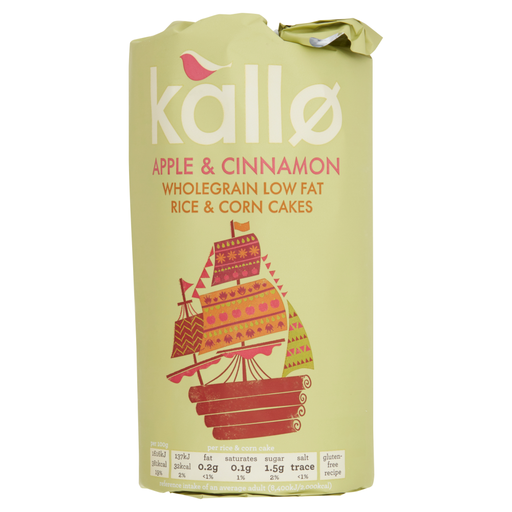 No image available
Apple and cinnamon flavour makes this a different choice from a plain base for mixed sweet and savoury toppings. If fat content or allergens are decisive for your guests, compare the current pack's nutrition and allergen information before serving.
Compare the fat values per 100g on the exact packs, rather than relying on calories or fat per cake. M&S, Kallo, Sainsbury's and Tesco list 2.5–2.9g fat per 100g across the plain and lightly salted examples discussed here.
They give you a less strongly flavoured base for both sweet and savoury combinations. Check the toppings separately: the ingredients and portions you add determine the finished bite's nutrition and allergen information.
Do not assume so. Sainsbury's says its relevant plain and lightly salted cakes are not suitable for customers with a milk allergy because of manufacturing methods, while Kallo lists possible milk cross-contact on relevant varieties. Check the exact current pack and the guest's requirements.
Store opened cakes airtight, as Tesco and M&S advise for their lightly salted varieties. Add wet toppings near serving time and follow the storage instructions on the pack you buy.
Yes. Read the current pack for the exact variety's nutrition, ingredients, allergens and storage instructions, particularly when preparing food for guests with dietary requirements.