Christmas brunch hosts
For a warm brunch with bacon, maple syrup, fruit or jam, consider American-style or buttermilk pancakes. If guests will help themselves to smaller portions, Scotch pancakes offer a stackable format.


Choose the pancake format around the meal: small Scotch pancakes work for stacks and sharing, American-style or buttermilk pancakes for a warm brunch, and sweet pancakes for lemon and sugar or dessert fillings. If a guest needs a free-from product, check the declaration on the actual pack; for chilled pancakes bought ahead, check the date and storage instructions too.
For a warm brunch with bacon, maple syrup, fruit or jam, consider American-style or buttermilk pancakes. If guests will help themselves to smaller portions, Scotch pancakes offer a stackable format.
For lemon and sugar, fruit fillings or ice cream, look at sweet pancakes rather than assuming a thick brunch pancake will suit the same serving plan.
Check the exact pack against each guest’s requirements. The cited Genius gluten-free and milk-free Scotch pancakes still contain egg, while the cited standard pancakes include wheat, milk or egg.
Settle the serving style and any dietary requirements first, then check portions, dates and preparation instructions for the pack you plan to buy.
| Priority | What to check | Your needs |
|---|---|---|
| Dietary suitability | Read the current ingredients, highlighted allergens and any gluten-free or milk-free declaration. Check for egg separately: the cited Genius free-from pancakes contain it. | I need a pack that matches a guest’s specific restrictions, not just a general free-from description. In Coeliac UK’s 2025 survey of 3,785 members, 74% trusted its Crossed Grain Trademark more than a gluten-free statement; that measures trust in labelling, not pancake-buying priorities. |
| Serving style | Match the format to the toppings: American-style or buttermilk pancakes for a warm brunch, sweet pancakes for lemon and sugar or fruit fillings, or small Scotch pancakes for stacks. | Will guests sit down to a warm brunch, help themselves to small pancakes, or have pancakes as dessert? |
| Portions and nutrition | Check the pack count and both per-100g and per-pancake figures. Waitrose & Partners lists 10.4g protein per pancake for its High Protein Pancakes; toppings change what is served alongside them. | I want enough pancakes for the planned portions and figures that relate to how many each person will eat. |
| Buying ahead | Check whether the pack needs refrigeration, its use-by or best-before date, and any freezing and defrosting instructions. The Food Standards Agency distinguishes use-by dates, which relate to safety, from best-before dates, which relate to quality. | If I am shopping before Christmas, the pack needs to fit the time and storage space available before serving. |
Vegetarian labelling does not settle whether a pancake contains wheat, milk or egg. The cited Genius gluten-free and milk-free pancakes, for example, contain egg.
Ask guests which ingredients they need to avoid, then check the current pack’s ingredients, allergens and free-from declaration.
The cited Waitrose buttermilk and sweet pancakes require refrigeration and carry use-by dates. The Food Standards Agency says a use-by date relates to food safety.
Check the date when buying or receiving the pack. If you plan to freeze it, follow that product’s stated freezing and defrosting instructions.
A serving may contain several pancakes, with toppings added separately. The per-pancake line makes the amount served easier to work out.
Check the per-pancake figures and the number you intend to serve before choosing toppings.
The cited Waitrose range includes high-protein, buttermilk and sweet ready-made pancakes for different serving plans.
The cited Scotch pancakes are labelled gluten-free, milk-free and made without wheat.
The cited M&S buttermilk pancakes are an option to consider for a warm brunch with fruit, jam or syrup.
The cited Tesco American Style Large Pancakes offer another ready-made brunch format.
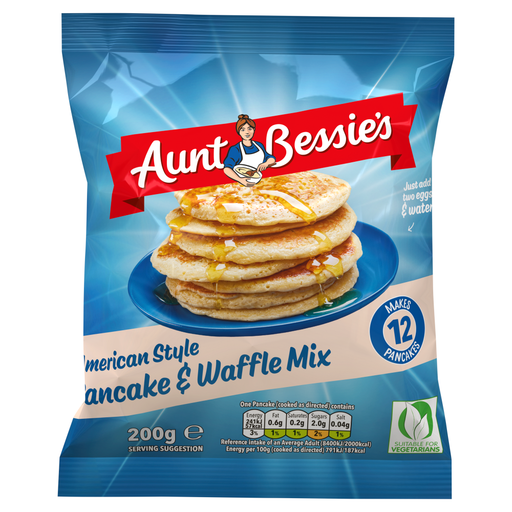
This Joybuy option is an American-style pancake and waffle mix for making brunch pancakes, rather than a pack of ready-made pancakes.
 No image available
A 200g mix for making American-style pancakes or waffles. Allow time to prepare and cook it, and check the pack for ingredients to add and allergen information before serving.
Not necessarily. The cited American-style, sweet and buttermilk products contain wheat, milk and egg. The cited Genius pancakes are labelled gluten-free and milk-free but contain egg, so check the current pack against the person’s requirements.
Follow the instructions for the individual pack. The cited Waitrose chilled products specify freezing within their use-by date and give defrosting directions; the cited M&S buttermilk pancakes also have a stated freezing date. Check those directions before buying ahead.
The Food Standards Agency says use-by dates relate to food safety, while best-before dates relate to quality. For a chilled pancake pack with a use-by date, plan to use or freeze it within the pack’s stated instructions.
Check the ingredients and highlighted allergens on the actual pack, particularly if a guest must avoid cereals containing gluten, milk or egg. Food Standards Agency guidance identifies these among the allergens that food businesses must declare when present as ingredients.