What matters when choosing?
Decide whether you want to build a dish around plain pasta, serve a filled pasta, or keep dried pasta for a change of plans. Then check the date, ingredients and servings of the particular pack.
Plain fresh pasta
Choose it when: You want to select the sauce and scale a pasta course using the pack's stated servings.
Allow for: Chilled storage and a use-by date; fresh egg pasta may contain wheat and egg.
Filled fresh pasta
Choose it when: The filling suits your menu and you want less to assemble just before serving.
Allow for: Filling-specific ingredients and pack servings that may differ from those of plain pasta.
Dried pasta
Keep it in mind when: Your serving date is uncertain or fridge space is limited.
Allow for: A different cooking plan and texture from chilled fresh pasta; follow the chosen pack's directions.
| Concern |
What to check |
Who this matters to |
| Dates and storage |
Match the use-by date to serving day. Follow that pack's refrigeration, freezing and defrosting directions. |
If I am shopping ahead, I need the pasta to remain suitable for the planned meal and to fit the available cold storage. About 31% of consumers would make timing and storage their primary concern. |
| Ingredients and allergens |
Read the current pasta and sauce labels, including filling ingredients and any precautionary allergen statements. |
When a guest has ingredients to avoid, I need to assess the whole dish rather than judge suitability from the pasta's name. Around 31% of consumers would put dietary and allergen suitability first. |
| Portions and format |
Use the individual pack's serving count and decide whether the pasta is a starter, side or main. |
For a meal with several diners, I want the pasta format and number of servings to match the course I am making. Roughly 19% of consumers would prioritise menu fit and portions. |
| Preparation and quantity |
Check the pack's cooking directions and stated servings; account for anything you plan to serve with it. |
If the dish needs to come together close to serving time, I want manageable preparation without buying more packs than the table needs. About 19% of consumers would make preparation and quantity their main concern. |
Brands and retailers to consider
These ranges illustrate different parts of the pasta shop, from plain and filled fresh pasta to dried pasta and sauce. Check the individual product rather than assuming a retailer's entire range has the same ingredients or storage directions.
Tesco
Tesco lists plain, filled and other fresh-pasta formats, including fresh tagliatelle nests.
- Its 500 g tagliatelle nests provide a plain format for a separately chosen sauce.
- The listed tagliatelle contains egg and wheat and may contain soya; check the current pack.
Sainsbury's
Sainsbury's lists plain fresh egg pasta as well as filled-pasta options.
- Its 500 g fresh egg spaghetti listing states four servings and five-minute cooking.
- Cooking, freezing and dietary directions need checking on the pack selected for the meal.
Asda
Asda lists plain fresh egg pasta and filled options, including its penne and a Rana tortelloni product.
- The 500 g penne listing states four servings; the 250 g Rana filled-pasta listing states two.
- Their ingredients, allergens and storage directions differ, so one cannot stand in for the other when planning for guests.
M&S
M&S lists fresh spaghetti made with durum wheat and free-range egg.
- Its fresh-spaghetti directions specify refrigeration at 0°C to +5°C and freezing by the date mark for up to one month.
- The product contains wheat and egg; follow its current label for dietary and storage decisions.
Barilla
Barilla UK offers dried pasta options, including standard, whole-grain and gluten-free products.
- A dried option can be considered when the meal date or available fridge space makes chilled pasta awkward.
- Select the particular product for its ingredients and pack directions; dried pasta is not a fresh-pasta substitute in every dish.
Dolmio
Dolmio is relevant here for pasta sauce, which can be paired with a separately chosen plain pasta.
- Choosing sauce separately leaves room to plan a plain-pasta course around the menu.
- Check the sauce pack's ingredients and allergens as well as those of the pasta.
Dried-pasta backup options on Joybuy
These Morrisons fusilli packs are dried-pasta options for a Christmas meal plan with an uncertain serving date or limited fridge space. They are not chilled fresh pasta; choose plain or filled fresh pasta separately if that is the dish you intend to serve.
 Image unavailable
Morrisons Fusilli 500g
Consider this dried fusilli as a backup if you cannot settle the fresh-pasta serving date yet. The pack is 500 g; check its best-before date, ingredients and cooking directions when buying. It will not provide the chilled fresh-pasta format.
View on Joybuy
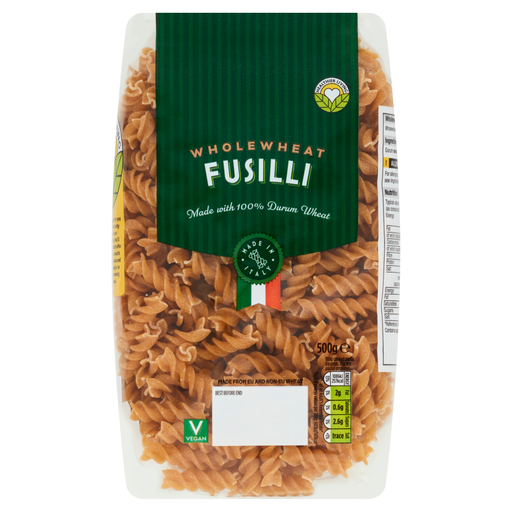 Image unavailable
Morrisons Wholewheat Fusilli 500g
Consider this wholewheat dried fusilli when you want a pasta backup without reserving fridge space. The pack is 500 g; check its best-before date, ingredients and cooking directions before choosing it for the meal. It is not chilled fresh pasta.
View on Joybuy
Frequently asked questions
Can I use chilled fresh pasta after its use-by date?
No. GOV.UK identifies use-by dates as relating to food safety, unlike best-before dates, which relate to quality. Plan to use the pasta by its use-by date, or follow the pack's directions for freezing it within the permitted time.
Can I buy fresh pasta early and freeze it for Christmas?
Yes, if the specific pack permits freezing and you freeze it within its stated date limit. Fresh-pasta products listed by ASDA and M&S have pack-specific freezing directions; follow the one you buy, including its defrosting and post-defrost use instructions.
Which allergens should I check in fresh pasta?
Check the ingredients and allergen information for the exact pasta, filling and any sauce. Several plain fresh egg-pasta examples contain wheat and egg, while filled pasta can also contain milk or other ingredients. GOV.UK includes cereals containing gluten, eggs and milk among the allergens for which food businesses must provide information when present as ingredients.
How many people will one fresh-pasta pack serve?
Use that pack's stated servings and account for whether pasta is a starter, side or main. ASDA's 500 g fresh egg penne and Sainsbury's 500 g fresh egg spaghetti each state four servings, whereas the 250 g Rana filled pasta listed by ASDA states two.
How do I check allergens if I buy fresh pasta loose?
Ask the retailer for the allergen information for that food rather than judging it by appearance or name. GOV.UK guidance says food businesses must provide allergen information for both prepacked and non-prepacked food and drink; for a packaged pasta, also read its current label.


