Choose a Chromebook if you track bills through websites and can handle coursework in browser-based tools or a compatible Microsoft 365 workflow. Choose a Windows laptop if you need installed course software, but check each required application against the exact device. Screen size, memory, storage and what comes in the box vary by configuration, so compare the model you would actually buy.
Who is each laptop suited to?
Browser-first bill trackers
If banking and bill portals and a simple payment sheet cover your tasks, a Chromebook may fit. Check that your coursework works in browser-based tools; Google Chromebook Help describes Microsoft 365 file editing on Chromebooks, with OneDrive needed for its Microsoft 365 editing route.
Spreadsheet-and-coursework multitaskers
If bills sit alongside several browser tabs, documents, video calls and installed university software, check the required applications and the exact Windows laptop configuration. Microsoft’s Windows 11 installation minimums are not a recommendation for that combined workload.
Small-room practical buyers
If desk or bag space is tight, compare a compact screen with the spreadsheet space of a 15.6-inch model. Check dimensions, weight, ports and charger contents for the exact configuration rather than relying on screen size alone.
What matters when choosing?
Chromebook
Choose it when: Bill portals and coursework work in the browser or in your chosen ChromeOS apps.
Accept that: Google’s Microsoft 365 editing route uses OneDrive, and required Windows desktop applications need a separate compatibility check.
Windows 11 laptop
Choose it when: You need to install course software or keep a conventional desktop workflow alongside bill tracking.
Check before buying: Confirm each required application works on the exact laptop and compare its memory and storage, not just its Windows 11 label.
| Concern |
What to check |
Who this matters to |
| Software and files |
List required bill portals, spreadsheet formats and course applications; confirm the file workflow on the chosen operating system. |
If a course file or application will not open, my bill-tracking laptop cannot cover all my study tasks. Roughly 36% of consumers would put compatibility first. |
| Memory and storage |
Compare memory and storage type and capacity on the exact configuration; check whether either can be upgraded. |
With tabs, coursework files and a payment sheet open, I need enough capacity for the way I work. Around 29% of consumers would make usable capacity their primary concern. |
| Screen and room fit |
Compare screen size with desk and bag space, then check the model’s dimensions, weight and ports. |
I need a laptop that fits my desk or travels with me without making spreadsheets awkward to view. About 21% of consumers would prioritise that physical fit. |
| Order and included items |
Check the seller, exact model, charger and software contents, plus the applicable cancellation information. |
I want to know what arrives and who to contact if the order is unsuitable or faulty. Roughly 14% of consumers would put those purchase arrangements first. |
Buying mistakes to avoid
-
Assuming a product family always has the same memory and storage
Acer and ASUS list materially different configurations within the Aspire Go 15 and Vivobook Go 15 ranges. The family name alone cannot identify the capacity you will receive.
Match the full model number to the retailer’s memory and storage specifications, and check upgradeability if it matters to you.
-
Planning around an advertised maximum battery figure
Acer says battery life varies with configuration and operating conditions, so a stated maximum is not a personal runtime promise.
Check the conditions behind the figure and consider how browser tabs, video calls and coursework fit your expected use.
-
Choosing a Chromebook before checking course files
Google’s Chromebook route for editing Microsoft 365 files uses OneDrive. That does not establish that a required Windows desktop application will run on ChromeOS.
Confirm access to the actual files and applications your course requires before choosing the operating system.
An incompatible workflow may mean arranging access to another suitable device.
-
Assuming the charger and software are included
ASUS says charger inclusion varies by country, region and model; software offered alongside a laptop can also be optional rather than included.
Read the exact retailer listing for box contents, charger details, operating system edition and any required software licence.
Relevant laptop brands for reference
Lenovo
The IdeaPad Slim 3 Gen 8 14-inch range is relevant when a compact Windows laptop is under consideration.
- Lenovo UK lists a 14-inch FHD anti-glare display, 16 GB memory and a 512 GB SSD for configuration 82XN00DWUK.
- Those specifications belong to that configuration, not every IdeaPad Slim 3.
Acer
The Aspire Go 15 range offers a larger-screen Windows configuration to compare for documents and spreadsheets.
- Acer United Kingdom lists a 15.6-inch 1920 × 1080 display, 8 GB memory and 128 GB storage for the Aspire Go 15 AG15-32P-32YG.
- Check the full model number; Acer says battery life varies by configuration and conditions.
ASUS
Vivobook Go 15 E1504 configurations are relevant when comparing 15.6-inch Windows options.
- ASUS UK lists E1504F variants with 4 GB, 8 GB or 16 GB memory and 128 GB, 256 GB or 512 GB storage.
- Features and charger inclusion vary by configuration and market; confirm the exact model and box contents.
Joybuy laptops for bills and coursework
These choices include compact and larger-screen Windows laptops alongside a Chromebook for browser-based bill tracking. Choose by your required coursework applications and file workflow before comparing screen size and capacity.
 No image available
ASUS Vivobook 14 X1407QA-LY003W, Snapdragon X, 16 GB RAM, 512 GB SSD, Quiet Blue
Consider this compact Windows option if bills and coursework share one laptop. Its listed Snapdragon X processor, 16 GB memory and 512 GB SSD distinguish this configuration; confirm that required university applications and peripherals work with this processor.
View on Joybuy
 No image available
HP OmniBook Ultra Flip 14-fh0006na 2-in-1, 16 GB RAM, 1 TB SSD
The 2-in-1 format is worth considering if you want a flexible device for room-based coursework alongside bill records. This variant is listed with 16 GB memory and a 1 TB SSD. If graphics capability matters for your course, confirm the exact specification before buying.
View on Joybuy
 No image available
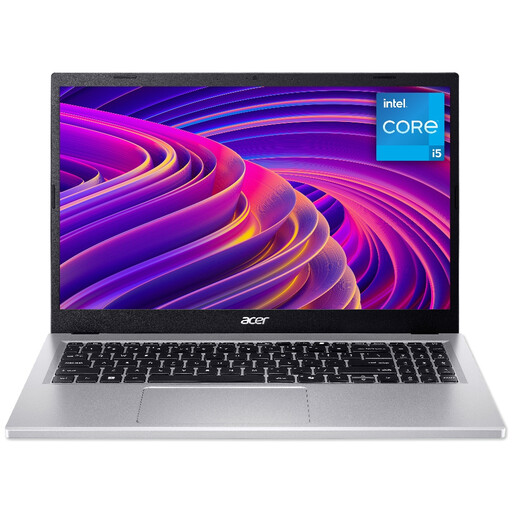
Acer Aspire Go AG15-71P 15.6-inch, Core i5-13420H, 8 GB RAM, 512 GB SSD, Silver
Consider the 15.6-inch screen if you prefer more visible spreadsheet space at your desk. This listing names 8 GB memory and a 512 GB SSD; confirm the retailer’s exact model number and allow for the device’s larger footprint.
View on Joybuy
 No image available
Acer Chromebook Plus 514 CB514-5H 14-inch, Core i3-1315U, 8 GB RAM, 256 GB SSD, Iron
This Chromebook is a choice for browser-based bill portals and compatible coursework tools. The named configuration has 8 GB memory and a 256 GB SSD. Confirm course-app compatibility; Google’s Microsoft 365 editing route on Chromebook requires OneDrive.
View on Joybuy
 No image available
Acer Aspire Lite AL15-36P-C29Z 15.6-inch, Intel N150, 8 GB DDR4 RAM, 128 GB SSD, Silver
The 15.6-inch screen may suit bill sheets viewed mainly at a desk. This configuration names 8 GB memory and a 128 GB SSD, so check whether that storage fits your local files. Confirm whether its Windows 11 edition is Home or Home in S Mode before relying on an installed course application.
View on Joybuy
Questions about student laptops
Can a Chromebook handle recurring bills and Excel files?
Yes, if your bill providers work in a browser and your files fit a ChromeOS-compatible workflow. Google Chromebook Help says Chromebooks can open and edit Microsoft 365 files; its Microsoft 365 editing route requires OneDrive. Check any course-specific software separately.
Is the Windows 11 minimum specification enough for bills and coursework?
Not necessarily: Microsoft’s 4 GB memory and 64 GB storage figures are installation minimums, not a workload recommendation. Compare the exact laptop’s capacity with the tabs, files and study applications you expect to use together.
Can I cancel an online laptop order if I change my mind?
For eligible UK distance sales, GOV.UK guidance says customers can cancel up to 14 days after delivery. Check the seller’s cancellation information and any applicable exception before ordering; remedies for faulty goods are a separate matter.
What should I do if my new laptop is faulty?
Contact the retailer and keep your order and fault records. Section 22 of the Consumer Rights Act 2015 sets a 30-day time limit for the short-term right to reject goods where its statutory conditions are met; a manufacturer warranty is not your only possible route.


