What to check before choosing
Start with the role soup will play in dinner, then check the pack and label against how your household will use it.
| Priority |
What to check |
Your needs |
| Dinner role |
Compare smooth and chunky recipes, named ingredients and the stated serving guidance. Decide whether you plan to add a side. |
I’m having soup with toast, or I want the tin to be the main part of dinner; those are different meal plans. |
| Pack use |
Check tin size and pack count. For a multipack, consider whether you will use every tin of the repeated flavour before its date. |
A multipack suits me only if the household wants that flavour more than once and has room to store it. |
| Dietary fit |
Read the exact tin’s ingredients, allergen declaration and dietary statement. Compare salt per 100g and per serving using the amount you expect to eat. |
I need the recipe to fit my dietary requirements, not merely a category filter or a claim about the wider range. NHS guidance advises checking salt labels. |
| Leftovers |
Read the opened-tin storage instructions and plan for any unused portion. Check whether you can refrigerate it promptly. |
If I’m eating only part of a tin, I need a plan for the remainder rather than leaving it open for another night. |
Brand and retailer ranges to compare
These range examples help distinguish recipes and formats; a brand name alone does not establish the ingredients or suitability of an individual tin.
Tesco
Tesco’s soup listing includes own-brand smooth tomato, Plant Chef sweet potato and coconut, and chunky chicken-and-vegetable 400g tins.
- The listed recipes offer different starting points for a light meal, a plant-based choice or a chunkier dinner.
- Check the individual tin rather than assuming those recipes have the same ingredients or dietary suitability.
Heinz
Tesco lists Heinz Cream of Tomato as both a single 400g tin and a 4 × 400g multipack, alongside the Big Soup Chicken & Veg format.
- The formats allow a choice between one familiar flavour for repeated meals and a chunkier recipe.
- Compare the exact flavour’s serving guidance and label; characteristics of one Heinz soup do not apply to the range.
Sainsbury’s
Sainsbury’s lists own-brand soups alongside branded options and provides dietary filters for browsing.
- Filters can help narrow the products to inspect.
- Sainsbury’s says allergy and intolerance filters are not a substitute for checking the label.
M&S
M&S lists tinned recipes including chunky vegetable, chicken and vegetable, minestrone and bean-based soups.
- Its Chunky Chicken and Vegetable Soup is a 400g recipe containing chicken, vegetables and pearl barley.
- That recipe lists celery and pearl barley containing gluten; M&S advises checking product information as ingredients and allergens can change.
Campbell’s
Tesco lists Campbell’s cream of mushroom and cream of chicken soups in 295g condensed packs.
- The condensed format offers a different recipe type from a 400g ready-to-heat tin.
- Read the preparation instructions and intended use before comparing it with a ready-to-heat dinner soup.
Joybuy tinned soup options
These Joybuy tins cover a lobster bisque, a cream of mushroom soup and three Heinz Big Soup recipes. Compare their labels and serving guidance according to whether you want a lighter soup or a recipe with named meat and vegetable ingredients.
 No image available
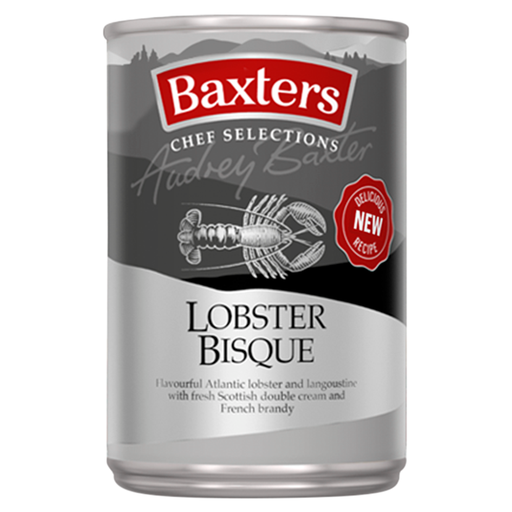
Baxters Lobster Bisque Chef’s Selection Soup 400g
Consider this 400g lobster bisque if its seafood recipe fits your dinner plan. Check the exact tin’s serving guidance and allergen declaration before use.
View on Joybuy
 No image available
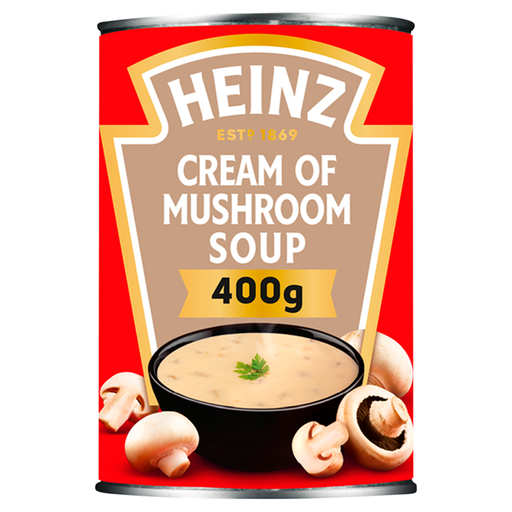
Heinz Cream of Mushroom Soup 400g
This 400g cream of mushroom soup is an option when you plan a smooth soup, perhaps with a side. Check the exact tin’s ingredients, allergens and serving guidance.
View on Joybuy
 No image available
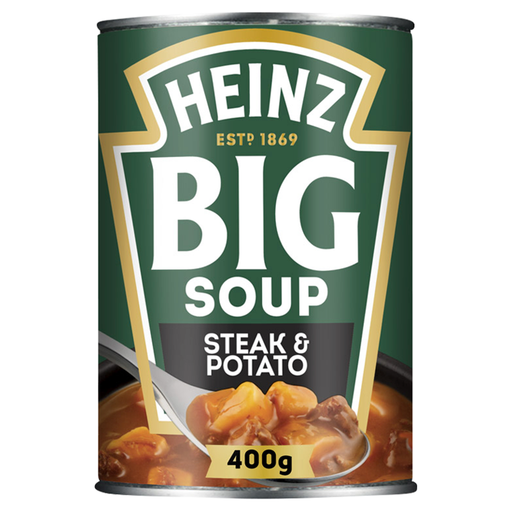
Heinz Big Soup Steak & Potato 400g
Steak and potato are the named ingredients in this 400g Big Soup variant. If it will be the main part of dinner, check the serving guidance and full ingredient list on the tin.
View on Joybuy
 No image available
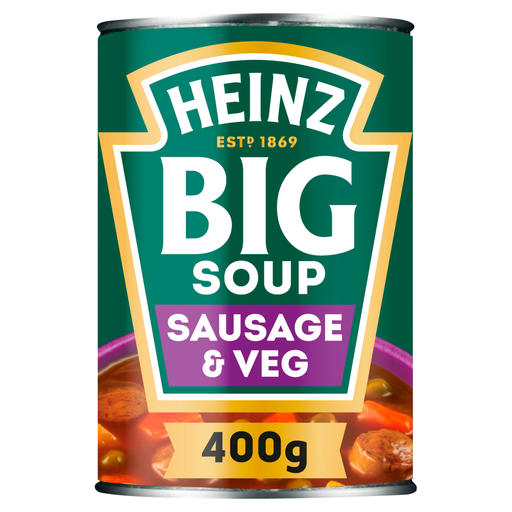
Heinz Big Soup Sausage & Vegetable 400g
This 400g variant names sausage and vegetables rather than a smooth soup recipe. Check its serving guidance, ingredients and allergens against the meal you intend to make.
View on Joybuy
 No image available
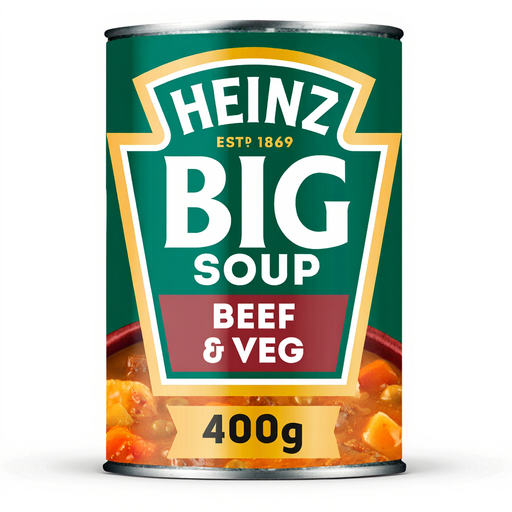
Heinz Big Soup Beef & Vegetable 400g
Beef and vegetables distinguish this 400g Big Soup variant from the steak-and-potato and sausage recipes. Read the exact can’s serving and allergen information before planning dinner around it.
View on Joybuy
Questions about tinned soup
Is a chunky soup always more filling than a smooth one?
No such conclusion follows from the recipe name alone. Tesco and M&S list soups with visibly different ingredients, but what works as dinner also depends on the portion and anything served alongside it. Check the tin’s serving guidance and decide how it fits your meal.
When does a multipack make sense?
Choose a multipack when your household expects to use several tins of the same flavour. Tesco lists Heinz Cream of Tomato as both a single tin and a 4 × 400g pack; check the dates, storage space and how often you would serve it before choosing the larger pack.
How do I check a soup for allergens or vegetarian suitability?
Read the ingredient list, allergen declaration and dietary statement on the exact tin. Sainsbury’s warns against relying on allergy and intolerance filters alone. Recipes differ: M&S lists celery and pearl barley containing gluten in its Chunky Chicken and Vegetable Soup.
Should I compare salt per 100g or per serving?
Check both: per 100g helps compare different tins, while per serving relates the label to the amount you plan to eat. NHS guidance advises checking food labels for salt. Sainsbury’s lists Heinz Cream of Mushroom Soup at 0.6g salt per 100g and 1.2g per half-can serving; those figures apply to that product, not every soup in the range.
What should I do with soup left after opening?
Follow the instructions on the particular tin. M&S says to keep its opened Chunky Chicken and Vegetable Soup in an airtight container in the fridge and eat it within two days. GOV.UK guidance for England, Northern Ireland and Wales advises refrigerating cooled leftovers within two hours, keeping the fridge at 0–5°C, and eating leftovers within 48 hours or freezing them.


