
24/7 Customer Support

Free returns

Same-day & Next-day Delivery

Quality Guaranteed

Unlock Your Welcome Offers: FREE Delivery | Up to 80% OFF | Free 30-day JoyPlus trial
Download the APP
Buying circular saw blades can seem straightforward until a new blade fails to fit the saw, produces rough edges or struggles with the material. Whether you are renovating a home, making furniture or working on a construction site, the correct combination of diameter, bore size, tooth design and blade material matters more than attractive packaging or a high tooth count alone.
This guide explains the practical checks to make before buying, followed by our top recommendations for different types of UK users.
A blade marked 190 mm, 184 mm or 165 mm may look suitable, but diameter is only one part of compatibility. You also need to check:
For example, a 165 mm blade may be unsuitable for a saw designed for a different arbor or guard arrangement, even if the diameter appears close.
Tooth count changes the way a blade behaves. A lower tooth count generally removes material more quickly and is useful for rip cuts, framing timber and construction work. A higher tooth count is more suitable for slower, cleaner crosscuts and finished panels.
However, a high tooth count can feed slowly through thick timber and may create additional friction if the blade is unsuitable for the material. Select the tooth pattern according to the job rather than treating tooth count as a quality ranking.
Wood-cutting saw blades are not automatically suitable for aluminium, tiles, plastic or plasterboard. A general-purpose TCT circular saw blade may be designed for hardwood, softwood, chipboard and composites, while an aluminium-cutting saw blade uses a different tooth geometry for non-ferrous metals.
Always check the manufacturer’s stated material suitability. Using the wrong blade can lead to poor cutting, excess heat, damaged teeth or kickback.
Blade diameter affects the maximum depth a saw can achieve. A 190 mm circular saw blade is commonly associated with larger corded saws, while 184 mm circular saw blades are found on some saws designed for deeper general-purpose cutting. A 165 mm circular saw blade is often used with compact cordless circular saws.
Do not estimate cutting depth from diameter alone. Check the saw’s published capacity at:
The Greenworks 24V cordless circular saw supplied with a 165 mm carbide-tipped blade lists a maximum cutting depth of 57 mm at 90° and supports bevel adjustment from 0° to 45°.
The bore is the central hole that fits over the saw’s arbor. A blade with a 30 mm bore may be usable on a saw with a smaller arbor when the correct reduction ring is supplied, but the ring must sit securely and be appropriate for that saw.
Several Silverline options include reduction rings. The 190 mm three-blade set has a 30 mm bore with 25 mm and 20 mm rings, while the 184 mm set includes 20 mm and 16 mm rings. Other sets include 10 mm, 16 mm, 18 mm, 20 mm or 25 mm rings. Check the exact listing and your saw manual before ordering.
Tungsten carbide-tipped saw blades are widely used for timber and composite boards because carbide-tipped teeth are harder and more wear-resistant than plain steel teeth. Alternate top bevel teeth are commonly used for general woodworking, while triple-chip ground teeth are suited to cleaner, more controlled cuts on sensitive surfaces.
For fine work, a veneer saw blade with a high tooth count and a 0° rake angle may help reduce tear-out on laminated chipboard, veneer, MDF and hardwood. For non-ferrous metals, use a blade specifically listed for aluminium, alloys or aluminium extrusions.
A practical selection guide:
Tooth count is only a guide. Tooth geometry, rake angle, blade thickness and the saw’s recommended speed also need to match the task.
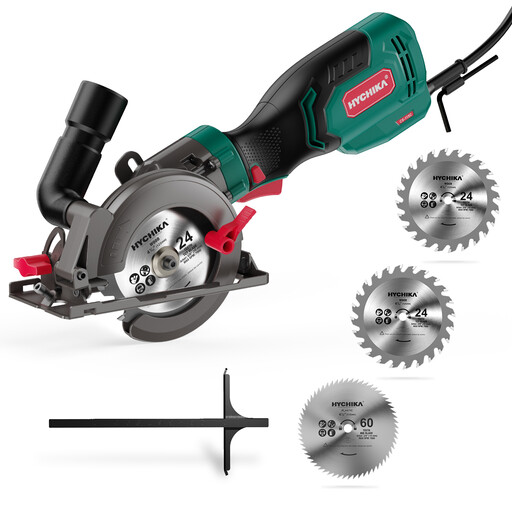
Why This Fits Their Persona: A practical corded option for DIY users handling flooring, shelving, plastic, soft metal or tile work without investing in a separate saw and multiple initial blades.
The included blade types are identified for different materials, reducing the temptation to use one wood blade for every job.
750 W motor, 3,500 RPM, 48 mm cutting depth at 90°, 0–45° bevel adjustment and a 2 metre power cord.
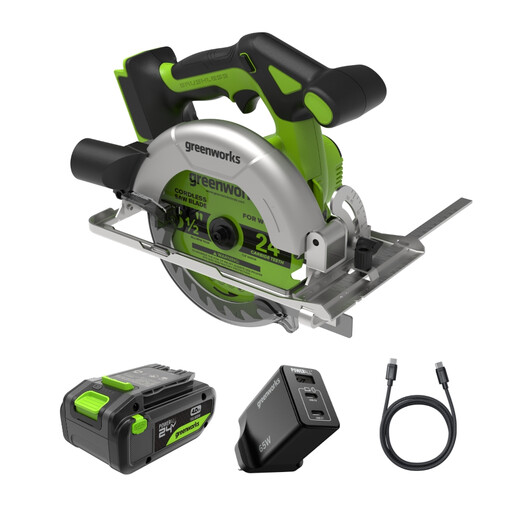
Why This Fits Their Persona: Suitable for workshop users and renovators who already own a compatible 24V battery and value cordless handling around rooms, gardens or framing projects.
The listing clearly states that the battery and charger are not included, helping buyers budget for the complete setup.
165 mm 24-tooth carbide-tipped blade, 5,000 RPM, 57 mm cutting depth at 90°, LED light, guide and dust port.
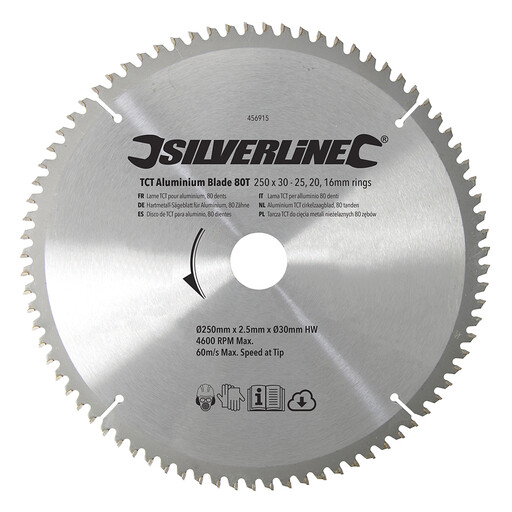
Why This Fits Their Persona: A focused option for tradespeople and workshop users cutting aluminium extrusions, light alloys and other non-ferrous metals.
It is specified for non-ferrous metals rather than being presented as a universal blade for timber and metal alike.
80 triple-chip ground TCT teeth, 5° negative rake, hardened body and reduction rings for 25 mm, 20 mm and 16 mm arbors.
We have compiled a complete, real-time list of products that fully satisfy these strict selection criteria and UK safety regulations.
Before fitting any blade, disconnect the mains plug or remove the battery. Confirm that the blade guard moves freely, the arbor nut is secure and the blade is not cracked, warped or missing teeth. Use eye and hearing protection, secure the workpiece and keep hands away from the cutting path.
For UK workplaces, employers should consider applicable requirements such as PUWER and follow the tool manufacturer’s instructions. For domestic users, check the saw documentation and look for the appropriate conformity marking and safety information where applicable. Dust extraction is particularly important when cutting MDF, plasterboard or other dusty materials.
Clean resin and debris from blades, store them in a dry location and replace any blade that shows significant wear. A dull blade can increase feed pressure, heat and kickback risk.
No. Many TCT blades are designed for hardwood, softwood, chipboard and composite materials, but the correct tooth count and geometry depend on the cut. Check the product specification before using a blade on laminated boards, MDF or treated timber.
Check the saw manual for its permitted diameter, bore size and maximum cutting depth. The blade must also fit inside the guard and operate within the saw’s rated speed. Never select a replacement based on diameter alone.
There is no fixed lifespan. Usage frequency, material, feed pressure, dust, hidden fixings and storage conditions all affect wear. Replace a blade when it becomes dull, damaged, warped or produces unusually rough cuts, burning or excessive resistance.