
24/7 Customer Support

Free returns

Same-day & Next-day Delivery

Quality Guaranteed

Unlock Your Welcome Offers: FREE Delivery | Up to 80% OFF | Free 30-day JoyPlus trial
Download the APP
A clean, straight cut is the foundation of any successful DIY project, whether you are building shelves, laying a new floor or crafting a garden planter. A reliable circular saw is an essential tool for achieving that professional finish. However, with so many options available—corded, cordless, large and small—choosing the right one can feel overwhelming.
This guide is designed to simplify your decision. As the Joybuy Product Recommendation Officer, my role is to help you understand the key features to look for, so you can select a tool that meets your specific needs without the marketing hype. We will look at some practical considerations and highlight a few models that offer a great combination of features and value for UK-based DIY enthusiasts.
Before diving into specific products, let’s cover a few key factors that will influence your choice. Thinking about these points will help you narrow down the options and find the perfect handheld saw for wood and other materials.
One of the first decisions you will make is whether to go for a corded or cordless model.
The size of the saw, specifically its blade diameter, determines its maximum cutting depth.
Modern circular saws come with features designed to improve accuracy and safety. A circular saw with laser guide is a popular feature, projecting a red line onto your workpiece to help you follow your cutting line precisely. Another useful feature is an adjustable base plate for making bevel cuts (angled cuts), typically up to 45 degrees, which is essential for joinery and framing.
Based on features, user-friendliness and suitability for common DIY tasks, here are some of our top recommendations.
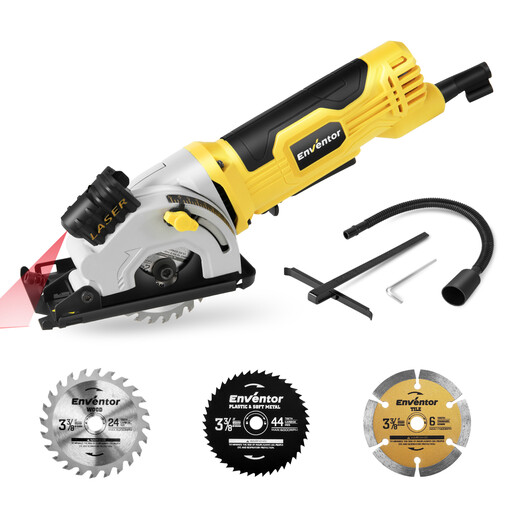
Why It Stands Out: This compact saw packs a surprising amount of power in a small frame. Its 580W pure copper motor delivers a no-load speed of 4000 RPM, making it capable of handling a variety of materials. It comes with three different 85mm blades straight out of the box: one for wood, one for soft metal and plastic, and a diamond blade for tile. This makes it an incredibly versatile tool for small-scale projects around the home.
Pros:
Who is it for? This is an excellent DIY circular saw for beginners or anyone needing a lightweight, easy-to-handle tool for crafts, repairs and cutting thinner sheet materials like plywood, laminate or plasterboard.
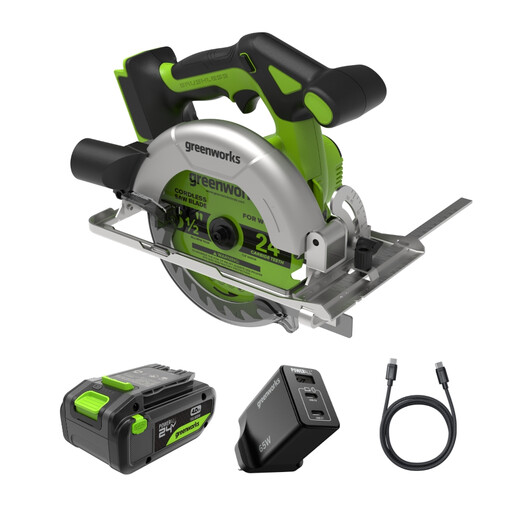
Greenworks 24V brushless Cordless Circular Saw, 165 mm, 5,000 RPM
Why It Stands Out: The Greenworks 24V model offers the ultimate convenience of cordless operation without a significant compromise on power, thanks to its high-efficiency brushless motor. It spins a full-size 165mm blade at 5,000 RPM, providing fast and clean cuts. The freedom from a power cord makes it perfect for outdoor projects like decking or fencing, or for moving around a busy renovation site.
Pros:
Who is it for? Homeowners and experienced DIYers who value portability and are tackling projects that require both power and flexibility. It is ideal for those already invested in the Greenworks 24V battery ecosystem. Please note, the battery and charger are sold separately.
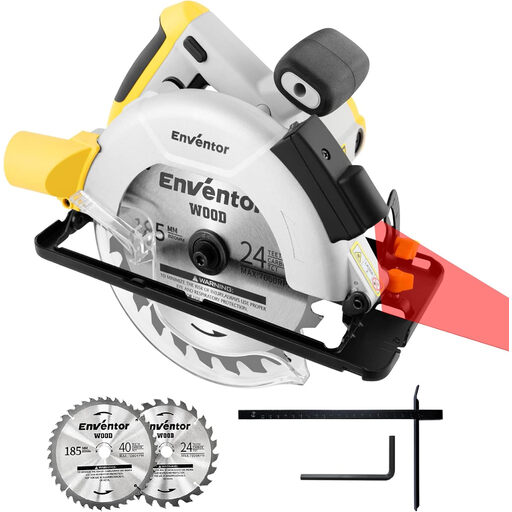
Enventor Circular Saw, 1200W 5800RPM Pure Copper Motor Electric Circular Saws with Laser Guide
Why It Stands Out: When your project demands serious cutting power, this 1200W corded saw from Enventor is a formidable choice. It drives a large 185mm blade at a very high speed of 5800 RPM, allowing it to make quick work of thick timber, worktops and dense boards. The substantial maximum cutting depth of 62mm at 90 degrees and 42mm at 45 degrees makes it suitable for construction and major renovation tasks.
Pros:
Who is it for? This is the tool for the serious hobbyist woodworker or renovator who frequently works with thick timber and needs consistent, reliable power for demanding jobs.
If the models above are not quite what you are looking for, or if you would like to compare them against a wider selection, there are many other tools available. From ultra-compact saws for craftwork to professional-grade models for heavy-duty use, finding the right fit is key.
Explore our full collection of multipurpose tool saws to find the perfect fit for your workshop.
What can a circular saw be used for? A circular saw is primarily used for making fast, straight cuts in a variety of materials. With the correct blade, it can cut through wood (including timber, plywood and MDF), plastics, soft metals and even ceramic tiles. It is a go-to tool for tasks like sizing sheet goods, cross-cutting timber to length, and making long rip cuts.
Is a cordless or corded circular saw better for DIY? This depends on your typical projects. A corded electric circular saw is great if you work primarily in a garage or workshop and need sustained power for long periods. A cordless circular saw is better if you need portability for outdoor work or move around a lot on-site. Many DIYers find a cordless model offers the best balance of convenience and capability for general home tasks.
What is a laser guide on a circular saw for? A laser guide projects a thin beam of light onto the material in front of the blade. This light acts as a visual guide for your cutting line, helping you to steer the saw more accurately and achieve a straighter cut, especially over long distances. It is a very helpful feature for improving precision.