
24/7 Customer Support

Free returns

Same-day & Next-day Delivery

Quality Guaranteed

Unlock Your Welcome Offers: FREE Delivery | Up to 80% OFF | Free 30-day JoyPlus trial
Download the APP
Fresh citrus juice can add flavour to breakfast, baking, sauces and cocktails, but choosing the wrong citrus juicer can create more cleaning and storage work than expected. A product may appear inexpensive yet have a small capacity, awkward strainer or difficult-to-wash parts.
This guide from the Joybuy Product Recommendation Officer focuses on practical details rather than promotional language, helping UK households compare manual and electric citrus juicers with fewer surprises.
A higher wattage figure does not automatically mean a more suitable orange juicer. For occasional lemon or lime use, a manual citrus juicer may be sufficient and avoids a power cable altogether. For several oranges at breakfast, motor operation and jug capacity may matter more than the wattage alone.
Check how the motor operates, whether the reamer rotates in two directions and how much juice the container holds. For example, the Kenwood JE290A has a 40W motor with a 60W peak rating, two-way rotation and a 1-litre jug.
Some shoppers focus on extraction but forget to check what happens to seeds and pulp. A basic lemon squeezer may let juice run directly into a glass, while a juicer with a built-in filter can collect unwanted pieces during use.
If your household prefers smoother juice, look for a stainless steel or integrated strainer and, where available, adjustable pulp settings. Do not assume that every fruit press provides the same level of separation.
A juicer that is difficult to dismantle may be left unused after the first few attempts. Before purchasing, check whether the reamer, jug and filter detach, whether they are dishwasher-safe and whether the main motor base must be wiped rather than immersed.
Compact dimensions also matter in UK kitchens, where cupboard and worktop space can be limited. A handheld lemon juicer is easy to store, while an electric citrus juicer needs a suitable location near a socket.
A manual citrus juicer is usually compact, quiet and ready to use without electricity. It suits occasional lemon, lime or small-orange preparation, particularly when you want a simple tool for recipes.
An electric citrus juicer can reduce hand pressure when preparing multiple portions. Look for one-touch operation, a stable base and a reamer suitable for different citrus sizes. Confirm the electrical specification before use. Products designed for the UK should be compatible with 220–240V, 50–60Hz supplies; the Kenwood JE290A is listed for this range.
A small reservoir may be adequate for one lemon, but families may prefer a larger container. A 1-litre jug works well for preparing several servings without repeatedly stopping to pour. Larger designs, such as the listed 1.4-litre electric press, may suit batch preparation.
Check whether the product is intended for oranges, lemons, limes and grapefruits. A universal reamer can be useful if your shopping habits vary between small limes and larger fruit.
For pulp separation, look for a dedicated filter or strainer. Stainless steel filters can be useful for separating pulp and seeds, while integrated plastic strainers may keep the design lighter and simpler.
A dishwasher-safe juicer can reduce washing time, but only detachable components should go into the dishwasher unless the instructions state otherwise. Never immerse an electric motor base, plug or power cord in water. Unplug appliances before dismantling or cleaning.

Why This Fits Their Persona: A practical choice for UK cooks who want fresh lemon, lime or orange juice without a powered appliance or complicated setup.
Its integrated strainer is designed to catch pulp and seeds, while the non-slip base helps keep the tool steady during pressing.
Manual operation; BPA-free polypropylene construction; detachable parts are listed as dishwasher-safe.
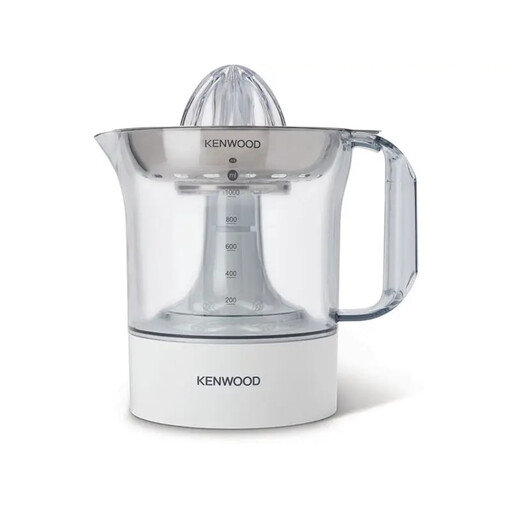
Why This Fits Their Persona: Suitable for households wanting a compact electric appliance with a defined capacity, filter and straightforward controls.
The stainless steel filter addresses pulp and seed separation, while detachable components make the cleaning process more manageable.
1-litre transparent jug; two-way rotation; universal reamer; detachable parts listed as dishwasher-safe.
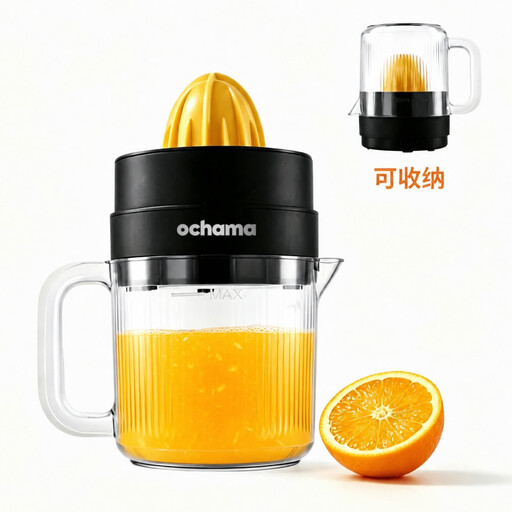
Why This Fits Their Persona: Its pressing format and larger 1.4-litre capacity may suit busy households preparing multiple drinks or recipe portions.
The listing describes removable parts for cleaning and a blade-free design, helping address maintenance and handling concerns.
1.4-litre stated capacity; 30W motor; electric pressing operation; designed for citrus fruit and pulp separation.
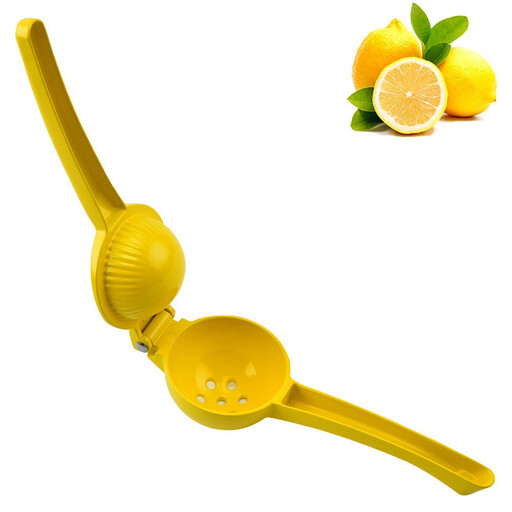
Why This Fits Their Persona: A portable handheld lemon juicer for shoppers who mainly squeeze small quantities directly while cooking or serving.
Its manual clip format avoids motor, cable and voltage concerns, making the operating requirements easy to understand.
Portable manual format; suitable for quick lemon-juice portions; compact storage profile.
We have compiled a complete, real-time list of products that fully satisfy these strict selection criteria and UK safety regulations.
Yes, if you mainly prepare one or two portions and do not mind applying hand pressure. A manual citrus juicer has no electricity cost and is generally straightforward to store. For larger quantities, an electric model may reduce repetitive pressing.
Unplug the appliance first, then remove the jug, reamer and filter. Wash only the parts identified as washable or dishwasher-safe in the instructions. Wipe the motor base with a damp cloth and keep the plug, cable and base away from water.
Lifespan depends on construction, frequency of use, cleaning and storage. Avoid forcing fruit into the reamer, remove acidic residue after use and follow the manufacturer’s instructions. A warranty, such as the stated 24-month warranty on the Bear CZJ-A04B1, can also be considered when comparing purchase options.