
24/7 Customer Support

Free returns

Same-day & Next-day Delivery

Quality Guaranteed

Unlock Your Welcome Offers: FREE Delivery | Up to 80% OFF | Free 30-day JoyPlus trial
Download the APP
A citrus juicer can make breakfast, baking and cooking more convenient, but the wrong design may leave you with sticky worktops, trapped pulp or a gadget that rarely leaves the cupboard. UK shoppers comparing a manual citrus juicer with an electric citrus juicer should look beyond attractive product photos and broad claims about effortless juicing.
The most common buying traps are:
The right citrus juicer should suit your routine, available storage and preferred texture rather than simply having the longest feature list.
A manual citrus juicer is usually straightforward to store and use. It needs no electricity, produces little noise and can be useful when you only need juice from a lemon or lime for a recipe. A hand-operated lemon squeezer or fruit press can also be convenient for picnics, rented accommodation or kitchens with limited worktop space.
An electric citrus juicer is more suitable when you regularly prepare several oranges, grapefruits or large servings. One-touch operation may reduce the physical effort involved, although you will need access to a socket and enough room to place the appliance securely. Check whether the motor base must be kept away from water and whether the cone and collection components can be removed for cleaning.
Decide how much pulp you want in your drink. A pulp separation juicer with an integrated strainer can catch pips and larger pieces while you press or rotate the fruit. This may be useful for breakfast juice or recipes requiring a smoother liquid.
However, strainers differ in size and design. A fine filter can produce a clearer drink but may need more frequent rinsing. If you prefer some texture, look for adjustable pulp levels or a wider straining surface. Product descriptions should clearly explain whether pulp control is adjustable rather than implying that every setting produces the same result.
A stable base helps prevent spills when pressing fruit. Look for a non-slip base, a broad footprint or a design that sits securely on a dry worktop. For an electric orange juicer, a sufficiently wide cone or feed chute can make larger fruit easier to handle.
Cleaning is equally important. Confirm which parts are removable and whether they are dishwasher-safe. Do not assume that dishwasher-safe components include the motor base. Electrical bases should generally be unplugged and wiped according to the manufacturer’s instructions, never immersed in water.
Materials also matter. Stainless steel can be useful for parts exposed to acidic juice, while BPA-free polypropylene is commonly used for lightweight manual designs. Check the product listing for the actual material rather than relying on photographs alone.
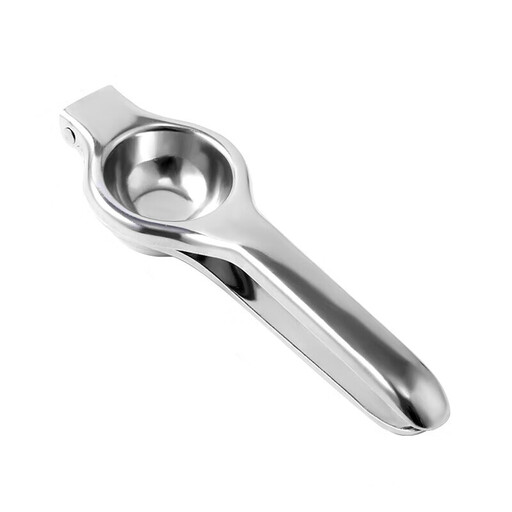
Why This Fits Their Persona: A compact option for households that mainly need lemon or lime juice for drinks, dressings and cooking.
Its manual format avoids motor maintenance, electrical storage requirements and unnecessary controls for occasional use.
Stainless steel construction; no plug or set-up required.
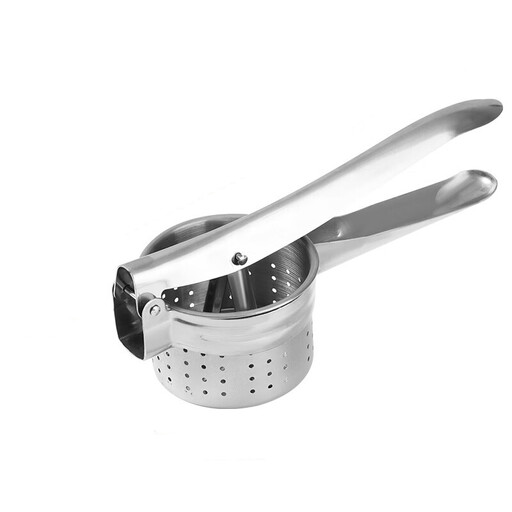
Why This Fits Their Persona: Suits shoppers who prefer a metal-bodied manual fruit press for regular kitchen preparation.
The manual construction keeps the operating process simple, without assuming that an electric appliance is necessary.
Stainless steel design; suitable for manual juice extraction.
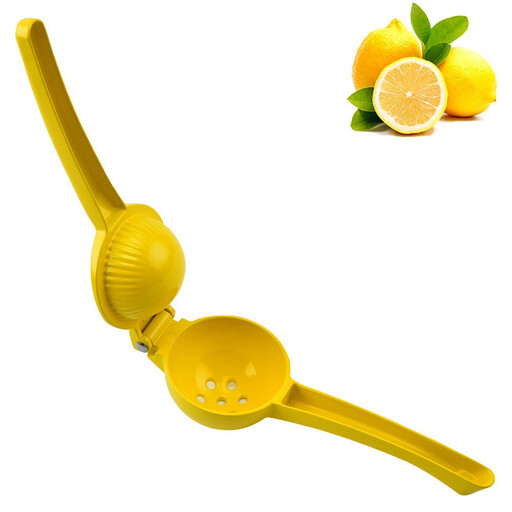
Why This Fits Their Persona: A portable choice for kitchens with a small footprint, packed lunches, caravans or preparing lemon and lime juice away from home.
Its clip-style format is designed for direct, small-batch use, rather than taking up space like a full electric juicer.
Portable manual operation; intended for lemon juice extraction.
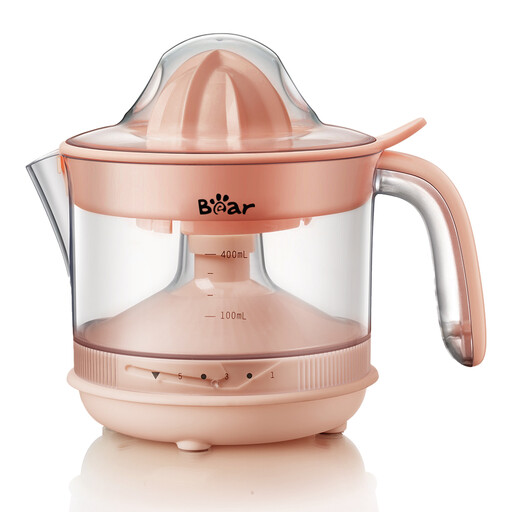
Why This Fits Their Persona: Designed for households making regular batches of lemon, orange or other citrus juice and wanting adjustable pulp control.
The listing specifies five adjustable pulp levels and a 110mm feed chute, giving shoppers clearer information than a generic “smooth juice” claim.
One-touch operation; 24-month warranty stated in the product information.
For a manual juicer with a collection reservoir, strainer and pouring spout, the Chef Aid Manual Citrus Juicer is designed for lemons, limes, oranges and grapefruits. Its listing specifies a non-slip base, integrated strainer, BPA-free polypropylene construction and dishwasher-safe parts.
This format may suit a UK household that wants fresh juice without plugging in an appliance. It can also help with recipe preparation because the juice is collected before being poured into a glass, jug or mixing bowl. Review the stated dimensions before buying, particularly if your kitchen drawers or cupboards have limited clearance.
We have compiled a complete, real-time list of products that fully satisfy these strict selection criteria and UK safety regulations.
Yes, but check the cone or pressing area before buying. Some handheld lemon squeezers are primarily suited to smaller fruits, while a traditional citrus juicer with a broad reamer may accommodate oranges and grapefruits more comfortably.
Lifespan depends on construction, cleaning and frequency of use. Avoid forcing oversized fruit into a small device, rinse acidic juice from surfaces after use and follow the care instructions. For electric models, keep the motor base dry and stop using the appliance if it becomes unusually hot or produces abnormal noises.
An electric citrus juicer uses electricity only while operating, so the running cost is generally linked to its wattage and usage time. For occasional lemon juice, the convenience may not justify storing and powering an appliance. For repeated batches, one-touch operation may be more practical than manually pressing each fruit.