What matters when choosing?
Collection-jug juicer
Choose it when: You collect juice for a batch of lemonade before adding water and other ingredients.
Allow for: Pouring the juice out and washing the jug, filter and cone after use.
Direct-serve press
Choose it when: Colleagues juice into individual glasses and keeping drips off the shared counter is a priority.
Allow for: Washing the food-contact parts and using a separate jug if the lemonade will be mixed as a batch.
Commercial-style juicer
Choose it when: Frequent serving justifies a dedicated appliance and someone can take responsibility for its upkeep.
Allow for: Checking its worktop footprint, cup clearance and cleaning routine before bringing it into the office.
Once you know whether the juice will go into a mixing jug or straight into glasses, compare cleaning access, batch size and drip control. Electrical suitability matters whichever format you choose.
| Concern |
What to check |
Who it matters to |
| Cleaning after shared use |
Identify the removable food-contact parts and check the instructions for washing each one; plan who will clean and dry them. |
If I am responsible for the communal worktop, I need colleagues to be able to clear pulp and wash the used parts promptly. Around 40% of consumers put this clean-up need first. |
| Batch size and pulp |
Compare stated working capacity, cone sizes for the fruit you use and the available pulp filters. |
When I make lemonade for several colleagues, I want to collect enough juice before stopping to empty the vessel. Roughly 30% of consumers prioritise small-group batch preparation. |
| Drips during serving |
Check for an anti-drip spout or removable drip tray, and whether your usual glass or mixing jug fits beneath the outlet. |
If colleagues take turns filling glasses, I want a tidy handover without juice dripping onto the counter. About 20% of consumers make drip control their primary concern. |
| Workplace electrical fit |
Confirm the plug and electrical rating for the office supply, then follow the workplace process for checking and maintaining equipment. |
Before introducing a juicer at work, I need to know that it suits our supply and that someone will oversee its condition. Approximately 10% of consumers put workplace electrical arrangements first. |
Brands to consider for shared-office lemonade
These product lines illustrate different serving and cleaning arrangements; check the features of the exact model rather than assuming they apply across a brand’s range.
Lakeland
Lakeland’s Electric Citrus Juicer 600ml is a collection-jug option for making a small batch before pouring.
- Lakeland specifies a 600 ml working capacity, two cone sizes, two pulp filters and detachable parts.
- Its jug format requires pouring the juice out; an anti-drip direct-serve system is not established for this model.
Braun
Braun offers both compact bowl-style citrus juicers and direct-serve models.
- Braun specifies five pulp settings, pressure-activated start and stop, and two-way rotation for the CJ3000.
- Braun describes a tip-up anti-drip spout on selected direct-serve models; do not assume the CJ3000 has that feature.
Smeg
Smeg’s CJF11 is a direct-serve option for offices that place particular value on managing drips around the serving area.
- Smeg specifies a universal reamer, anti-drip spout, dishwasher-safe parts, a UK Type-G plug and 220–240 V compatibility for the CJF11.
- Consider whether its countertop presence is warranted for occasional lemonade making; the specifications do not establish a cleaning or serving advantage over every smaller model.
Sage
Sage’s Citrus Press is worth considering if the office regularly switches between different citrus fruits.
- Sage says its Citrus Press uses one cone for citrus sizes from limes to grapefruits and has dishwasher-safe components.
- Check that its serving arrangement and dimensions suit the office; a versatile cone alone does not settle the batch-versus-direct-serve choice.
Hamilton Beach
The 66900-UK is a commercial-style option to assess when serving will be frequent rather than occasional.
- Catering Hygiene describes removable dishwasher-safe juice-contact parts, a removable drip tray and clearance for taller cups or pitchers.
- Confirm its dimensions, cleaning responsibilities and workplace equipment arrangements before choosing it for an office.
Joybuy products for batch preparation
These collection-vessel citrus juicers suit offices planning to gather juice before mixing lemonade in a jug. Check the washing instructions and workplace electrical fit for the particular model you choose.
 No image available
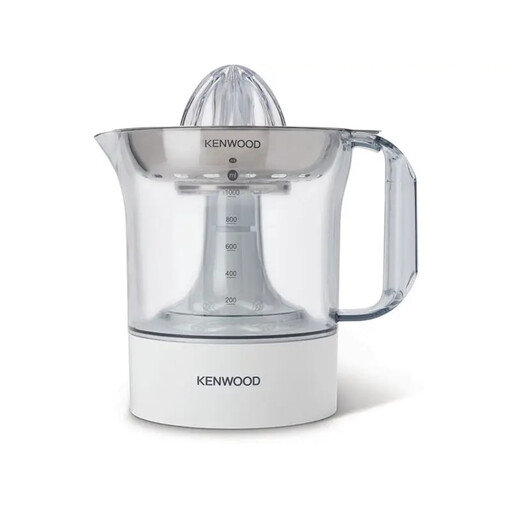
Kenwood JE290A Citrus Juicer, White
Consider this model if you want to collect citrus juice before mixing a batch of office lemonade.
Confirm the collection capacity, washing instructions and UK plug type before choosing it for shared workplace use.
View on Joybuy
 No image available
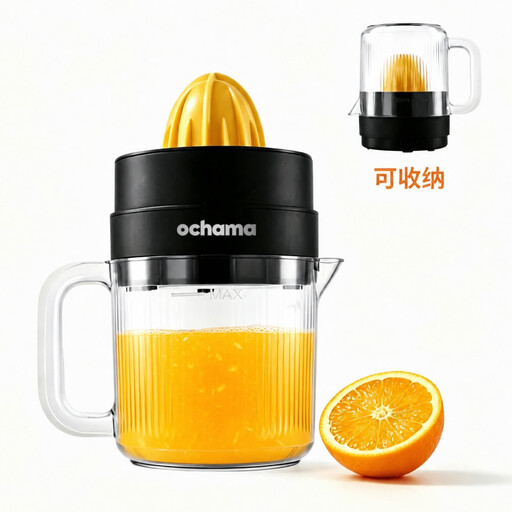
ochama Semi-Automatic Electric Citrus Juicer, 1.4 L, 30 W
Consider the stated 1.4 L container if you plan to collect juice for a larger lemonade batch; container capacity does not indicate how much juice the fruit will yield.
The product name specifies a 30 W rating and pulp separation. Check the cleaning instructions, pulp options, plug and electrical rating before workplace use.
View on Joybuy
Frequently asked questions
Does a citrus juicer in a UK office need a PAT test every year?
Not automatically. The Health and Safety Executive says annual portable appliance testing is not required for every appliance in a low-risk office; the employer must maintain electrical equipment to prevent danger and decide what inspection or testing is appropriate for its use.
What should an office check before using an electric citrus juicer?
Check that the juicer is suitable for the intended use and electrical supply, and follow the employer’s equipment process. The Health and Safety Executive advises checking its condition; switch it off and unplug it before visually inspecting the plug, cable and casing, and have damage dealt with by a competent person.
How should colleagues clean a shared juicer?
Agree who cleans the food-contact parts and wipes spills after each use, following the exact model’s instructions. If the organisation operates as a food business, GOV.UK says its cleaning schedule must cover what is cleaned or disinfected, how often and which products are used.
Do food-business rules apply when staff make office lemonade?
That depends on what the organisation actually does with the drinks; do not assume that a staff-only arrangement either qualifies or is exempt. GOV.UK includes preparing, handling and distributing food among activities relevant to food-business responsibilities, so ask the local authority or your organisation’s compliance lead how the rules apply to your arrangement.


