Large-map planners
If you want the city, building tools and management panels visible together, decide whether you value the finer detail of 27-inch 4K or the extra horizontal space of a 34-inch ultrawide.


For city-building games, choose the screen format and resolution around the map view you want, the space on your desk and what your PC can run comfortably. A 27-inch 4K display favours fine detail, a 34-inch ultrawide favours horizontal workspace, and QHD offers a lower-resolution route. If your wired headphones will connect through the monitor rather than directly to your PC or console, check the exact model’s headphone output and audio path.
If you want the city, building tools and management panels visible together, decide whether you value the finer detail of 27-inch 4K or the extra horizontal space of a 34-inch ultrawide.
If your graphics hardware or preferred game settings make 4K a difficult target, consider QHD while checking how your own games run at the resolution you intend to use.
If you use wired headphones, decide whether they will plug into your PC or console, or into the monitor. Only the latter arrangement makes a monitor headphone output essential to your plan.
Start with the map view and native resolution you want, then check PC performance and physical fit. Settle the headphone connection before comparing monitor audio features.
| Concern | What to check | Who this matters to |
|---|---|---|
| Map workspace | Compare 27-inch 4K with 34-inch, 21:9 ultrawide for the view you prefer. Check how your games display their interface at that format. | I want a broad city view without losing track of the tools beside it. Around 36% of consumers put map workspace first. |
| Resolution and PC workload | Check your PC’s performance in your games at 3840 × 2160, 3440 × 1440 or 2560 × 1440 and at your intended settings. | If my PC struggles at the resolution I choose, a higher monitor refresh rate will not solve that problem. PC-performance balance is the main concern for around 29% of consumers. |
| Desk fit and adjustment | Measure usable desk width and depth against the exact monitor’s dimensions and stand footprint; check the adjustments you need. | I need room to position the screen comfortably alongside my keyboard. Around 21% of consumers would make desk fit and adjustment their first consideration. |
| Headphone connection | Choose where your wired headphones will plug in. For a monitor connection, confirm its headphone output and the intended input’s audio routing. | My headset needs to work through the display, not just through the PC or console. For around 14% of consumers, that connection path is the deciding concern. |
A 34-inch screen also needs enough width and depth on the desk. LG UK lists the 34GN850-B at 819.2 mm wide and 312.2 mm deep with its stand; another model needs its own measurements.
Measure the available space, including room for your keyboard. If you plan to use an arm, check the exact monitor’s mounting pattern, the arm’s load rating and clamp clearance.
An unsuitable stand footprint may mean changing the monitor’s placement or using a compatible arm.
AOC and Samsung each specify 240 Hz on the QHD and 4K gaming models cited here, but refresh rate does not tell you how much map detail or horizontal workspace the screen provides.
Choose format, native resolution, size and adjustment first. Then consider whether a higher refresh rate matters for the other games you play.
Speakers and headphone outputs are separate features. LG UK lists a headphone output on the 34GN850-B, and BenQ lists one on the EX321UX; neither establishes the ports on another model.
Trace your intended connection from PC or console to monitor to headphones, and confirm the exact model’s port list and audio behaviour before buying.
If that path does not suit your equipment, you may need a different connection or an additional audio accessory.
LG UK’s 34GN850-B illustrates the 34-inch, 3440 × 1440 ultrawide route, with a listed headphone output.
Dell UK specifies its 27-inch S2725QC IPS monitor at 3840 × 2160 and up to 120 Hz, with height and pivot adjustment.
Samsung UK specifies its 27-inch Odyssey OLED G8 G80SH with a 4K QD-OLED panel and 240 Hz refresh rate.
AOC UK’s 27-inch Q27G4ZR illustrates a 2560 × 1440 gaming route with Adaptive Sync and a height-adjustable stand.
BenQ UK specifies the 31.5-inch EX321UX at 3840 × 2160 and 144 Hz, with height adjustment and a headphone jack.
These monitors offer 4K, ultrawide and other screen-size options to consider for city-building with headphones. Compare each exact model’s native resolution, desk dimensions and audio connection with your setup; the formats alone do not establish how your games will run or display their interfaces.
 No image available
Consider this model if fine map and interface detail is your priority and your PC can run your games at 4K.
The product name specifies a Nano IPS panel, 240 Hz/480 Hz dual-mode operation, DisplayPort 2.1 and HDMI 2.1.
Check game performance at your intended settings and confirm the exact headphone connection you plan to use.
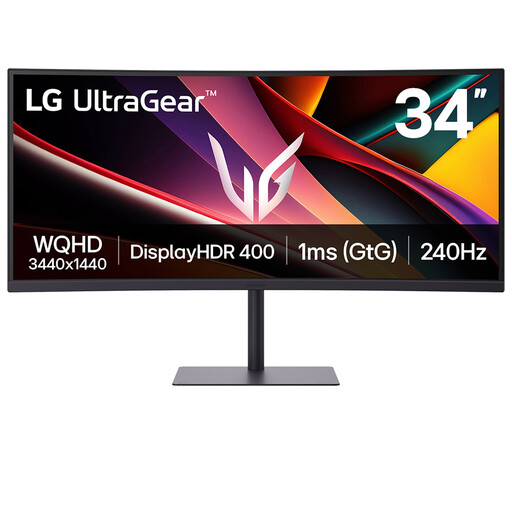 No image available
Consider this ultrawide option if horizontal room for the city view matters more to you than choosing a conventional 16:9 screen.
The product name specifies a VA panel and 240 Hz refresh rate.
Check the screen’s dimensions, how your games handle ultrawide display and whether your PC can run them at the intended settings. Confirm the headphone connection on the exact model.
 No image available
Consider this ultrawide model if you want a wide city layout and also intend to use the monitor for other games.
The product name specifies an OLED panel and 240 Hz refresh rate.
Check desk fit, game support for your preferred layout and your PC’s performance. The product information warns that prolonged static images can cause OLED burn-in; follow the screen-protection guidance when using persistent game interfaces.
 No image available
Consider this larger 4K option if you want a substantial screen for city maps and have space to position a curved display.
The product name specifies 3840 × 2160 resolution, 165 Hz refresh rate and USB-C with 65 W power delivery.
Check how the screen fits your viewing position and how your PC performs at 4K. If headphones will connect through the monitor, confirm that its audio output supports your intended connection.
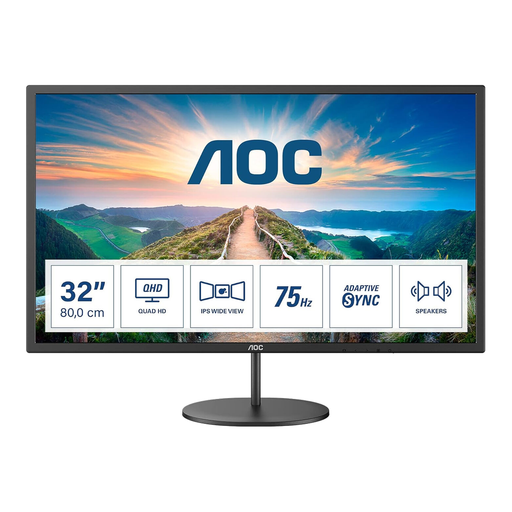 No image available
Consider this larger-screen alternative if you do not need to prioritise the fastest gaming refresh rates.
The product name specifies an IPS panel, Adaptive Sync and built-in speakers.
Confirm its native resolution and refresh rate against your games, along with its desk dimensions, stand adjustment and headphone connection. Built-in speakers alone do not establish a headphone output.
No, if your headphones connect directly to your PC, console or another audio device. Speakers are separate from a headphone output: Dell lists speakers on the S2725QC, while LG lists a headphone output but no speakers on the 34GN850-B.
No; check the exact monitor’s ports and your intended audio path. LG lists a headphone output on the 34GN850-B and BenQ lists a headphone jack on the EX321UX, but those specifications do not apply to other models in their ranges. Also confirm that your chosen connection carries audio to the monitor output.
It need not be your first selection criterion if city-building is your main use. Choose a resolution, screen format and physical size that suit your map view and PC; a higher refresh rate may matter more if you also play fast-action games.
Check that the seller supplies a monitor intended for your part of the UK, with the relevant safety information. GOV.UK guidance distinguishes product-marking arrangements for Great Britain and Northern Ireland, so do not assume one marking rule applies identically to both. When replacing a display, check an appropriate electrical-equipment collection or recycling route; GOV.UK identifies the UK Waste Electrical and Electronic Equipment framework for such equipment.