
24/7 Customer Support

Free returns

Same-day & Next-day Delivery

Quality Guaranteed

Unlock Your Welcome Offers: FREE Delivery | Up to 80% OFF | Free 30-day JoyPlus trial
Download the APP
A clamp can look like a simple purchase, but the wrong design may damage a workpiece, lose pressure during use or prove awkward in a confined space. Whether you need woodworking clamps, an automotive tool or a camera clamp mount, comparing the application, construction and adjustment system matters more than choosing by appearance alone.
A wide opening does not automatically mean a clamp will suit your project. Check the jaw depth, clamping force and the shape of the contact pads. A clamp with a generous span but shallow jaws may struggle to hold a thick or uneven workpiece securely.
For woodworking, soft or non-slip jaw covers can help reduce marks on timber. For irregular shapes, a swivel shoe can maintain better contact than a fixed pad.
More pressure is not always preferable. Excessive force can crush softwood, mark finished furniture or distort plastic components. Treat the stated load limit as a maximum, not a target. Place protective material between the jaws and delicate surfaces, and tighten gradually.
For camera equipment, the maximum supported load is particularly important. A camera clamp mount should be attached to a stable surface, with every locking knob tightened before a device is mounted.
A traditional screw clamp offers controlled tightening, but it can be slow when repeated adjustments are needed. Conversely, a compact one-handed clamp may be convenient but unsuitable for high-pressure work.
Consider whether you need quick-release clamps, a ratchet mechanism, a reversible jaw or an extended flexible reach. For vehicle repairs, a clamp that cannot reach around hoses or components may be unusable despite appearing robust.
Look for three measurements:
A G-clamp is generally suited to controlled, direct pressure and can be useful for metalwork, repairs and workshop tasks. A bar clamp or F-clamp is often more practical for furniture assembly and larger timber because its rail allows a longer reach.
Cast iron provides a solid frame for many workshop clamps, while steel rails are common in bar clamps and ratchet bar clamps. Reinforced nylon can reduce overall weight and make one-handed operation easier. The choice should match the working environment and the amount of repeated handling.
Check whether the thread, rail and moving parts have protection against corrosion. A copper-plated thread, for example, can help reduce weld spatter adhesion during suitable metalworking tasks. Non-slip TPU or nylon jaw pads are useful when working with painted, polished or finished surfaces.
For frequent repositioning, a trigger-operated one-handed clamp can save time. Separate quick-release controls help prevent accidental loosening, while a reversible jaw may allow the clamp to work in standard clamping or spreading mode.
Before use, check that:
The UK does not have one universal performance rating covering every type of clamp. Always follow the product instructions and the manufacturer’s stated limits rather than assuming that a tool is suitable for lifting, securing loads in transit or supporting overhead equipment.
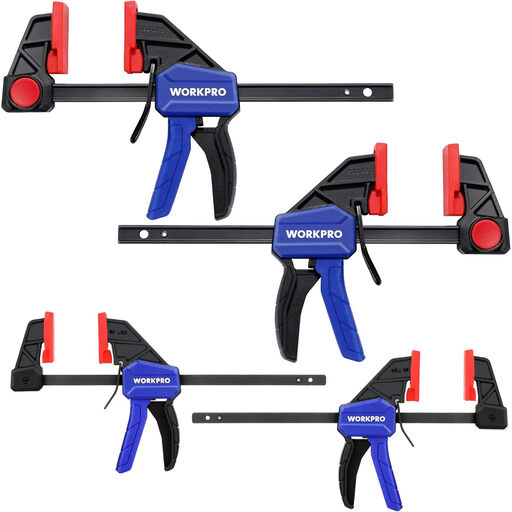
Why This Fits Their Persona: This mixed set gives home DIY users two 120 mm mini clamps and two 150 mm clamps for smaller furniture, repairs and craft projects.
The different sizes reduce the need to buy several single clamps, while soft TPU jaw pads help limit surface marking.
One-handed operation, quick release, reversible jaws and stated maximum forces of 23 kg and 68 kg by size.
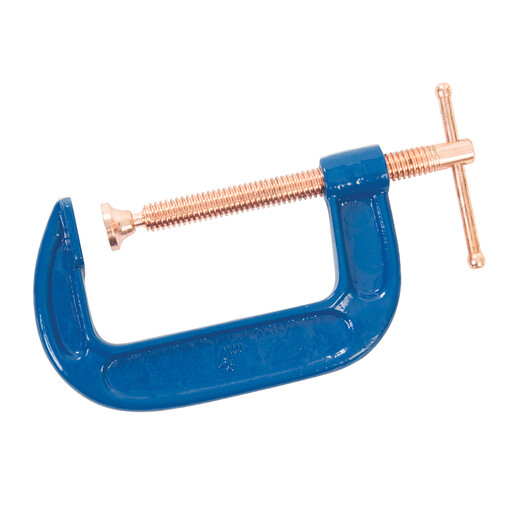
Why This Fits Their Persona: A suitable option for workshop users who prefer a traditional screw-operated clamp for controlled pressure on repair and fabrication tasks.
The cast-iron frame and reinforced shoulders provide a defined workshop format, while the swivel shoe can accommodate irregular-shaped objects.
100 mm format, steel threaded bar, copper-plated thread and tommy bar handle.
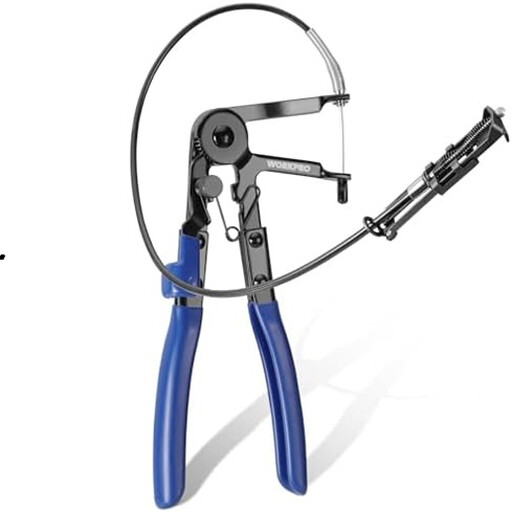
Why This Fits Their Persona: Automotive technicians and home mechanics can use its flexible reach when spring hose clamps sit behind hoses or other components.
The 67 cm flexible hose addresses restricted access, while the locking ratchet holds the clamp in a compressed position.
10–50 mm opening range, one-handed operation and heat-treated carbon steel construction.
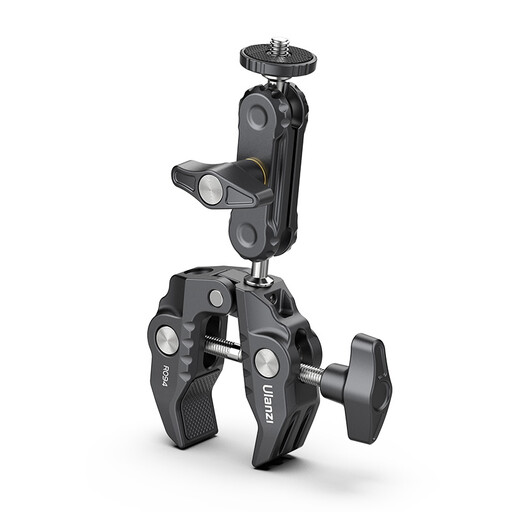
Why This Fits Their Persona: Vloggers and photographers can attach compatible cameras or phones to desks, poles, tripods and light stands where a conventional tripod is inconvenient.
The clamp must be fixed to a stable surface and its locking knobs tightened before use, reducing reliance on an unsecured improvised mount.
Includes a phone holder, 360° ballhead magic arm and 1/4-inch and 3/8-inch thread options.
We have compiled a complete, real-time list of products that fully satisfy these strict selection criteria and UK safety regulations.
For vehicle filming, a suction cup camera mount can be more portable than a fixed super clamp, but inspect the surface, clean the contact area and check stability regularly. For beauty users, the Lena Wireless Straightening Clamp has 12 mm curved floating ceramic plates, MCH heating technology and a stated weight of 150 g. As with any heated styling tool, follow the supplied operating and storage guidance, keep it away from water and allow it to cool before packing.
For larger timber assemblies, compare the WORKPRO 150 mm Ratchet Bar Clamp Set. It offers a 150 mm span, 62 mm jaw depth, 68 kg stated clamping force and a spreading range up to 285 mm. Its nylon protective covers are intended to help reduce marks during woodworking and DIY use.
F-clamp sets and bar clamps are practical for furniture assembly, frames and general timber work. Choose jaw pads that protect the surface, a rail length suited to the workpiece and a force rating that will not crush softer wood.
Attach it to a stable, suitable surface and verify that the clamp is fully closed. Tighten all locking knobs, keep within the stated load limit and check the mount again if the camera position, surface or surrounding movement changes.
Lifespan depends on pressure, storage, moisture and cleaning. Keep metal parts dry, remove dust or adhesive residue, avoid exceeding the stated limit and inspect threads, rails, pads and locking mechanisms before repeated use.