
24/7 Customer Support

Free returns

Same-day & Next-day Delivery

Quality Guaranteed

Unlock Your Welcome Offers: FREE Delivery | Up to 80% OFF | Free 30-day JoyPlus trial
Download the APP
Choosing clamps and pliers is rarely as simple as picking the cheapest set or the one with the largest jaw opening. The right tool depends on the material being held, the force required, the available working space and whether the job involves plumbing, automotive repair, electrical work, photography or everyday home maintenance.
This guide separates useful specifications from sales language, helping UK shoppers avoid unsuitable tools and choose equipment that matches the task.
A large opening does not automatically mean a tool will grip securely. Water pump pliers may open widely but still struggle if the jaw profile does not suit a smooth, round pipe. Likewise, a G-clamp with a broad frame may not fit around a narrow workbench edge.
Check both the maximum jaw or throat capacity and the shape of the jaws. Serrated jaws can grip pipes and fasteners, while smooth or padded contact points are more suitable for finished surfaces and delicate equipment.
Low-cost tools may look similar in product photographs but differ substantially in construction. For regular DIY hand tools, look for clearly stated materials such as heat-treated alloy steel, chromium-vanadium steel or forged carbon steel. These materials can offer useful strength and resistance to wear when maintained correctly.
However, material alone does not make a tool suitable for every job. Plastic hose clamp pliers, for example, may be appropriate for flexible lines but are not intended for hard, reinforced or high-pressure hoses.
A tool that works well in an open garage may be awkward beneath a sink or inside an engine bay. Straight pliers need room for the handles, while angled or flexible designs can make access easier.
For vehicle work, also consider whether the handles lock in position, whether one-handed operation is possible and whether the tool can reach around obstructions. For camera equipment and car phone holders, the equivalent concern is stability: a clamp or mount must suit the mounting surface and device weight.
For general-purpose pliers, drop-forged or heat-treated steel is a practical indicator of construction. A corrosion-resistant finish can help with storage in garages, sheds and damp utility areas, but tools should still be wiped clean and stored dry.
The Silverline G-Clamp 100mm uses a cast-iron frame with a steel threaded bar. Its copper-plated thread is designed to help prevent weld spatter sticking, while the swivel shoe can accommodate irregular-shaped objects. This makes the design more relevant to workshop clamping than to delicate furniture or electronics.
Compare the stated opening range with the parts you actually handle. A 180mm water pump plier and a 250mm version offer different reach and jaw capacity, while a household pliers set gives you several jaw styles rather than one adjustable tool.
For example:
Do not exceed the tool’s stated capacity. When working near electrical systems, isolate the circuit and use appropriate protection; ordinary pliers are not automatically insulated electrical tools.
For a camera clamp mount, check the available 1/4-inch or 3/8-inch threads, clamp opening and mounting surface. A suction mount should only be attached to a clean, smooth surface and checked regularly. In a moving vehicle, secure both the mount and device before use.
A car phone holder also needs to match the vehicle’s air vents. Some vent-clamp models are unsuitable for circular, recessed or hidden vents. Confirm the phone size, case thickness and whether the support interferes with controls or visibility.
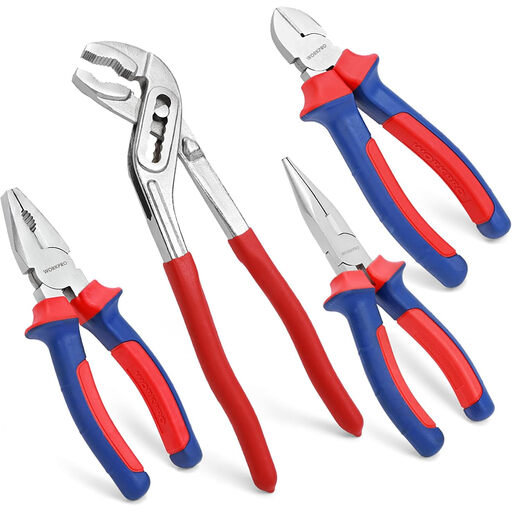
Why This Fits Their Persona: A practical starting point for flat-pack assembly, home maintenance, basic plumbing tasks and general DIY work around a UK home.
It avoids relying on one general-purpose tool by including four distinct plier types, each intended for a different task.
Includes combination, long nose, side cutter and 244mm water pump pliers, with PP and TPR textured handles.
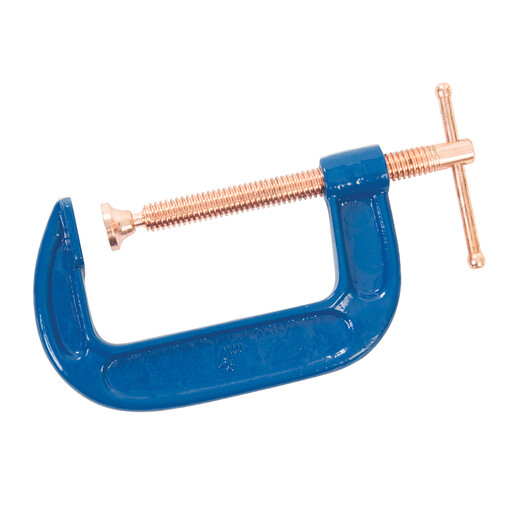
Why This Fits Their Persona: Suitable for workshop users who need a fixed clamp for woodworking, fabrication or holding components during assembly.
The stated 100mm size, reinforced shoulders and swivel shoe make its intended clamping role clearer than a vague “heavy-duty” label.
Cast-iron frame, steel copper-plated thread, tommy bar handle and corrosion-resistant finish.
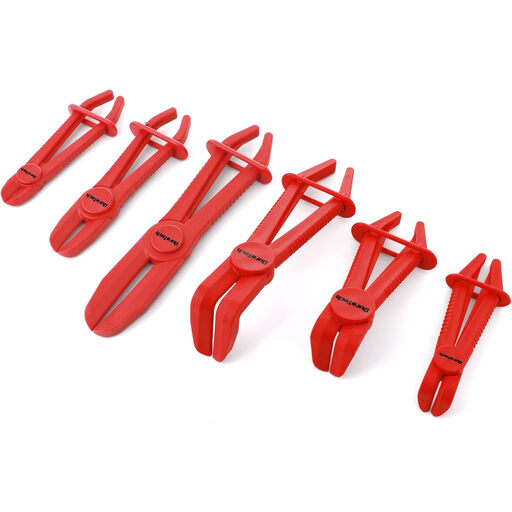
Why This Fits Their Persona: Designed for mechanics and vehicle maintenance users handling flexible fuel, coolant, radiator or brake hoses.
The set states its limits clearly: it is not for hard, reinforced or high-pressure lines. This helps prevent unsuitable use.
Six straight and angled sizes, PA6 reinforced nylon construction, locking buckles and anti-slip handles.
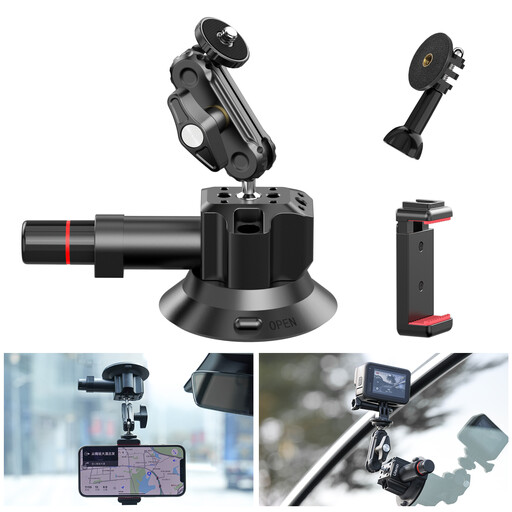
Why This Fits Their Persona: A compact option for vloggers, action-camera users and drivers who need temporary mounting on a suitable smooth surface.
It highlights the need for a stable surface and secure fastening rather than implying that suction mounting works on every dashboard or window.
A 3-inch suction mount with smartphone clamp compatibility and a 1/4-inch magic arm connection.
No. A clamp generally holds a workpiece or device in position, often for longer periods. Pliers are handheld tools for gripping, cutting, bending or compressing. Some specialist products, such as hose clamp pliers, combine handheld operation with a locking function.
Wipe away dirt, moisture and residue after use. Lightly lubricate threaded parts on G-clamps and keep steel tools in a dry location. Check jaws, handles, threads, locking mechanisms and mounting points for cracks, distortion or excessive wear before use.
Only for tasks where the circuit is isolated and the tool is suitable for the specific job. Ordinary pliers should not be treated as insulated tools for live electrical work. Follow relevant UK workplace procedures, use appropriate PPE and select tools with clearly stated electrical ratings where required.