Teacher printing regular worksheet batches
If you mainly prepare black-text A4 handouts, focus on how often you will refill paper or ink and whether you need automatic two-sided printing. Photo-printing features may matter less to this workload.


For regular A4 handwriting sheets, consider a refillable ink-tank printer, then choose its paper handling to match the workload rather than relying on its stated ink yield alone. Automatic two-sided printing matters for double-sided packs; an automatic document feeder matters if staff also copy or scan multi-page originals. For frequent shared batches, check tray capacity, rated mono speed and the school’s approved network setup.
If you mainly prepare black-text A4 handouts, focus on how often you will refill paper or ink and whether you need automatic two-sided printing. Photo-printing features may matter less to this workload.
If you also work from multi-page originals, check for an automatic document feeder. For occasional single-sheet copies, a flatbed may be sufficient.
Repeated batches and access by several staff members make paper capacity and an approved connection method important. Include the printer in the school’s purchasing and data-protection processes.
Start with the number and timing of worksheet batches, then decide whether the same device must copy, scan or serve several staff members.
| Concern | What to check | Who this matters to |
|---|---|---|
| Consumable interruptions | Check the supplied ink, replacement-bottle availability and the basis of any stated page yield. | I print handwriting sheets regularly and want fewer pauses to replace ink, while recognising that stated yields do not predict my worksheet output. Around 29% of consumers put consumable continuity first. |
| Whole-class batches | Compare rated mono speed and tray capacity, and confirm whether two-sided printing is automatic. | When handouts are needed before a lesson, waiting, reloading paper and turning sheets can disrupt preparation; around 36% of consumers prioritise batch handling. |
| Copying and scanning | Check for an automatic document feeder and its sheet capacity if you handle multi-page originals. | I regularly copy or scan lesson packs as well as print them, so feeding originals one at a time would be awkward. For around 21% of consumers, that workflow is the primary concern. |
| Managed sharing | Confirm the school’s purchasing and IT processes, permitted connection method and handling of printed or scanned personal data. | Several staff members will use one device, and it needs to fit our school’s approved setup; around 14% of consumers place managed sharing first. |
Brother and Canon publish model-specific page yields, but worksheet coverage, colour use and maintenance affect how far ink goes in practice.
Check the test basis and what comes with the exact printer, then consider how many pages your classroom normally prints.
Manual two-sided printing still requires staff to turn sheets. HP identifies its Smart Tank 5100 Series as using manual two-sided printing.
Look for automatic duplex in the exact model’s specifications and prepare the worksheet layout for double-sided A4 printing.
Turning sheets manually adds staff handling time for repeated packs.
A flatbed can be suitable for single sheets, but feeding multi-page originals individually takes more attention. Brother lists a 20-sheet feeder for the DCP-T780DW; Canon lists a 50-sheet feeder for the MAXIFY GX6150.
If copying or scanning packs is routine, compare feeder capacity. If it is not, avoid choosing a feeder solely for worksheet printing.
A printer used for pupil-identifiable material needs to fit the school’s handling procedures. The Department for Education says schools must maintain and regularly review data-protection policies and procedures.
Ask the school’s IT team to approve the connection and follow its process for access, printer placement and scanned files.
The DCP-T780DW is a refillable multifunction option for recurring handouts and some multi-page copying or scanning.
The MAXIFY GX6150 is worth assessing where frequent batches and multi-page originals make paper handling important.
The EcoTank ET-2850 provides a print, scan and copy route to assess for more modest worksheet output.
The Smart Tank 5105 is a refillable print, copy and scan option to assess for lighter use.
These printers offer different options to assess for classroom worksheets and related copying or scanning. Check A4 support, paper handling and the school’s connection requirements for the exact model you choose.
 No image available
Consider this model if several staff members print batches and also copy or scan multi-page originals.
Canon lists a 24.0 images-per-minute mono rating, a 50-sheet document feeder, Wi-Fi and Ethernet. The Joybuy description lists automatic two-sided printing and a 350-sheet paper capacity.
Canon lists its weight at 11.6 kg, so check placement and obtain school IT approval before connecting it.
 No image available
Consider this model if one device needs to print A4 worksheets and also copy or scan lesson materials.
The product name identifies print, scan and copy functions and Wi-Fi. Check its paper handling and the school’s approved connection method before choosing it.
 No image available
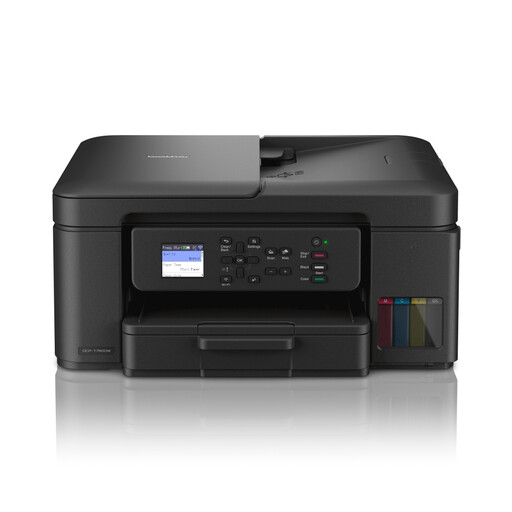
Consider this model for regular handouts when you also copy or scan multi-page lesson material.
Brother lists automatic two-sided printing, a 150-sheet input tray, a 20-sheet document feeder, Wi-Fi and an output rating of up to 16 images per minute.
Check that its connection options fit the school’s approved setup. Brother’s stated ink yields do not predict the number of classroom packs you will print.
 No image available
Consider this inkjet all-in-one if the classroom needs more than worksheet printing.
Confirm A4 paper support, copying and scanning functions, paper handling and the school’s approved connection method for this exact model before buying.
An ink-tank model is worth considering when handwriting sheets are printed regularly and replacing cartridges would interrupt work. Check the supplied ink and replacement bottles for the exact model; manufacturer page yields are not a promise of how many worksheet packs it will produce.
It is useful if the worksheets are designed for both sides of A4 and staff regularly print double-sided packs. Brother lists automatic two-sided printing for the DCP-T780DW, while HP identifies the Smart Tank 5100 Series as manual two-sided, so check the exact model rather than assuming the feature is standard.
Not for printing worksheets alone. A feeder becomes useful when staff repeatedly copy or scan multi-page originals; Brother lists a 20-sheet feeder for the DCP-T780DW and Canon a 50-sheet feeder for the MAXIFY GX6150.
Follow the school or trust’s approved IT process before connecting it. If the printer handles personal data, its access, placement and output handling should fit the school’s procedures; the Department for Education says schools must maintain and regularly review data-protection policies and procedures.