Teachers naming a small set of trays
A built-in keyboard lets you make short labels at a classroom desk without setting up a computer. Brother UK identifies classroom trays as a P-touch labelling use.


For a few short tray names, choose a standalone label maker that prints without computer setup. For repeated, coordinated labels or a wider layout, consider a connected model, checking its tape width and cutting workflow against the job. Whichever printer you choose, test compatible tape on a representative tray, especially if labels will be wiped or frequently handled.
A built-in keyboard lets you make short labels at a classroom desk without setting up a computer. Brother UK identifies classroom trays as a P-touch labelling use.
When trays, folders and supplies need consistent labels, connected design, stored layouts or automatic cutting may reduce repeated entry. Check which of those functions the specific printer offers.
If tray fronts are regularly touched or wiped, make tape choice part of the printer decision. DYMO UK distinguishes standard D1 tape for clean, flat surfaces from Durable D1 tape intended for more demanding exposure.
For classroom trays, decide how you will create the labels, how many you need to make and what the tray surface must withstand.
Choose when: You need a manageable number of short tray names entered directly on the machine.
Trade-off: A 12 mm width limit and manual cutting are less convenient for broad layouts or repeated runs, as on the Brother PT-D210VP.
Choose when: You want to move the printer around but sometimes design labels on a computer, as the DYMO LabelManager 280 permits.
Trade-off: The LabelManager 280 still has a 12 mm maximum tape width; computer-based design also requires a compatible system.
Choose when: Whole-classroom relabelling calls for wider layouts and less manual cutting. The Brother PT-D610BTVP supports tape up to 24 mm and has an automatic cutter.
Trade-off: It is a larger desktop machine, so decide whether those functions matter for your usual labelling runs.
| Concern | What to check | Who this matters to |
|---|---|---|
| Simple tray naming | Check for a built-in keyboard, suitable power option and enough tape width for a short name. | If I only need to name a few trays, I want to print at my desk without opening software. Around 33% of consumers put this computer-free workflow first. |
| Repeated layouts | Check device compatibility, available tape widths and whether saved designs or automatic cutting suit repeated runs. | When I am relabelling a classroom, I need consistent layouts without re-entering each design. Around 42% of consumers prioritise that repeated-label workflow. |
| Label durability | Check tape compatibility and adhesive suitability for the tray plastic; test a label against normal handling and cleaning. | If trays are handled and wiped often, I need the labels to remain readable. For around 25% of consumers, that is the primary concern. |
A short name may fit a narrow label, while a layout with larger text or symbols may need more space. Brother UK specifies tape up to 12 mm for the PT-D210VP and up to 24 mm for the PT-D610BTVP.
Measure a representative tray front and decide what the printed label must contain before selecting a printer.
DYMO UK positions standard D1 tape for clean, flat surfaces and Durable D1 tape for exposure that includes moisture, cleaners and abrasion. Neither description guarantees adhesion to every tray.
Check that the tape fits the exact printer, then test it on the tray material before making a full set.
Computer design, stored layouts and automatic cutting serve repeated or more complex jobs; they need not determine a purchase for a few direct-entry tray names.
Decide whether staff will regularly reuse layouts or produce labels in batches before making those functions a requirement.
The Health and Safety Executive says the law does not prescribe a fixed frequency for portable appliance testing. Equipment still needs to be maintained safely, and a school may have its own inspection procedure.
Ask which electrical-safety checks the school requires for the printer and inspect the equipment for damage before use.
Brother UK presents P-touch machines for education uses including classroom-tray labelling.
DYMO UK presents its LabelManager range and D1 tapes for school organisation.
Epson United Kingdom lists handheld LabelWorks machines as another label-making format.
These label printers offer different formats for preparing classroom-tray labels, from a desktop label-and-address printer to portable models. Check each printer's compatible labels against your tray fronts and cleaning routine.
 No image available
For a run of classroom-tray labels prepared at a desk, check that the printing workflow fits the computer you plan to use.
Confirm that compatible labels have the right size and adhesion for the trays, then test one before producing the full run.
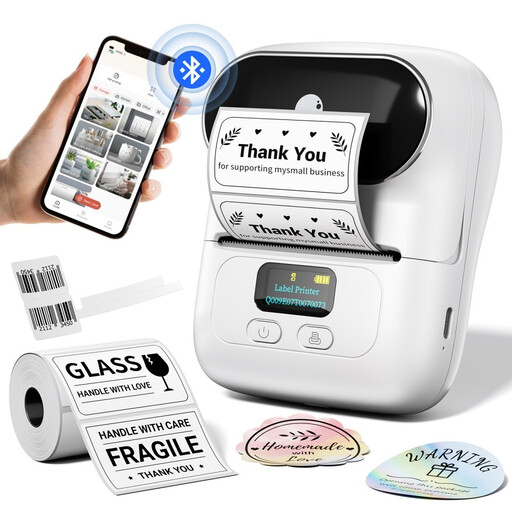 No image available
For staff who want to prepare tray labels while moving between work areas, check whether its mobile workflow suits the devices they use.
Check the supplied roll's size and adhesive against the tray material and cleaning routine before labelling a full set.
 No image available
For occasional short tray names, measure the intended layout against its stated 0.59 inch label width.
If you plan to create labels on a phone or tablet, check device compatibility and test the compatible label material on a tray.
Not if short names fit the tray fronts at a readable size. Brother UK specifies tape up to 12 mm for the PT-D210VP and up to 24 mm for the PT-D610BTVP; measure a tray front if you want larger text, extra lines or symbols.
DYMO UK says standard D1 tape adheres to clean, flat plastic, but that does not establish how it will behave on every tray texture or under cleaning. Try one label on a representative tray before making a classroom set.
Consider it when tray labels will be wiped, rubbed or exposed to moisture. DYMO UK positions Durable D1 tape for resistance to exposure including cleaners and abrasion; check that the exact tape fits your printer and test it on the tray.
An annual interval is not a universal legal requirement in Great Britain: the Health and Safety Executive says the law does not prescribe how frequently portable appliance testing must be done. Follow the school's electrical-safety procedure for the checks appropriate to its equipment and use.