
24/7 Customer Support

Free returns

Same-day & Next-day Delivery

Quality Guaranteed

Unlock Your Welcome Offers: FREE Delivery | Up to 80% OFF | Free 30-day JoyPlus trial
Download the APP
“Clay products” covers a surprisingly broad range, from modelling clay and Play-Doh playsets to clay masks, matt hair clay and clay paint sample pots. That variety is useful, but it also creates common buying traps. A product designed for a five-year-old’s craft table is not interchangeable with an air dry clay project, while a pore-cleansing clay mask should be judged by its ingredients and directions rather than its packaging.
This guide explains what to check before buying, then matches selected products to different users and budgets.
Plasticine and similar modelling compounds are designed to remain workable. That makes them suitable for repeated children’s clay activities, colour mixing and temporary models. Air dry clay, by contrast, is selected when the finished object needs to set at room temperature.
Check the product description carefully. A non-hardening material is not suitable if you want a permanent decoration, while air-drying material may be unsuitable for repeated reworking after it has cured.
A large tub or playset may look good value, but consider what is actually included. A child interested in pretend cooking may benefit from moulds, presses and serving accessories, whereas a hobby modeller may need separate clay modelling tools for cutting, smoothing and detailing.
Also check the quantity of compound supplied. Some themed sets contain several small cans rather than a large block of material.
A skincare clay mask is formulated for the face, while hair styling clay is designed for hold and texture. Neither should be substituted for the other. For skincare, review the full ingredient list, intended skin type and recommended contact time. For hair products, compare hold, finish, application method and wash-out instructions.
Marketing phrases such as “detoxifying” or “all-day” should not replace practical checks. Look for user-perceivable features, such as a matt finish, a stick format or a stated hold level.
For creative projects, decide whether you need reusable modelling clay, air dry clay or a ready-made Play-Doh playset. Reusable clay is convenient for open-ended play, while air dry clay is more appropriate for models intended to harden.
For decorating, a clay paint sample can help you assess colour and finish under your home’s lighting before buying a larger tin. For example, a 40ml matt emulsion sample can be practical for testing an interior wall shade, but check whether the paint is washable and whether it is suitable for walls and ceilings.
Children’s clay products can include small parts, sharp-edged tools or compounds that contain wheat. Follow the stated age guidance and supervise children where required. Do not assume that “non-toxic” means edible. Remove packaging before play, keep compound away from mouths and wash hands and surfaces afterwards.
In the UK, check the packaging for the applicable conformity and safety information, follow the manufacturer’s warnings and avoid products with unclear age guidance.
For a skincare clay mask, compare ingredients such as kaolin, bentonite, charcoal or salicylic acid, but do not assume that more active ingredients means greater suitability. Sensitive or irritated skin may need a simpler formula and shorter contact time. Avoid the eye area and stop use if irritation develops.
For a matt hair clay, check whether it is designed for short or medium-length hair, how much to apply and whether it is reworkable. Starting with a pea-sized amount can reduce waste and prevent an overly heavy finish.
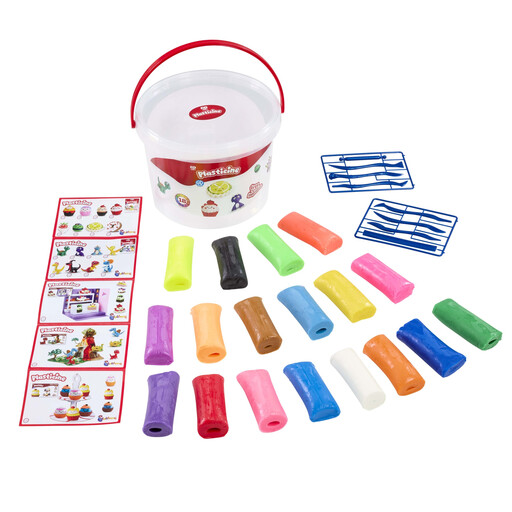
Why This Fits Their Persona: A practical starting point for families wanting repeat-use modelling clay, with 18 colourful sticks, a tool, instructions and a carry bucket for storage.
The non-hardening material avoids the disappointment of a tub becoming unusable after one session, provided it is stored properly.
18 colours, included modelling tool, carry handle and stated suitability from age five.
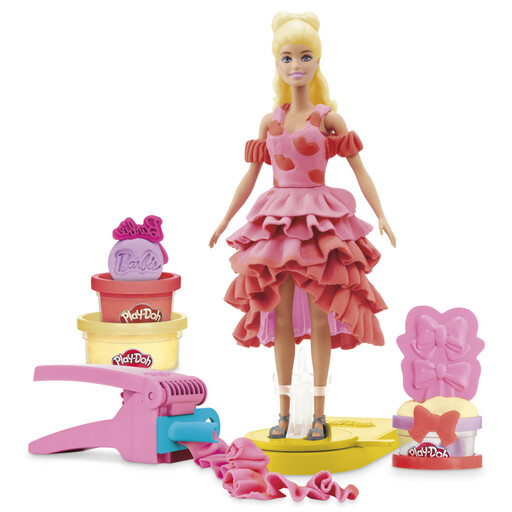
Why This Fits Their Persona: Designed for children who enjoy themed, imaginative play and a wider selection of tools, accessories and creative prompts.
The playset’s purpose is clear: it combines a workstation, runway, doll, pattern sheets and styling tools rather than relying on compound alone.
Includes five cans, two pattern sheets, hair moulds, cutters and display accessories; suitable from age five.
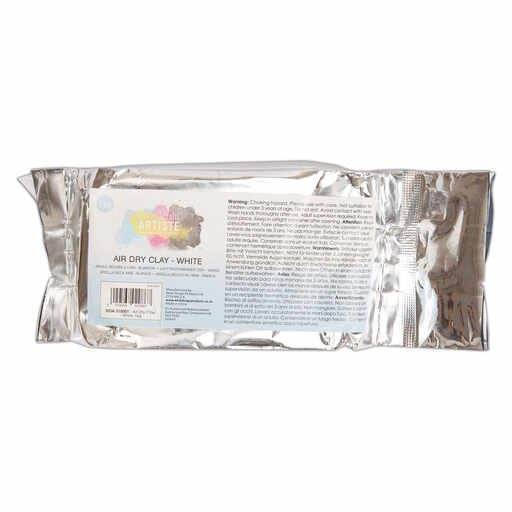
Why This Fits Their Persona: A sizeable material option for educators, animators, hobbyists and group craft sessions requiring more than a small project pack.
The 1kg quantity is easier to allocate across multiple projects, while the product information gives storage, temperature and drying guidance.
White clay, wheat and gluten free, suitable for mixed-media work, animation and educational activities.
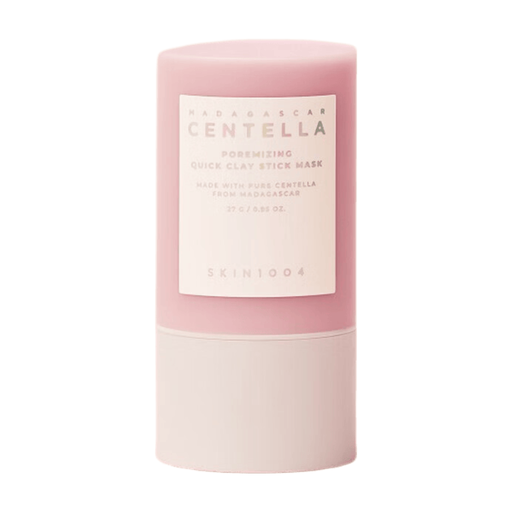
Why This Fits Their Persona: The twist-up format suits shoppers who want a targeted weekly skincare clay mask with less mess during application.
Its stated three-to-five-minute use time helps avoid leaving clay on until it becomes uncomfortably dry; users should still follow the label and rinse thoroughly.
Stick application, five clays listed in the description and 27g net content; intended for external use.
Non-drying modelling clay can remain usable for repeated sessions when returned to its container and kept away from heat, dust and direct sunlight. Air dry clay has a working window that depends on thickness, room temperature and humidity. Seal unused material as directed and allow finished pieces to dry fully before handling.
It can be suitable when the product’s age guidance allows it and an adult supervises where stated. Check for small parts, hygiene instructions and warnings against ingestion. Children under the listed minimum age should not use the product.
Follow the product instructions rather than applying it daily by default. Some masks specify once or twice weekly, while formulas containing exfoliating ingredients may require additional care. Avoid applying a mask to broken or irritated skin, rinse if discomfort occurs and use moisturiser afterwards if appropriate.