
24/7 Customer Support

Free returns

Same-day & Next-day Delivery

Quality Guaranteed

Unlock Your Welcome Offers: FREE Delivery | Up to 80% OFF | Free 30-day JoyPlus trial
Download the APP
A clear cylinder flower vase can make stems, colours and decorative details the focus of a display. It can also become an awkward purchase if the proportions, material or base stability are overlooked. A vase that looks suitable in a product photograph may be too narrow for a generous bouquet, too fragile for a busy venue or difficult to clean after dried foliage sheds.
This guide helps UK shoppers, florists, wedding organisers and home decorators compare a glass flower vase, acrylic flower vase and other transparent vase styles before ordering.
A tall vase is not automatically suitable for large flowers. Check the diameter as well as the height. A narrow cylinder vase can work neatly with tulips or a few orchid stems, but a wide arrangement may look crowded or become unstable if the base is not proportionate.
For a large bouquet, pampas grass or a dramatic wedding display, consider how much room the stems need to spread. Also allow space above the rim so flowers do not appear compressed.
Transparent products can be made from different materials. Glass usually provides a weightier feel and a polished appearance, while a shatterproof plastic vase made from transparent PET acrylic is lighter and less likely to break into sharp fragments if knocked.
Neither material is automatically suitable for every setting. Glass may be preferred for a formal dining table or premium-looking display. Acrylic can be more practical for children’s parties, busy venues, outdoor-covered events or repeated transport.
A vase needs a stable, flat surface, particularly when filled with water. Avoid placing tall designs on narrow shelves or near the edge of a table. Product descriptions may not specify a maximum load, so avoid overloading a vase with heavy branches, stones or decorative fillers.
Clear surfaces also show water marks, dust and fingerprints. Look for a smooth opening that can be wiped easily, and use mild soap, water and a soft cloth rather than abrasive cleaners that may scratch acrylic or dull the surface.
Choose according to the environment and handling required:
A large clear vase measuring around 30 cm high can accommodate taller arrangements, including roses, orchids and pampas grass. A 20 cm vase may be easier to style on a coffee table, bedside table or compact dining setting.
Diameter affects both visual balance and stability. A 10 cm-wide cylindrical vase can provide more room for a fuller display than an 8.5 cm design, while a narrower opening helps keep a smaller number of stems upright.
Match the design to the display:
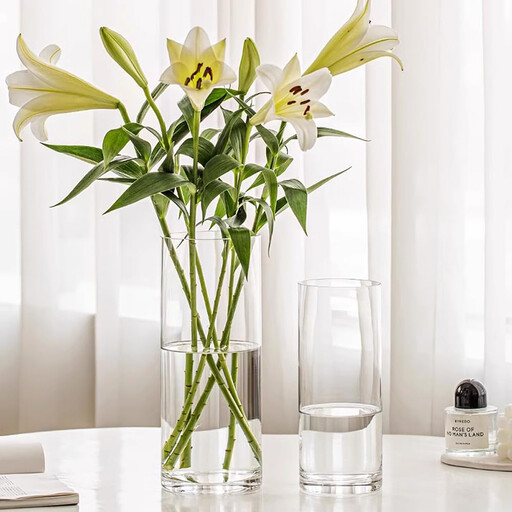
Why This Fits Their Persona: The multi-piece format gives renters, DIY decorators and first-time arrangers several vessels for coordinated displays without needing to buy each height separately. The lightweight format is also easier to move between rooms or event spaces.
The listed material is thickened transparent PET acrylic rather than conventional glass, reducing the risk of shattering during everyday handling. Different heights also avoid relying on one vase size for every arrangement.
Three-piece option; lightweight, transparent PET acrylic; suitable for fresh or dried flowers and craft displays.
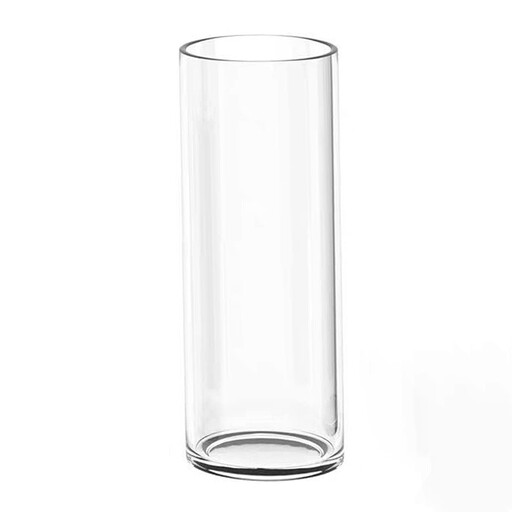
Why This Fits Their Persona: Its 30 cm height and clear glass construction suit formal arrangements in a UK dining room, hallway or reception area where a polished, substantial vessel is preferred.
The dimensions are clearly listed as 30 cm high and 10 cm in diameter, helping buyers assess proportion before ordering instead of judging scale from photographs alone.
High-quality glass; smooth polished surface and edge; suitable for orchids, roses, tulips, pampas grass or candle displays.
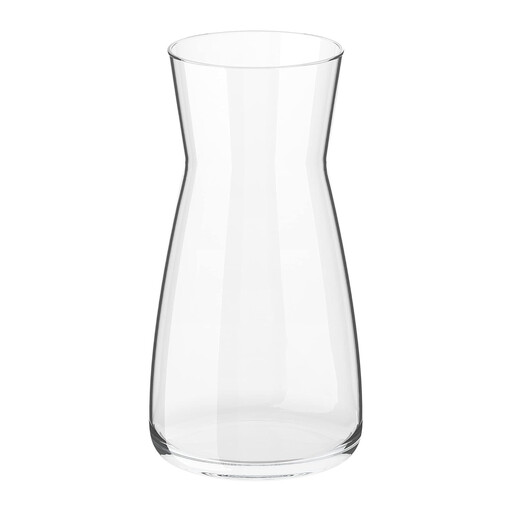
Why This Fits Their Persona: The 20 cm profile is suited to compact table arrangements, tulip displays and wedding décor where a lower centrepiece can help preserve visibility across the table.
The listed 8.5 cm diameter and thickened bottom give a clearer indication of its footprint. The defined dimensions make it easier to plan grouped centrepieces accurately.
20 cm height; thickened bottom; smooth polished opening; suitable for fresh or dried floral designs.
Before adding water, place the vase on a level, stable surface and check that it is not close to the edge of a table. For glass designs, keep the vase away from areas where children or pets could knock it. For acrylic, avoid abrasive sponges and harsh cleaners that may mark the transparent finish.
Trim flower stems at an angle and remove leaves that would sit below the water line. Change water regularly when using fresh flowers, and dry the outside of the vase to prevent rings on wooden or painted surfaces. For dried flowers, remove loose foliage outdoors or over a sheet that can be folded and discarded.
We have compiled a complete, real-time list of products that fully satisfy these strict selection criteria and UK safety regulations.
Glass can provide a weightier, formal appearance, while acrylic is lighter and shatterproof. For venues with frequent movement, children or limited storage, transparent PET acrylic may be easier to handle. For a carefully managed indoor reception, glass may suit the preferred visual style.
The correct height depends on the flower stems and the intended arrangement. A 20 cm vase can suit compact tulip displays and low table decorations. A 30 cm large clear vase offers more height for roses, orchids, pampas grass and taller arrangements. Always compare the vase diameter with the number of stems.
Use mild soap, clean water and a soft cloth. Empty and rinse a vase regularly when it holds fresh flowers, and remove residue before it dries. Avoid abrasive cleaners, especially on acrylic surfaces, and keep the vessel on a stable surface to reduce the chance of knocks or tipping.