
24/7 Customer Support

Free returns

Same-day & Next-day Delivery

Quality Guaranteed

Unlock Your Welcome Offers: FREE Delivery | Up to 80% OFF | Free 30-day JoyPlus trial
Download the APP
Clear plastic storage boxes can make a cupboard, loft, bedroom, office or garage easier to manage because you can see what is inside without opening every container. However, a low price or transparent finish does not automatically mean a box will suit your space or withstand regular use.
The most useful choice depends on dimensions, polypropylene thickness, lid design, stacking stability and intended contents. This guide explains the practical details to check before buying, then matches several options to different UK household needs.
A box described as “large” may not fit beneath a bed, inside a wardrobe or on a particular shelf. Capacity also does not tell you whether the shape will accommodate folded clothing, A4 folders, toys or awkward household items.
Before ordering, measure:
For compact shelves and desks, low-profile A4 storage boxes may be more practical than deep containers. For seasonal clothing or bulky toys, large storage boxes with a taller body may make better use of available floor or wardrobe space.
Transparent plastic varies considerably in thickness and structure. Thin walls may be suitable for occasional light items, but repeated lifting, stacking or storage in a busy garage can place more strain on the base and corners.
Look for polypropylene (PP) construction, reinforced areas and a stated body thickness where available. A 2.5mm thickened body, rounded corners and three-dimensional reinforcing ribs provide more information than vague wording such as “heavy duty”. They do not remove the need to follow the recommended load limit, but they indicate how the box has been designed to handle everyday use.
Stackable plastic storage boxes need more than a flat lid. A secure lid fit, anti-slip base and box shape that sits evenly above the container are important for reducing sliding. An unstable stack can waste space and create a handling hazard, particularly in a hallway cupboard or garage.
Check whether the boxes are intended to stack with their lids fitted, and avoid placing overweight items in upper containers. Keep plastic storage away from open flames, high temperatures and prolonged direct sunlight, as heat can deform some materials.
For general household use, durable polypropylene storage boxes are a practical option because PP is lightweight and commonly used for rigid storage products. The product description should ideally specify the material rather than simply stating “plastic”.
Useful structural features include:
Clear plastic helps with visual inventory, but it should not be treated as a complete substitute for labelling. A small label on the front can identify contents quickly when several boxes contain similar items.
Transparent storage containers with lids are useful for clothing, paperwork, craft supplies and general household belongings because the lid helps shield contents from dust and accidental spills. Snap-on lids should close securely without requiring excessive force.
For frequently accessed items, handles and an easy-opening lid can matter more than maximum capacity. For long-term seasonal storage, prioritise a firm closure and a box that can be moved safely when full.
A plastic storage boxes pack of 4 can provide consistent sizing across a shelf or cupboard, while individual larger storage boxes may be more suitable for quilts, coats or children’s toys. Compare the measurements of each box, not just the total number supplied.
Typical matching considerations include:
Do not store food directly in a general-purpose box unless the product is specifically indicated as suitable for food contact. Kitchen storage containers should be selected according to their stated use and care instructions.
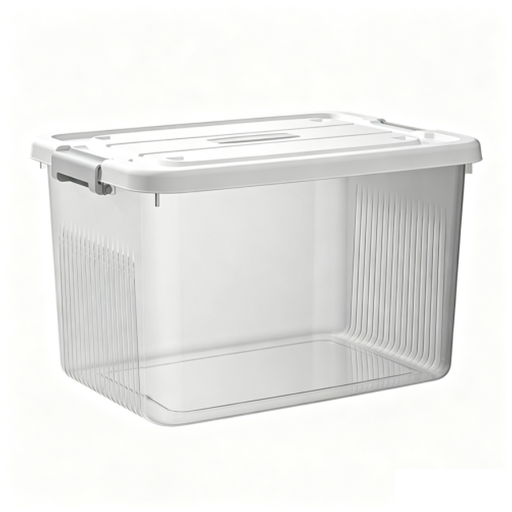
Why This Fits Their Persona: A four-box set gives renters, students and first-time organisers a consistent starting point for cupboards, bedrooms, balconies or car storage. The medium dimensions suit everyday belongings without committing to oversized containers.
The stated 2.5mm body, reinforcing ribs, anti-slip bottom and snap-on lid provide clearer construction information than a generic thin plastic tub.
Pack of four; clear PP body; built-in handles; designed for stacking and visual storage.
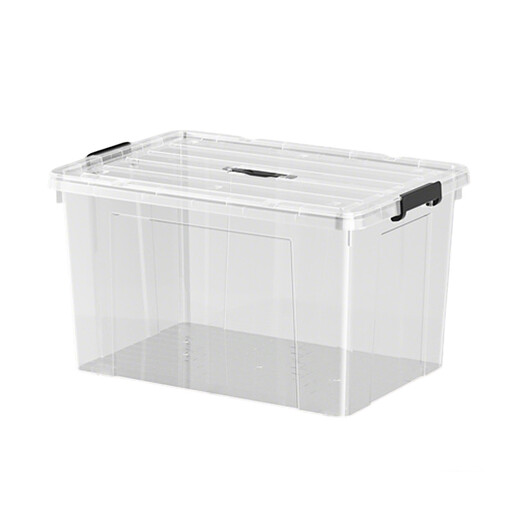
Why This Fits Their Persona: The larger 51×39×27cm format is suited to households wanting a coordinated set for seasonal clothes, baby supplies, toys or balcony storage.
Its specified thickened body, rounded corners, reinforcing ribs and anti-slip base address concerns about flimsy walls and sliding stacks.
Larger four-piece set; 2.5mm PP body; secure snap-on lids; ergonomic side handles.

Why This Fits Their Persona: The low-profile 4L design is a practical match for office workers, students and crafters organising A4 paper, files, stationery or small supplies on desks, shelves and in drawers.
The stated 39.5 × 25.5 × 8.8cm outer dimensions make shelf planning easier, while the reinforced base and corners provide useful structural detail.
Four transparent 4L boxes; clip-close removable lids; stackable with or without lids; low-profile format.
Use clear boxes where visibility saves time, such as children’s craft materials, spare cables, seasonal accessories or cleaning cloths. Opaque alternatives can be preferable for items sensitive to light or for creating a less visually busy room.
For kitchens, ventilated produce storage may be more appropriate than sealed boxes. A collapsible storage basket can fold away when empty and is designed for airflow around fruit and vegetables. It should be kept away from heat and open flames, cleaned with a damp cloth and not overloaded.
In offices and study areas, group items by task rather than simply by type: printing supplies, correspondence, stationery and craft tools can each have a labelled container. This reduces the need to repeatedly open several boxes to find one item.
We have compiled a complete, real-time list of products that fully satisfy these strict selection criteria and UK safety regulations.
They can be useful for lofts and garages, provided they are kept away from open flames, high temperatures and prolonged direct sunlight. Check the load guidance before stacking, and avoid storing overweight items that could deform the box or lid.
There is no single lifespan because usage, weight, sunlight, temperature and handling all affect durability. Boxes with a thickened body, reinforced corners and a stable lid are designed with more structural support than very thin containers. Cleaning with a damp cloth and avoiding sharp objects can help maintain their condition.
They do not directly reduce energy or utility costs. Their practical benefit is improved visibility and space use, which may reduce duplicate purchases and make cupboards easier to manage. For kitchen storage containers, choose products according to their stated food-use suitability rather than appearance alone.