Solo back-of-head trimmers
If you cut your own hair and find the crown or rear neckline awkward to reach, consider a self-cut design with an angled or rotating head. Check whether you can hold it comfortably while looking in a mirror.


Choose an angled or rotating self-cut clipper if holding the cutting head steady against the back of your head is your main difficulty. For a neckline tidy or short back and sides, a conventional cordless clipper may suit you if its guards match your intended length and you can check your work with mirrors; look for a taper lever if you want to blend between lengths. Neither design removes the need to work slowly where you cannot see directly.
If you cut your own hair and find the crown or rear neckline awkward to reach, consider a self-cut design with an angled or rotating head. Check whether you can hold it comfortably while looking in a mirror.
If you mainly tidy a short back and sides or maintain a fade between barber visits, guard lengths and a taper lever may matter more than a specialist head shape. You will still need mirrors to inspect the back as you work.
If you want a repeatable short trim rather than a detailed fade, focus on a guard or setting that gives your intended length, a grip you can control and enough cordless runtime to work without rushing.
For a solo rear-head trim, decide whether reach or precise length matching is the harder part of the cut. An angled head, a rotating head and a conventional clipper address those needs differently; whichever you choose, check its actual cutting range and power arrangements.
Consider it when: Holding a standard clipper flat against your own crown and rear head is the main obstacle. Wahl describes its Self-Clip 360 blade and dual-sided grip as designed for self-cutting.
Check: The available guard lengths still need to suit your cut; the rear-access benefit is a manufacturer design claim, not a substitute for checking your work.
Consider it when: Changing the cutting angle behind your head is the priority. Philips specifies a 180° rotating head on the QC5570/13.
Check: The QC5570/13 has a stated maximum setting of 15 mm, so confirm that its range suits the length you want and that the model is currently available to buy.
Consider it when: You can inspect the back with mirrors and mainly need to maintain a neckline, match the sides or blend a short cut.
Accept: Guards and a taper lever provide length control, but the familiar clipper shape does not itself improve your view or access behind your head.
| Concern | What to check | Who this matters to |
|---|---|---|
| Rear-head reach and control | Look for a stated angled or rotating head and a grip you can hold steadily; check that the length range also suits your cut. | If I struggle to keep the clipper steady around my crown and rear neckline, easier control matters more to me than extra styling options. Around 36% of consumers would put rear-head access first. |
| Length and blending | Confirm the supplied guards and their millimetre lengths; check for a taper lever if you intend to blend. | When I tidy the back between haircuts, I want it to match the sides rather than leave a visible step. For around 29% of consumers, matching or blending the length would be the primary concern. |
| Power while trimming | Check the stated cordless runtime and whether the exact model can also run while plugged in. | I need room to move between mirrors without a lead pulling across my hands, but I do not want the cut interrupted by a flat battery. Cordless movement and continuity would come first for around 21% of consumers. |
| Cleaning and electrical setup | Follow the model-specific cleaning instructions and check the supplied plug and charging arrangement. | If upkeep or an unfamiliar charger would make regular trimming difficult, I want those details settled before buying. Around 14% of consumers would prioritise care or electrical setup. |
More guards give you more length choices, but they do not change how easily you can hold a clipper against the back of your own head.
Decide whether rear-head access, blending or a uniform trim is your priority before comparing guards, head shape and grip.
Power and cleaning options vary by model. Philips describes the QC5570/13 as usable with or without a cord and washable; other models may be dry-use only and not washable, so check the specific model’s instructions.
Check the exact model instructions before using it while plugged in or putting any part under a tap.
In a March 2022 product-safety report, the Office for Product Safety and Standards identified a serious electric-shock risk with the supplied two-pin plug and three-pin adaptor for the Kemei KM-2600. That finding concerns the named product, not all imported clippers.
Check the supplied charger and plug details for the clipper you intend to buy; do not assume that a generic adaptor makes an unfamiliar arrangement suitable.
Blending behind your own head takes more control than making a simple, even trim. Braun’s self-cutting guidance advises working slowly, and Wahl recommends checking the back with a mirror.
Establish the length you want and inspect your progress before attempting finer taper adjustments.
Wahl offers both conventional clipper guidance and the Self-Clip 360, which it positions for cutting your own hair around the back of the head.
The Philips Headgroom QC5570/13 is a rotating-head option intended for self-cutting in hard-to-reach areas.
Braun’s HC5510 represents a conventional cordless clipper route for choosing a repeatable short length.
These conventional cordless clipper kits are options for choosing a rear-trim length or maintaining a short back with mirrors. If an angled or rotating head is essential to how you cut your own hair, check that feature on the exact model before choosing one of these kits.
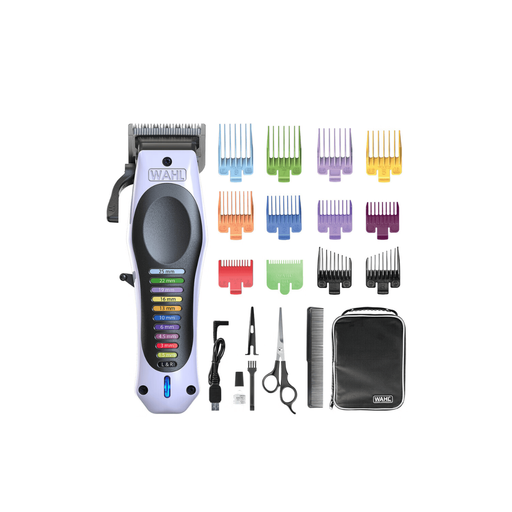 No image available
Consider this cordless kit if you want to move between mirrors while trimming the back and need to choose a consistent guard length.
Confirm that its supplied guards suit your intended cut and that its grip works for you when reaching behind your head.
 No image available
Consider this cordless kit if you want to select a length for a short back and prefer detachable blades that the product name identifies as washable.
Follow the exact cleaning instructions: washable blades do not establish that the whole clipper can be rinsed.
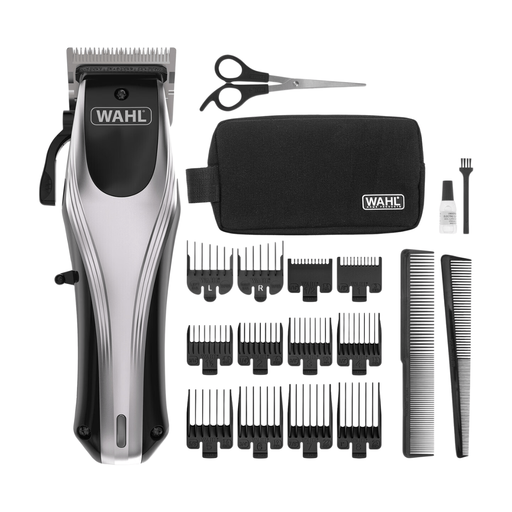 No image available
Consider this cordless kit for a short-back tidy when you can use mirrors to guide the cut.
Check the lengths of its supplied guards before buying, especially if you need to match an existing cut.
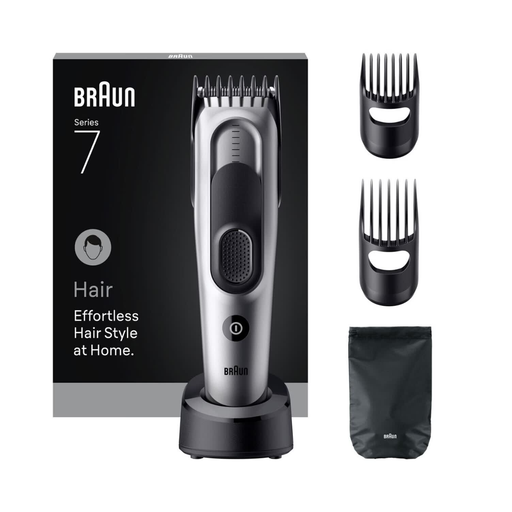 No image available
Consider this model if selecting a repeatable length matters more to you than a specialist rear-access head.
The product name specifies 17 lengths and a five-tool bundle. Confirm the supplied plug and a suitable charging arrangement for your socket before buying.
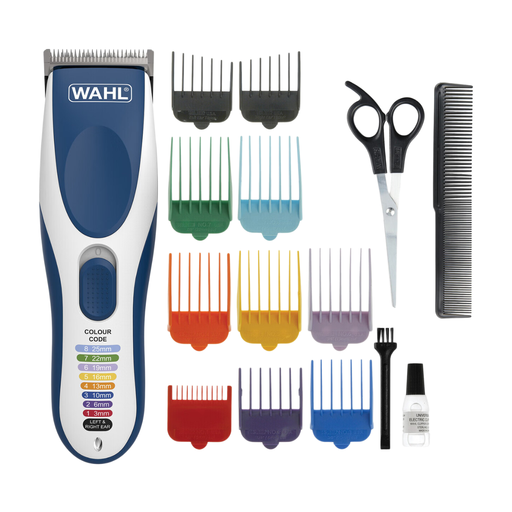 No image available
Consider this cordless kit if colour-coded combs would help you choose the same guard when tidying the back again.
Check the actual cutting lengths and cordless runtime against the trim you plan to do.
An angled or rotating self-cut design is worth considering when holding the cutting head against the rear of your head is the main difficulty. Wahl describes an angled blade on its Self-Clip 360, while Philips specifies a rotating head on the QC5570/13; with either design, use mirrors to inspect the result and check that its lengths suit your haircut.
Use a guard that matches the sides if you want an even short cut, rather than choosing a number without considering the length it leaves. For an undercut, Braun gives #1 (3 mm) and #2 (6 mm) as examples for the lower head area; choose according to how short you want that part and the style you are maintaining.
A taper lever is useful if you intend to blend between guard lengths, but it is less important for a simple one-length trim. Wahl explains that the lever changes the closeness of the cut between guide-comb lengths; you will still need mirrors and careful control when blending behind your head.
Rinse it only where the instructions for that exact model allow it. Philips describes the QC5570/13 as washable, but a claim about washable blades on another kit does not mean its entire body can go under a tap; check whether brushing or blade oil is required instead.
Check the supplied plug, charger and model documentation rather than relying on a generic adaptor. The Office for Product Safety and Standards reported a serious electric-shock risk involving the supplied plug and adaptor of the specific Kemei KM-2600, which shows why those details matter without establishing that other clippers have the same fault.