
24/7 Customer Support

Free returns

Same-day & Next-day Delivery

Quality Guaranteed

Unlock Your Welcome Offers: FREE Delivery | Up to 80% OFF | Free 30-day JoyPlus trial
Download the APP
Hello, I'm the Joybuy Product Recommendation Officer. My role is to help you find practical and reliable products for your home. With the unpredictable British weather and a close eye on energy bills, drying laundry indoors has become a weekly puzzle for many of us. A tumble dryer is one solution, but it can be costly to run and harsh on delicate fabrics.
A quality clothes airer offers a simple, cost-effective and gentle alternative. However, with so many types available—from large tiered racks to compact over-door models—choosing the right one can be confusing. This guide is designed to cut through the clutter, helping you understand the key features to look for and highlighting some excellent options for different UK homes.
Before you decide, consider these three key points. Getting this right will ensure your new laundry airer is a help, not a hindrance.
First, think about where you will use and store the airer. If you live in a flat or a home with limited floor space, a folding clothes airer that can be tucked away behind a sofa or in a cupboard is essential. Measure the area you have available. For those in very tight quarters, an over door clothes airer can be a brilliant solution, as it uses vertical space that would otherwise be wasted.
Next, consider your typical wash load. A single person or couple might only need a few metres of drying space, whereas a family will require a much larger capacity. Check the product specifications for total drying length (measured in metres) and maximum weight capacity (in kg).
The design of a clothes drying rack directly impacts its usability. The most common types you'll encounter are:
A good airer should be sturdy enough to handle wet, heavy laundry without wobbling. Models made from powder-coated steel offer a good combination of strength and resistance to rust.
Also, look for thoughtful design details. Protective caps on the feet will prevent scratches on your floors. An easy-to-use locking mechanism ensures the frame stays securely in place when in use. Some models even include extra hooks for hanging shirts on coat hangers, maximising your drying options.
Based on a review of popular designs and features, here are our recommendations for different needs and household sizes.
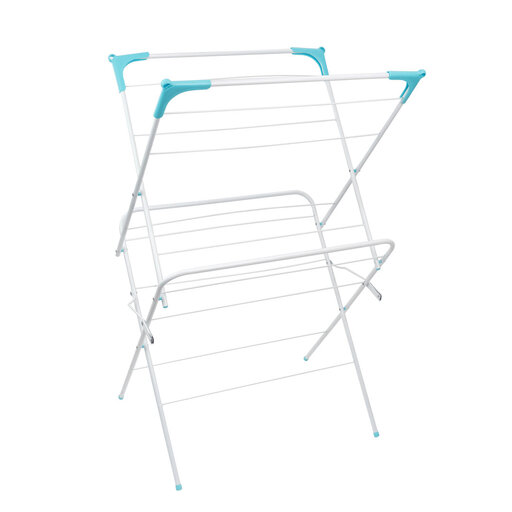
Why It Stands Out: This model is the definition of a practical all-rounder. Its classic concertina design is incredibly easy to use, and it provides a decent amount of drying space for its compact footprint, making it a reliable choice for daily laundry needs.
Pros:
Who is it for? Ideal for individuals, couples or small families living in flats or smaller homes who need a reliable, easy-to-store clothes horse.
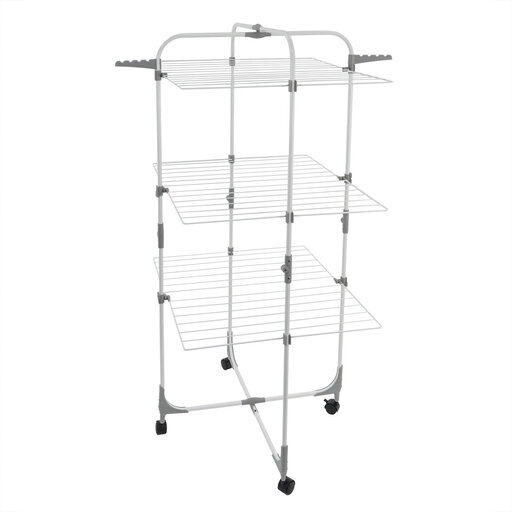
Why It Stands Out: When laundry day means tackling multiple large loads, this tiered airer delivers. It offers an impressive amount of drying space in a vertical format, and its flexible shelf system makes it adaptable for all kinds of clothing, from socks to duvets.
Pros:
Who is it for? Perfect for families or households with large, frequent laundry loads who need maximum drying capacity without sacrificing too much floor space.
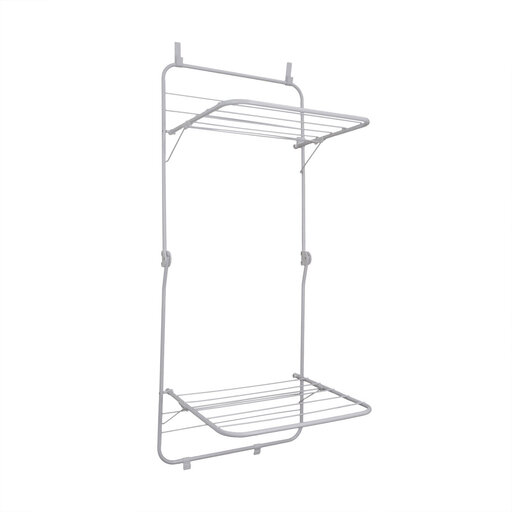
Why It Stands Out: This is an intelligent solution for anyone who thinks they don't have room for an airer. By using the often-overlooked space on the back of a door, it provides valuable drying capacity for everyday essentials without taking up any floor area.
Pros:
Who is it for? An excellent choice for students, those living in studio flats or anyone needing extra drying space for smaller washes without cluttering their living area.
The right clothes airer is a personal choice based on your home and lifestyle. If the models above aren't quite what you're looking for, there are many other styles and sizes available.
To find the perfect match for your home, feel free to explore our full collection of White Collapsible Racks.
In the UK, the terms clothes horse and clothes airer are used interchangeably to describe a frame used for drying laundry. 'Clothes horse' is a more traditional term, but both refer to the same item. You may also see them called a clothes drying rack or laundry airer.
To speed up drying time, ensure good airflow. Space your garments out on the rack, leaving a gap between each one. Place the airer in a well-ventilated room or near an open window. For thicker items, it helps to turn them over after a few hours. Using a dehumidifier in the same room can also significantly reduce drying time.
Yes, substantially. A clothes airer has no running costs, as it relies on ambient air to dry your clothes. In contrast, a tumble dryer is one of the more energy-intensive appliances in a home. Switching to an airer, even for just a few loads a week, can lead to noticeable savings on your electricity bills.