
24/7 Customer Support

Free returns

Same-day & Next-day Delivery

Quality Guaranteed

Unlock Your Welcome Offers: FREE Delivery | Up to 80% OFF | Free 30-day JoyPlus trial
Download the APP
A clothes airer can reduce reliance on a tumble dryer, but choosing the wrong design may create more problems than it solves. A rack that looks spacious online may hold fewer garments than expected, while a lightweight frame may become unstable when loaded with damp towels.
For UK households, the right choice depends on available space, ventilation, laundry volume and whether the airer will be used indoors or outdoors. Before buying, look beyond promotional phrases such as “large capacity” and check the actual drying length, load limit, dimensions and storage method.
A product may advertise a high number of metres, but this does not always mean it can accommodate bulky items comfortably. Several closely spaced bars may be suitable for shirts and smalls, yet unsuitable for towels or bedding. Check whether the design allows garments to hang freely and whether shelves can be folded or removed for longer items.
An indoor clothes airer can look compact when folded but occupy considerable floor space when open. This is particularly important in flats, utility rooms and narrow hallways. Measure the intended area, including clearance around doors, radiators and walkways. A foldable drying rack is only space-saving if it can be stored easily after use.
Damp clothing is heavier than dry clothing. A frame with a high stated capacity still needs laundry distributed evenly to prevent imbalance. Outdoor rotary airers also require a suitable ground spike or socket, while a ceiling pulley airer needs secure fixing to an appropriate ceiling structure. Renters should check whether drilling or permanent installation is permitted.
Compare both the drying space in metres and the maximum supported weight. As a general guide, a smaller winged laundry airer can suit everyday clothing, while a three-tier clothes airer or large-capacity clothes airer is more practical for family washing.
Do not treat the maximum load as a target for every shelf. Distribute heavier items such as jeans and towels across the frame, and avoid concentrating wet laundry on one side.
Check:
A tall three-tier model may offer substantial capacity without a wide footprint, but it may not suit low ceilings or rooms where overhead storage is limited.
Powder-coated iron can provide a practical indoor frame when cared for correctly, while aluminium is useful for outdoor drying because it is lightweight and resistant to rust. Look for protective feet where the airer will stand on flooring, and check whether outdoor models include essential fittings such as a ground spike, socket or cover.
For ceiling-mounted products, inspect the fixing kit and installation instructions before purchase. The supporting surface must be suitable for the intended load; do not rely on plasterboard alone unless the installation method specifically allows it.
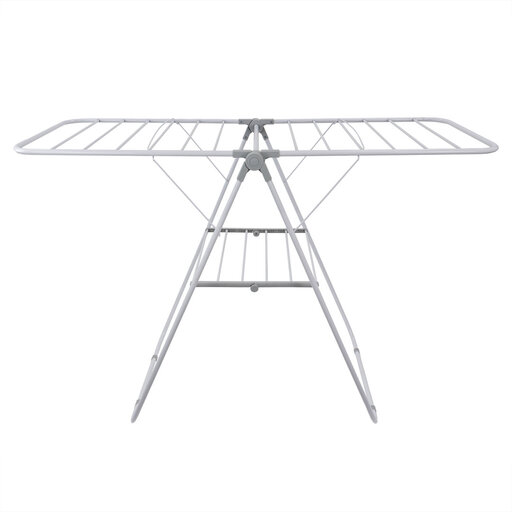
Why This Fits Their Persona: A practical option for individuals, couples and smaller households needing a reusable indoor or outdoor airer without permanent installation.
The 13 metres of drying space and multi-position wings make the usable layout clearer than a vague capacity claim. It also folds flat for storage.
13 metres of drying space; protective feet, adjustable wings and a stated 12kg capacity.
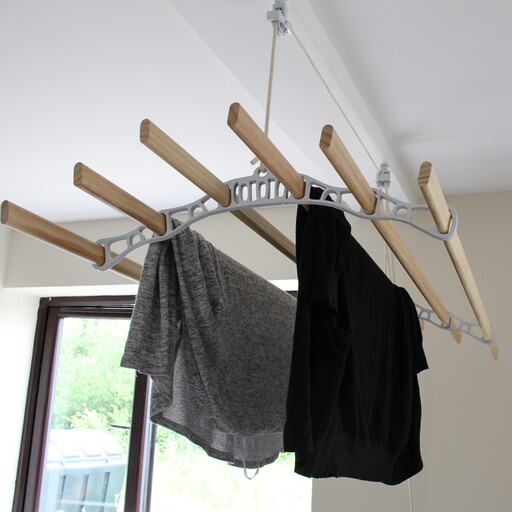
Why This Fits Their Persona: Suitable for homeowners or renters with permission to install a fixed airer in a utility room, bathroom or kitchen with an appropriate ceiling structure.
Its 1.5m length is stated clearly, and the pulley design lifts laundry away from floor space. Buyers can assess the fixing requirement before ordering.
Six pine laths; pulley operation and included fixing kit with instructions.
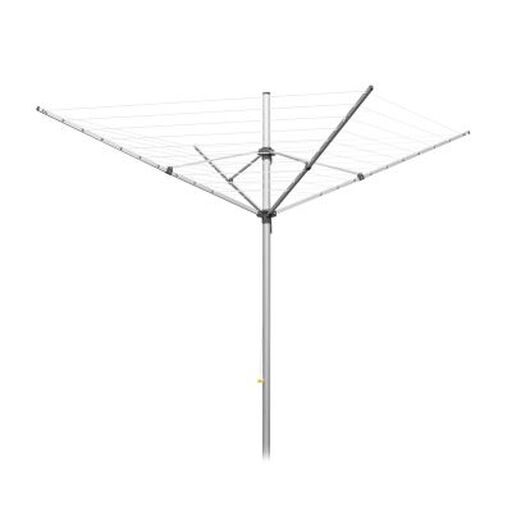
Why This Fits Their Persona: Designed for larger households with garden space and frequent washing, including several loads at once.
The 50-metre capacity, 3.12m turning circle and included ground spike make the space and installation requirements straightforward to assess.
Rust-resistant aluminium; one-handed Easi-Lift mechanism; 30cm extension pole and protective cover included.
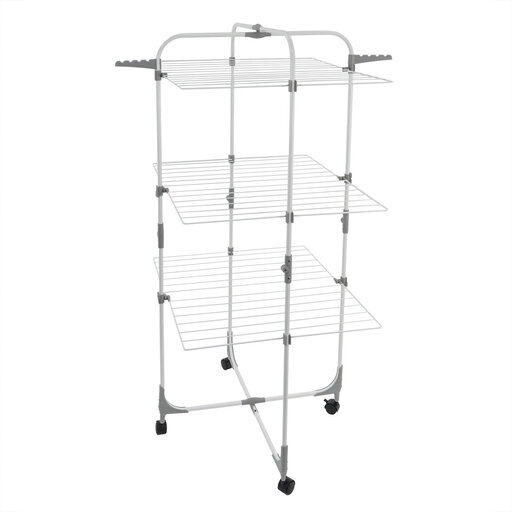
Why This Fits Their Persona: A flexible indoor clothes airer for households that need several shelves for everyday laundry but have a limited floor width.
The open and folded measurements are specified, and the upper shelf can be used for longer garments when lower shelves are folded down.
28 metres of drying space; four wheels with two brakes; stated 18kg capacity and flat-folding storage.
Position an indoor clothes airer where air can circulate, rather than directly against a cold external wall. Leave gaps between garments, open a window when practical and use extraction in kitchens or bathrooms to help manage moisture. Avoid placing wet laundry over heaters, as this can restrict airflow and may increase condensation.
For delicate items, use coat-hanger hooks or flat shelves where available. Rotate heavier garments during drying and wipe powder-coated frames with a damp cloth, following the product care instructions.
We have compiled a complete, real-time list of products that fully satisfy these strict selection criteria and UK safety regulations.
A manual clothes airer does not use electricity during drying, so its direct running cost is generally lower than an electric tumble dryer. However, indoor drying can increase humidity, so ventilation may be needed. Actual savings depend on electricity prices, dryer efficiency and how often the appliance is used.
Drying time varies according to fabric thickness, room temperature, airflow, humidity and how closely garments are arranged. Lightweight clothing may dry within several hours, while towels, denim and bedding generally take longer. Spacing garments apart and improving ventilation can help.
They can be suitable only where the landlord or tenancy agreement allows the required fixings. Check the ceiling construction, installation instructions and permitted alterations first. If permanent drilling is unsuitable, a freestanding foldable drying rack provides a more portable alternative.