
24/7 Customer Support

Free returns

Same-day & Next-day Delivery

Quality Guaranteed

Unlock Your Welcome Offers: FREE Delivery | Up to 80% OFF | Free 30-day JoyPlus trial
Download the APP
A clothes steamer can make daily garment care quicker, particularly when you need to refresh a shirt before work, smooth a dress without an ironing board or reduce creases in clothes packed for a UK business trip. However, choosing by wattage or a bold “rapid wrinkle remover” claim alone can lead to disappointing results.
The practical differences are usually found in the water tank, steam output, handling and safety features. This guide explains the main buying pitfalls and matches several garment steamer options to different household needs.
A high wattage figure indicates the electrical power used by the appliance, but it does not automatically show how much steam reaches the fabric. Steam output, measured in grams per minute (g/min), is often more useful when comparing wrinkle remover models.
A compact handheld clothes steamer may be convenient for quick touch-ups but have a smaller tank and lower steam output than a standing model. Conversely, a powerful model may be unnecessarily bulky for occasional travel use.
A small tank keeps a portable clothes steamer light, but it may require refilling during a full outfit or several garments. A standing garment steamer with a tank of around 1.8 to 2.1 litres is more practical for family laundry sessions, though it takes up more storage space.
Check whether the tank is detachable, as this makes filling, emptying and cleaning easier. Leaving water inside after use can contribute to mineral build-up, particularly in areas with hard water.
Steam is useful for many ironable fabrics, but garments still need to be checked against their care labels. Delicate fabrics require a suitable temperature and careful movement. A clothes steamer for delicate fabrics should offer controllable steam or clear instructions rather than relying on a general-purpose marketing statement.
Never steam clothing while it is being worn. Hot steam can cause burns, and the appliance should be unplugged before filling, emptying or cleaning.
For quick daily use, look at both heat-up time and steam output. A model ready in approximately 30 to 45 seconds is convenient for last-minute preparation. Steam output around 20 to 22g/min is suitable for many light garments, while models offering up to 36 or 40g/min may be more appropriate for heavier fabrics and larger loads.
These figures describe the manufacturer’s stated specifications, not a guarantee of identical results on every material. Cotton, linen, denim and densely woven fabrics may need slower movement or more passes.
A handheld clothes steamer is easy to store and can be used on a hanger, making it suitable for flats, offices and travel. A foldable model is particularly useful when suitcase space matters.
A standing clothes steamer, also called a vertical garment steamer, normally provides a larger water tank, adjustable poles and a hanger or support board. It is more suitable for multiple garments, long dresses and regular household use, but requires dedicated storage space.
For occasional touch-ups, a 100ml to 300ml tank can be sufficient. Larger tanks reduce interruptions when steaming several garments. Also check the cord length, tank design, hose length and included accessories.
A fabric brush can help separate fibres on thicker materials, while a heat-resistant glove offers additional hand protection. Features such as anti-drip protection, automatic shut-off and limescale management can improve convenience, but they do not replace safe handling or regular maintenance.
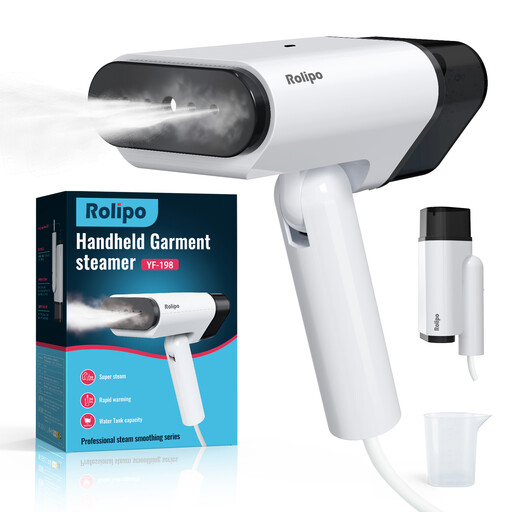
Why This Fits Their Persona: Its foldable handheld format suits shoppers who want a simple wrinkle remover for occasional use at home, in the office or on short trips.
The compact design makes its intended use clear: quick touch-ups rather than extended family laundry sessions. The integrated anti-leak tank is listed as a product feature.
Foldable and portable; one-button operation; suitable for home, office and travel use.
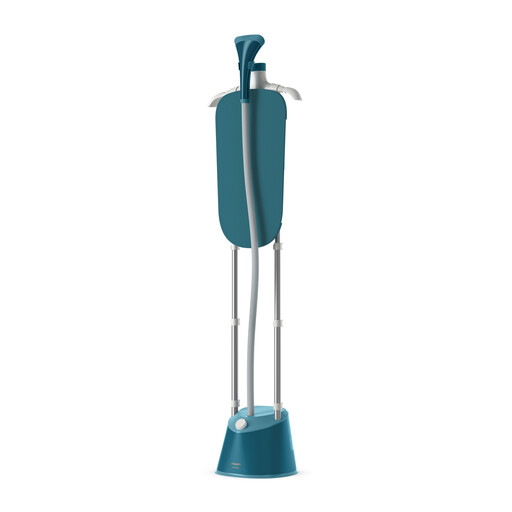
Why This Fits Their Persona: This standing garment steamer is designed for regular home use where a stable setup, larger tank and garment support are more valuable than compact storage.
Its specification lists the steam output, tank size and three steam settings, so buyers can compare practical capacity rather than relying only on wattage.
1800W power; up to 36g/min steam output; 1.8L detachable tank; integrated StyleBoard and adjustable poles.
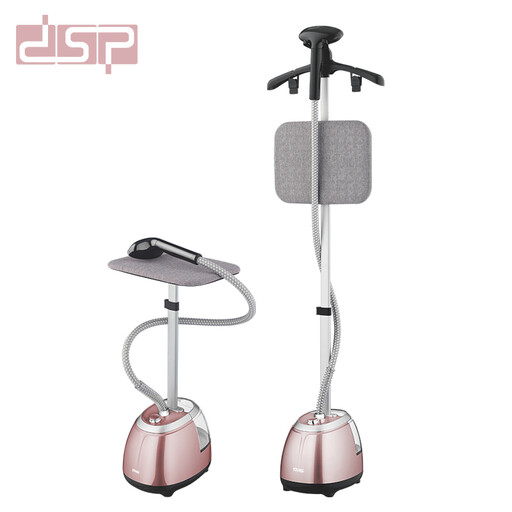
Why This Fits Their Persona: The larger tank and adjustable settings suit families or users who steam multiple garments, including heavier fabrics, in one session.
Ten steam settings provide more control than a single-output appliance, while the 2.1L tank is designed to reduce frequent refilling.
2000W power; stated steam output of 40g/min; 2.1L tank; stainless steel nozzle and trouser clip.
We have compiled a complete, real-time list of products that fully satisfy these strict selection criteria and UK safety regulations.
Running cost depends on wattage, steaming time and electricity rates. A lower-powered handheld model may use less electricity per minute, while a standing steamer can finish a larger batch without repeated setup. Compare the appliance’s wattage with how long you expect to use it rather than assuming one format always costs less.
Only if the garment care label permits steam or ironing. Use the appropriate lower setting where available, keep the appliance moving and test an inconspicuous area first. Do not press a hot plate or nozzle aggressively against delicate material.
Empty the tank after every session, follow the manufacturer’s limescale instructions and store the appliance upright or folded as directed. Keep the cord, plug and water tank dry, and never use perfumes, detergents or other liquids unless the instructions specifically allow them.