
24/7 Customer Support

Free returns

Same-day & Next-day Delivery

Quality Guaranteed

Unlock Your Welcome Offers: FREE Delivery | Up to 80% OFF | Free 30-day JoyPlus trial
Download the APP
A clothes steamer can be a convenient alternative to setting up an ironing board, particularly when you need to refresh a work shirt before commuting, smooth a dress before an event or remove creases from curtains and upholstery. However, not every garment steamer suits every household.
Marketing often focuses on wattage, “powerful steam” and compact styling while leaving out details that affect everyday use. Before buying a handheld clothes steamer or vertical clothes steamer, consider these common pitfalls.
Power is measured in watts, but wattage alone does not tell you how much steam reaches the fabric. A useful comparison should also include steam output, usually shown in grams per minute (g/min), heat-up time and the type of garments the appliance is designed to handle.
A 2,000W standing garment steamer may be more suitable for large laundry loads, while an 800W portable clothes steamer could be more practical for occasional touch-ups or travel.
A compact tank helps reduce weight, but it may require frequent refilling. Conversely, a garment steamer with a water tank capacity of around 1.8 or 2.1 litres will take up more storage space but is more suitable for steaming several garments in one session.
Check whether the tank is detachable, how easily it can be filled and whether the product instructions specify a particular water type. In areas with hard water, regular cleaning can help reduce mineral build-up.
Steam can damage or mark certain materials if used incorrectly. Always read the garment care label, keep the nozzle moving and avoid holding hot steam in one place. Delicate fabrics may require a lower setting, a fabric brush or a test on an inconspicuous area first.
Also check practical safety features such as automatic shut-off, anti-drip protection, an insulated handle and clear operating instructions. A UK-compatible plug and the correct 220–240V specification are important for domestic use.
Steam output indicates the approximate quantity of steam produced per minute. Higher output can help with thicker fabrics, but control is equally important for delicate clothing. Heat-up time matters when you want a quick wrinkle remover before leaving home.
For example, the Philips STE1040/20 lists up to 36g/min steam output, three steam settings and an approximately 45-second heat-up time. The DSP KD6019 lists 40g/min output, ten steam settings and a 30-second heat-up time.
These figures should be treated as product specifications rather than a guarantee of identical results on every fabric.
A 150ml or 260ml tank keeps a handheld clothes steamer relatively manageable for short sessions. A 1.8-litre or 2.1-litre tank is better suited to family laundry, curtains or repeated use in a home or office.
Remember that water adds weight while you work. A lighter model may be easier to hold vertically, whereas a standing garment steamer transfers most of the weight to its base and stand.
If you want to steam clothes while they remain on a hanger, look for vertical steaming support and a stable hanging system. For upholstery and heavier materials, a bristle or fabric brush may help separate fibres while steam is applied.
A foldable design is useful for students, commuters and frequent travellers, but inspect the folded dimensions and cable arrangement rather than relying only on the word “portable”.
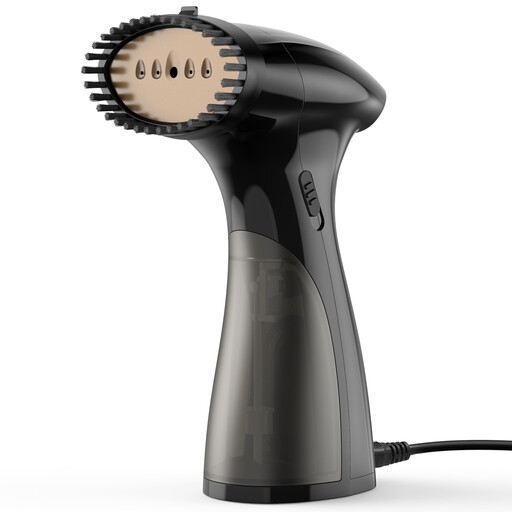
Why This Fits Their Persona: Its compact format suits students, renters and occasional users who need a simple clothes steamer for home, office or short trips.
The 150ml tank makes its capacity clear, so buyers can choose it for short sessions rather than expecting long, uninterrupted steaming.
800W rated power, approximately 0.8kg weight, vertical and horizontal operation and a bristle brush attachment.
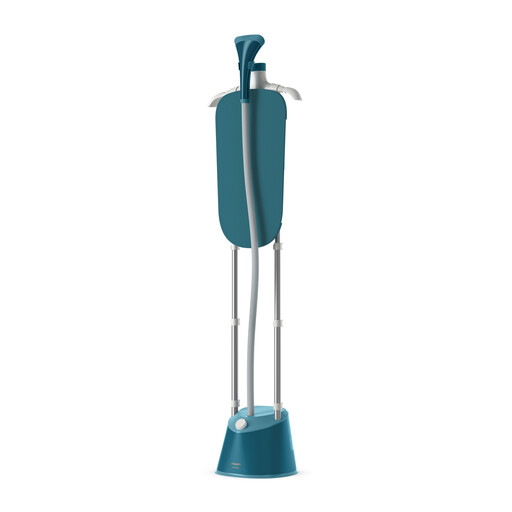
Why This Fits Their Persona: Its standing format and integrated support board suit households that regularly prepare multiple garments at once.
The 1.8L detachable tank is specified clearly, reducing the risk of buying a standing steamer that still needs constant refilling.
1800W power, up to 36g/min steam output, three settings, adjustable double poles and Easy Rinse limescale management.
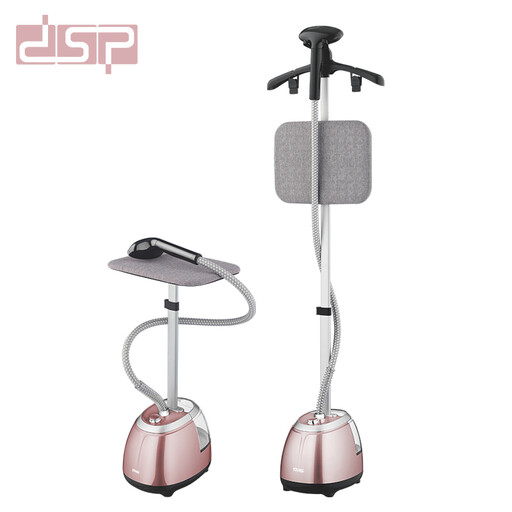
Why This Fits Their Persona: A standing design with a large tank is suited to families, hospitality use or anyone steaming heavier fabrics and several garments in sequence.
Its stated 2.1L tank and adjustable steam control address the common mismatch between a small reservoir and demanding workloads.
2000W power, listed 40g/min steam output, ten steam settings, stainless steel nozzle, hanger system and trouser clip.
We have compiled a complete, real-time list of products that fully satisfy these strict selection criteria and UK safety regulations.
A clothes steamer is designed primarily to relax creases and refresh hanging fabrics. It may not create the sharply pressed seams or flat finish produced by a traditional steam iron for clothes, particularly on thick cotton or linen.
Running cost depends on wattage, usage time and electricity tariffs. A handheld model may use less energy during a short touch-up because it heats only a small quantity of water. A standing model uses more power but can reduce interruptions during a larger steaming session. Compare the rated wattage with how long you expect to use the appliance.
Some models are designed for vertical steaming and include a brush attachment for thicker materials. Check the product instructions and fabric care guidance first. Test an unseen section, keep the steamer moving and avoid saturating upholstery.
Lifespan varies with construction, frequency of use, water quality, storage and maintenance. Emptying the tank after use, removing limescale as instructed and avoiding overfilling can help protect the heating system. Keep proof of purchase and review the stated warranty, such as the one-year limited warranty listed for the Cuisync GY-2000.