
24/7 Customer Support

Free returns

Same-day & Next-day Delivery

Quality Guaranteed

Unlock Your Welcome Offers: FREE Delivery | Up to 80% OFF | Free 30-day JoyPlus trial
Download the APP
A clothes steamer can make a crumpled shirt presentable in minutes, without setting up an ironing board. However, choosing the right model requires more than comparing power ratings or trusting phrases such as “powerful steam”. A compact handheld garment steamer may suit occasional touch-ups, while a standing garment steamer is more practical for family laundry and longer sessions.
The main buying risks are usually easy to overlook:
Steam output is commonly shown in grams per minute (g/min). A higher stated figure can help steam penetrate heavier fabrics, but it may also use water more quickly. For occasional shirts, blouses and dresses, a handheld fabric steamer with around 20–22 g/min may be suitable. For bulky clothing or larger loads, a standing vertical clothes steamer offering up to 36–40 g/min may be more appropriate.
Heat-up time affects convenience. Models in this selection take approximately 30–45 seconds to become ready, although actual performance can vary with the water level and operating conditions.
Tank size is one of the clearest differences between handheld and standing models:
A detachable tank can make refilling and emptying easier. Whichever size you choose, empty residual water after use and follow the manufacturer’s cleaning instructions to help limit mineral build-up.
A handheld clothes steamer should be comfortable to hold at the angle required for vertical steaming. Features such as an anti-drip system, locking steam trigger, ready indicator and automatic shut-off can improve day-to-day handling.
Some models include a ceramic or coated soleplate for gliding over fabric, while others use a steam plate designed primarily for hanging garments. Steam is hot enough to cause burns, so never steam clothing while it is being worn. Unplug the appliance before filling, emptying or cleaning it, and allow it to cool before storage.
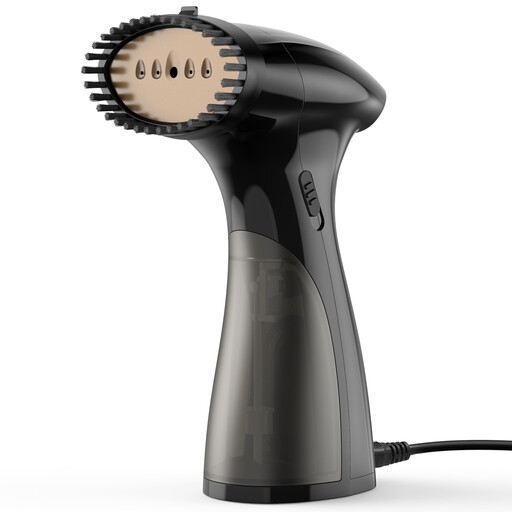
Why This Fits Their Persona: Its compact format and approximately 0.8 kg weight make it suitable for first-time buyers who want a simple clothes steamer for home, office and occasional travel.
The 150 ml tank and stated 800 W rating are clearly specified, helping shoppers judge its intended short-session use rather than expecting standing-steamer capacity.
Supports vertical and horizontal use, and includes a bristle brush attachment for thicker fabrics.
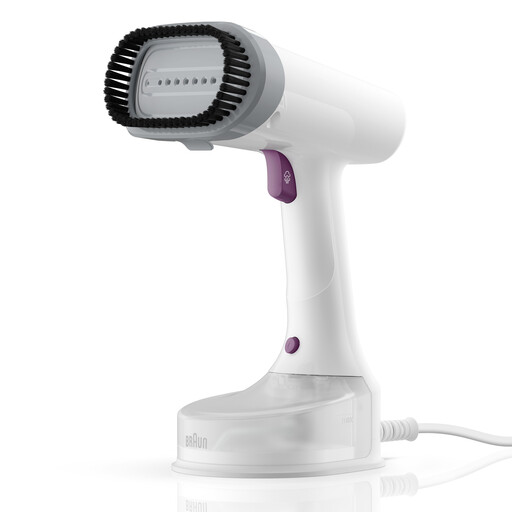
Why This Fits Their Persona: This handheld garment steamer is designed for shoppers wanting more controlled handling, including both vertical and horizontal steaming for workwear and occasional pressing.
The 150 ml tank makes its session length clear, while the 45-second heat-up time avoids vague “instant steam” wording.
Provides up to 22 g/min steam, with a FreeGlide 3D soleplate and Smart iCare technology listed for ironable fabrics.
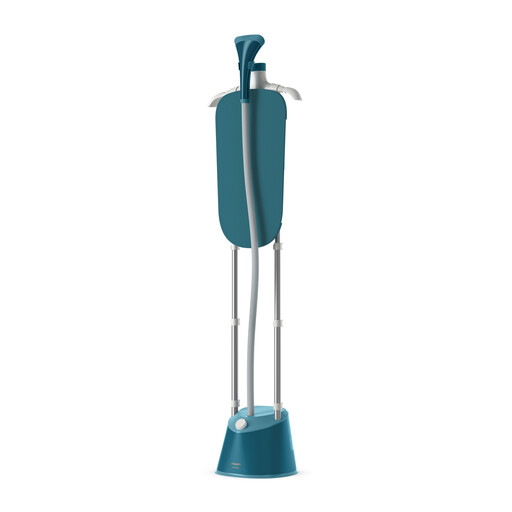
Why This Fits Their Persona: Its standing design is suited to families, frequent outfit preparation and anyone who would rather steam garments on an integrated support board.
The 1.8 litre detachable tank, three steam settings and approximately 45-second heat-up time provide measurable information for planning longer sessions.
Offers up to 36 g/min steam, adjustable double poles, an integrated StyleBoard and an Easy Rinse limescale-management feature.
We have compiled a complete, real-time list of products that fully satisfy these strict selection criteria and UK safety regulations.
Before ordering, compare the following points:
Running cost depends on power rating, steaming time and electricity tariff. A handheld model may use less energy during a short touch-up, while a high-powered standing garment steamer may be more suitable for several garments in one session. Compare the wattage and expected usage rather than assuming one format always costs less.
No. Check the care label first and use the manufacturer’s instructions. Steam is generally intended for suitable ironable fabrics, but embellished, coated, waterproof or heat-sensitive materials may require extra care. Test an inconspicuous area where appropriate and keep the steam plate moving.