
24/7 Customer Support

Free returns

Same-day & Next-day Delivery

Quality Guaranteed

Unlock Your Welcome Offers: FREE Delivery | Up to 80% OFF | Free 30-day JoyPlus trial
Download the APP
A clothes steamer can make daily dressing easier, but choosing the wrong model may leave you with weak steam, frequent refills or a device that is inconvenient to store. Marketing often focuses on wattage or attractive folding designs while overlooking the details that affect real-world use.
Before buying a handheld clothes steamer, garment steamer or steam generator iron, check three common pitfalls:
A clothes steamer is designed primarily for vertical steaming. Hang a shirt, dress, suit jacket or curtain and move the steam plate from top to bottom. This avoids the need for an ironing board and works well for last-minute touch-ups.
A traditional steam iron uses a heated soleplate and pressure against a flat surface. It is generally more suitable for sharp trouser creases, collars, cuffs, bedding and large laundry loads.
A steam generator iron separates the water tank from the iron and supplies steam through a hose. This format usually offers a larger tank and higher steam pressure, making it practical for busy households with substantial ironing piles. It is less convenient to carry than a travel clothes steamer.
Choose based on your main task:
Steam output is normally shown in g/min. A higher figure can provide more steam to loosen creases, although garment results also depend on fabric thickness and how slowly you move the appliance.
For occasional touch-ups, a compact model producing around 20g/min may be adequate. Heavier fabrics such as denim, linen and curtains can benefit from a higher output. Steam generator irons may also list pump pressure in bar, which indicates the pressure used to deliver steam through the soleplate.
Do not compare wattage alone. Wattage mainly describes electrical power consumption and heating capacity; it does not provide a complete picture of steam performance.
Tank size affects how long you can work before stopping. A 100ml detachable tank keeps a handheld steamer light and compact, but may suit short sessions rather than a full basket of laundry. A 1.8-litre removable tank is more practical for extended ironing.
Look for:
In areas with harder water, a removable scale collector or another anti-scale system can reduce maintenance. Follow the manufacturer’s instructions rather than adding household cleaning products to the tank.
A short heat-up time is useful when preparing clothes before work. Compact models may be ready in around 30 seconds, while larger steam generator irons can take approximately two minutes.
Also consider:
A product described as suitable for 220V outlets should be checked carefully before use in the UK. Confirm the voltage range, plug type and safety instructions supplied with the product. Never use an appliance with a damaged cable, leaking tank or exposed electrical parts.
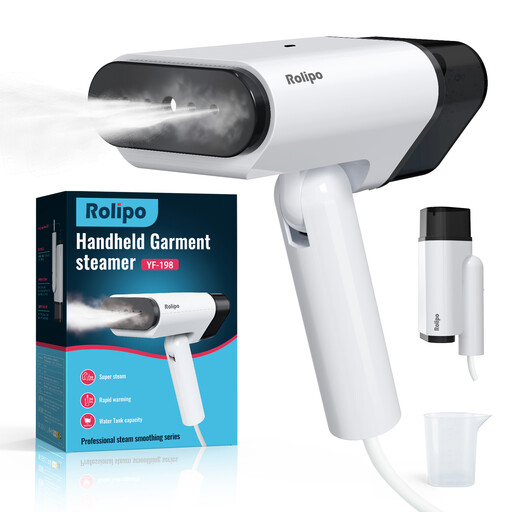
Why This Fits Their Persona: Its foldable handheld format suits shoppers who want a straightforward garment steamer for occasional use at home, in an office or in a suitcase.
The foldable design addresses storage and portability concerns, while the integrated anti-leak tank is intended to reduce spills during use and transport.
One-button operation; foldable handheld body designed for home, office and travel use.
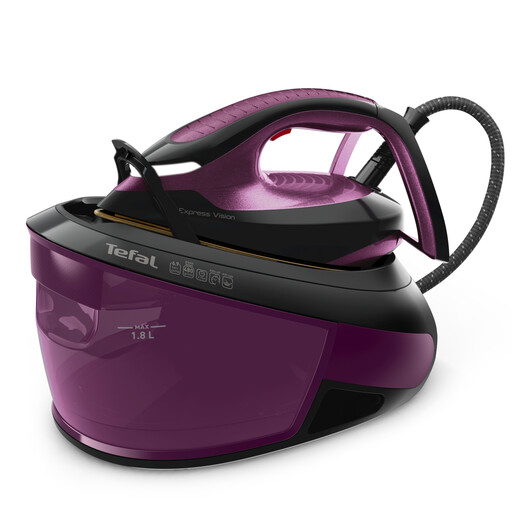
Why This Fits Their Persona: This model is suited to households handling frequent or larger ironing loads where tank capacity, steam control and convenient maintenance matter.
The 1.8L removable tank reduces repeated trips to the tap, while the removable scale collector addresses limescale maintenance.
6.9-bar pressure with 130g/min continuous steam; 480g steam boost, vertical steaming, auto shut-off and safety lock.
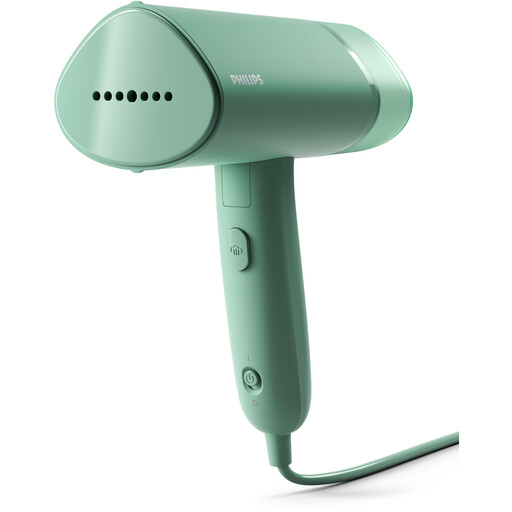
Why This Fits Their Persona: The compact foldable frame and storage pouch are practical for business trips, holidays and quick outfit preparation without an ironing board.
The 30-second stated heat-up time supports last-minute touch-ups, while the detachable 100ml tank makes refilling simpler between garments.
20g/min continuous steam; foldable design, 2m power cord and storage pouch.
Steam can refresh the appearance of clothing, but it does not replace washing or professional cleaning. For delicate, embellished or coated fabrics, follow the manufacturer’s guidance and try an inconspicuous area first.
We have compiled a complete, real-time list of products that fully satisfy these strict selection criteria and UK safety regulations.
Running cost depends on wattage, heat-up time and how long the appliance is used. A compact 1000W handheld steamer may use less power during a short touch-up than a 2800W steam generator iron, but a larger model can complete a substantial load more efficiently in terms of time. Check the appliance’s wattage and avoid leaving it switched on between garments.
Lifespan depends on frequency of use, water quality, storage and descaling. Empty the tank after each session, allow the unit to cool, keep vents clear and follow the supplied anti-scale instructions. Auto shut-off, a safety lock and repair or warranty information are useful factors when comparing models.
It can replace an iron for hanging garments, light creases and quick wrinkle removal. It is less suited to sharp creases, flat pressing and heavy laundry. Many households use a portable clothes steamer for daily touch-ups and keep a steam iron or steam generator iron for more structured ironing tasks.