
24/7 Customer Support

Free returns

Same-day & Next-day Delivery

Quality Guaranteed

Unlock Your Welcome Offers: FREE Delivery | Up to 80% OFF | Free 30-day JoyPlus trial
Download the APP
Buying a Coca-Cola cans multipack can seem straightforward, but pack size and flavour are not the only details worth checking. A low shelf price may hide a smaller can format, while a large case may take up more storage space than expected. Choosing between Coca-Cola Original Taste, Coca-Cola Zero Sugar, Diet Coke and flavoured options also requires a closer look at sugar, caffeine and intended use.
This guide explains the practical points UK households should check before ordering, helping you match a multipack to your routine, fridge space and social occasions.
An 8-pack may appear cheaper than an 18-pack, but the larger option can offer a lower cost per can. Always compare:
For occasional use, a smaller pack can reduce waste. For parties, family gatherings or regular home consumption, a larger Coca-Cola multipack may be more practical.
Coca-Cola Original Taste and cherry cola contain sugar, while Coca-Cola Zero Sugar and Diet Coke contain no sugar according to the supplied product nutrition information. However, sugar-free does not automatically mean caffeine-free. Standard Coca-Cola Zero Sugar and Diet Coke products list caffeine in their ingredients.
If you want cola without caffeine, look specifically for Diet Coke No Caffeine or Coke Diet Caffeine Free. Check the packaging before purchase, as product formulations and labelling can change.
The phrase “Coke cans” does not always mean the same serving size. A 250ml can is more compact and may suit smaller portions, lunch occasions or limited fridge space. A 330ml can is the more familiar standard format for many UK households and is convenient for meals, movie nights and parties.
A case containing 24 cans also occupies considerably more storage space than an 8-pack, so check your cupboard, fridge and recycling arrangements before buying.
Start by deciding which type suits the people who will drink it:
These figures are product-specific. Always read the current can label, particularly if dietary requirements or sweetener sensitivities are important.
For regular use, 330ml cans offer a familiar single-serving format. Smaller 250ml cans can be easier to portion and store. Available quantities in this range include 4, 8, 12, 18 and 24 cans, as well as multi-case formats such as two 18-can packs.
A useful calculation is:
Total drink volume = number of cans × millilitres per can
For example, an 18 x 330ml pack contains 5.94 litres in total. This helps compare a multipack with bottled alternatives and estimate how long a case might last.
Unopened cans should generally be stored in a cool, dry place away from direct sunlight. Serve chilled for the expected flavour and carbonation. Do not buy cans that are leaking, badly dented, swollen or otherwise damaged.
Check the best-before date printed on the base or packaging, and consume opened drinks promptly for better carbonation. Cans are commonly recyclable in the UK, but local collection rules vary, so follow your council’s guidance.
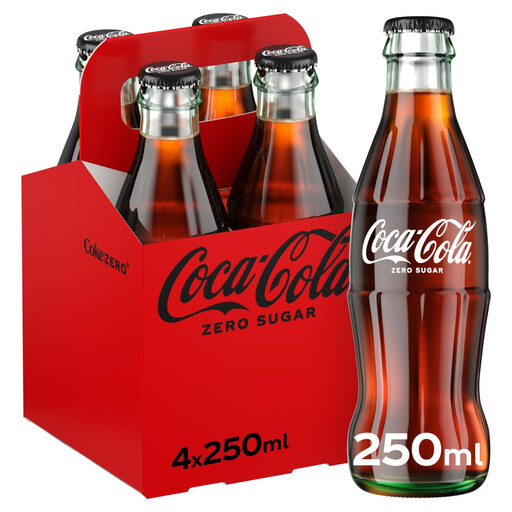
Why This Fits Their Persona: A compact four-can pack suits first-time buyers, smaller households and shoppers who want to try a sugar-free cola without committing to a large case.
The pack quantity and 250ml can size are clearly stated, reducing the risk of mistaking a trial pack for a full-sized 330ml multipack.
Zero sugar and approximately 1 calorie per 330ml equivalent listed for the product range; suitable for vegetarian and vegan diets.

Why This Fits Their Persona: This larger format is suited to households that regularly serve Coca-Cola with meals or want a consistent supply for visitors and shared occasions.
The 24-can quantity and standard 330ml format make the total supply transparent before ordering, helping avoid undersizing for gatherings.
Contains 24 standard 330ml cans; supplied nutrition information lists 35g of sugar and 139 calories per can.
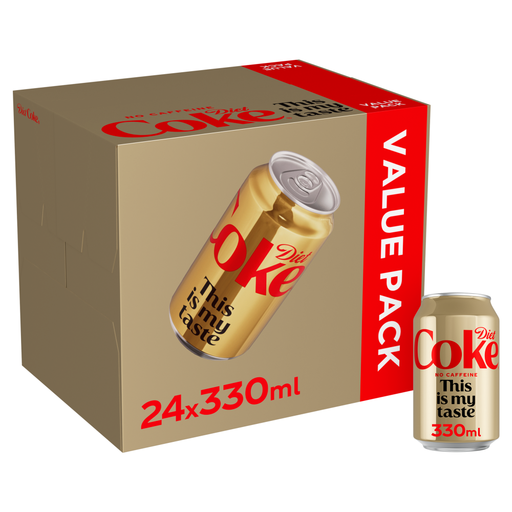
Why This Fits Their Persona: A large case suits households planning regular use, parties or evening refreshments where a caffeine-free option is required.
Its product name identifies the caffeine-free format, while the 24 x 330ml quantity makes it easier to plan for sustained use.
Zero sugar and zero calories in the supplied nutrition information; caffeine is not listed among the ingredients.
We have compiled a complete, real-time list of products that fully satisfy these strict selection criteria and UK safety regulations.
It depends on household consumption. An 8-pack may suit occasional use, while an 18- or 24-can case is more appropriate for regular drinking or entertaining. Store unopened cans in a cool, dry place and check the printed date on the packaging.
No. Many UK multipacks use 330ml cans, but some products contain 250ml cans. Check both the number of cans and the volume per can before comparing prices or total supply.
Standard Diet Coke cans contain caffeine according to the supplied ingredient information. For a caffeine-free option, choose a product explicitly labelled Diet Coke No Caffeine or Coke Diet Caffeine Free, and verify the current packaging before consumption.