
24/7 Customer Support

Free returns

Same-day & Next-day Delivery

Quality Guaranteed

Unlock Your Welcome Offers: FREE Delivery | Up to 80% OFF | Free 30-day JoyPlus trial
Download the APP
Buying Coca-Cola Zero Sugar cans seems straightforward until you compare pack sizes, flavours, caffeine content and price per can. A small multipack may suit a flat share, while a bulk cola cans order can be more practical for family meals, parties or regular home use.
However, attractive packaging and phrases such as “zero sugar” do not tell you everything. The following guide highlights the common buying traps, explains the specifications worth checking and matches suitable Coca-Cola and Diet Coke multipacks to different shopping needs.
A larger-looking box is not always the most convenient option. Most Coca-Cola cans in this range are 330ml, but smaller formats such as 250ml are also available. Compare both the number of cans and the total volume before deciding.
For example, an 8-pack of 330ml cans provides 2.64 litres in total, while a 24-pack provides 7.92 litres. The larger Coca-Cola Zero Sugar multipack may suit regular drinkers, but it also needs more cupboard or garage storage space.
Coca-Cola Zero Sugar and Diet Coke are separate drinks with different flavour profiles and ingredient lists. Cherry versions add a fruit flavour, while caffeine-free Diet Coke is formulated without caffeine. Checking the product name carefully helps prevent ordering the wrong variety.
The products listed here contain zero sugar and around zero calories per 330ml can, but this does not mean every version is caffeine-free or suitable for every dietary requirement. Several products contain sweeteners including aspartame and acesulfame K, and labels state that they contain a source of phenylalanine.
Always read the current packaging, particularly if you need to avoid caffeine, aspartame or specific ingredients. Product information and packaging can change, so the label supplied with your order should take priority.
For everyday meals, 330ml cans provide a familiar single-serving format and can be chilled individually. They are suitable for lunch, home-working breaks, picnics and casual entertaining. A 4-pack or 8-pack can be useful when you want to try a flavour or avoid storing a large quantity.
For frequent consumption or gatherings, consider 18-, 24- or multi-case packs. A 24-pack of Coca-Cola Zero Sugar contains 7.92 litres, making it suitable for sharing and planned stock-ups. Compare the price per can rather than relying only on the headline pack price.
The listed Coca-Cola Zero Sugar products provide 0g sugar and approximately 1 kcal per 330ml can. Diet Coke listings provide similar figures, with approximately 1 kcal per can. These values make them different from standard full-sugar cola, but they remain soft drinks rather than substitutes for water.
Review the sweetener information before purchase. Coca-Cola Zero Sugar listings include aspartame, acesulfame-K and steviol glycosides, while several Diet Coke products list aspartame and acesulfame-K. People who need to avoid phenylalanine should pay particular attention to the relevant warning.
Standard Coca-Cola Zero Sugar and Diet Coke products listed here contain caffeine. If you want a caffeine-free cola, choose a clearly labelled Diet Coke No Caffeine product rather than assuming all diet versions are caffeine-free.
Several listings state that the drinks are suitable for vegans and vegetarians. This can help shoppers looking for a vegan soft drink, but always verify the ingredients and dietary statement on the delivered packaging.
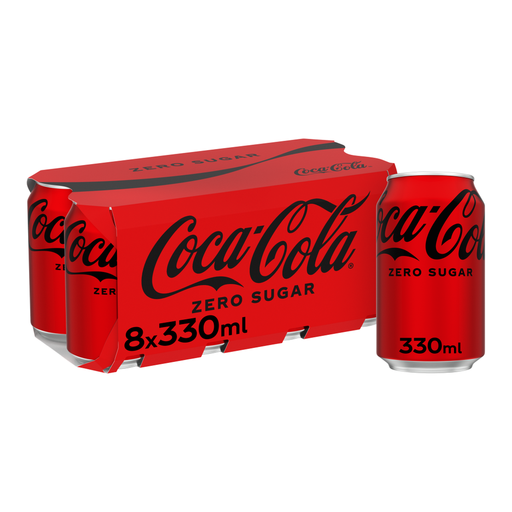
Why This Fits Their Persona: An 8-pack offers a manageable entry point for individuals, couples or smaller households that want Coca-Cola Zero Sugar cans without committing to a large stock-up.
The clearly stated 8 x 330ml format makes the total quantity easy to assess before buying.
330ml single-serve cans; zero sugar and approximately 1 kcal per can.
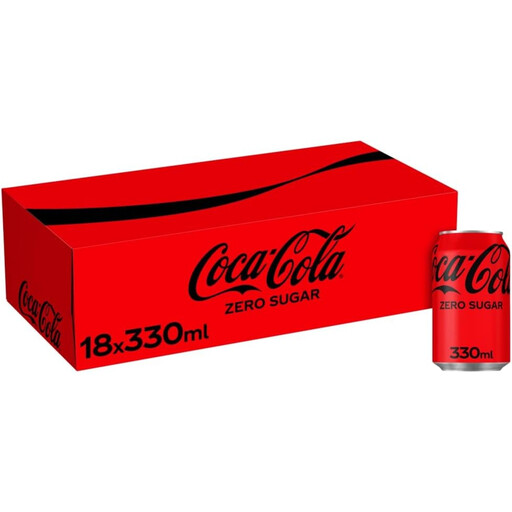
Why This Fits Their Persona: A medium-sized Coca-Cola Zero Sugar multipack gives regular households a useful supply for meals, visitors and relaxed weekends.
The pack count and can volume are stated together, reducing confusion between case size and individual serving size.
18 x 330ml format; listed as suitable for vegans and vegetarians.
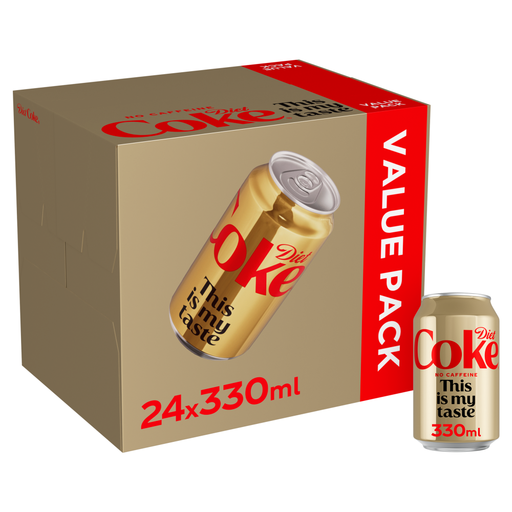
Why This Fits Their Persona: Designed for shoppers who specifically want a caffeine-free, zero-sugar cola for evenings, family occasions or flexible drinking times.
The product name explicitly identifies the caffeine-free format, avoiding assumptions about standard Diet Coke cans.
24 x 330ml cans; zero sugar and no caffeine according to the product description.

Why This Fits Their Persona: A 24-can case is suited to parties, match nights, barbecues, sports gatherings and households that regularly serve cola.
The large case clearly states 24 individual 330ml cans, so you can plan servings and storage before ordering.
7.92 litres in total; zero sugar and approximately 1 kcal per 330ml can.
We have compiled a complete, real-time list of products that fully satisfy these strict selection criteria and UK safety regulations.
Store unopened cans in a cool, dry place, away from direct sunlight and extreme temperatures. Avoid storing them where cans may be crushed or exposed to moisture. Chilling cans before serving is the simplest way to improve refreshment, particularly for meals and gatherings.
Check the best-before information printed on the can or outer packaging. Do not use cans that are leaking, severely dented, swollen or otherwise damaged. Once opened, consume promptly to retain carbonation and flavour.
Several listed Coca-Cola Zero Sugar products are marked as suitable for vegans and vegetarians. Check the dietary statement and ingredients on the specific product packaging before consumption, as formulations and labelling may vary.
The practical shelf life is shown by the best-before date printed on the base of the can or packaging. Store cans in a cool, dry place and rotate older packs forwards so they are used first.
Standard Coca-Cola Zero Sugar cans listed here contain caffeine. If you want a caffeine-free cola, select a product specifically labelled Diet Coke No Caffeine and check the current ingredients panel before opening.
The answer depends on the pack price, serving size and how quickly the drink will be consumed. Cans provide convenient individual portions and do not need resealing, while larger bottles can suit shared meals. Compare the total price, volume and storage requirements before choosing.