What should you check?
Decide whether the carton is mainly for breakfast foods or will replace the child’s usual milk; that determines how closely you need to assess its nutritional content.
| Priority | What to check | Your needs |
|---|
| Age and use |
The NHS says unsweetened, calcium-fortified milk alternatives can be given from age 1 as part of a varied diet. Before 12 months, coconut drink must not replace breast milk or first infant formula as the main milk. |
I’m adding a drink to breakfast, not replacing an infant’s main milk too early. |
| Main-milk nutrition |
Check calcium, vitamin D, vitamin B12 and iodine, plus energy and protein. For a non-dairy main-milk replacement, Hertfordshire and West Essex Clinical Guidance advises looking for around 40 kcal per 100 ml or more and at least 1 g protein per 100 ml. |
If my child will rely on this instead of cow’s milk, I need to assess more than its flavour or calcium content. |
| Allergens |
Read the current ingredients, allergen declaration and any specific free-from claim. Marks & Spencer describes its Creamy Coconut Drink as vegan but says it is not suitable for people with a milk allergy. |
For a diagnosed allergy, I need the particular carton to be suitable for every allergen my child must avoid. |
| Sweetness |
Compare the ingredients and sugars line; “no added sugars” and “unsweetened” are not interchangeable descriptions. Hertfordshire and West Essex Clinical Guidance advises choosing unsweetened alternatives where possible. |
For regular breakfasts, I’d rather check what sweetens the drink than choose by coconut flavour alone. |
Relevant brand references
These examples show why the exact product label matters; a brand name does not establish the nutrition or allergy status of every drink it sells.
Koko
Tesco lists Koko Dairy Free Unsweetened Alternative Drink as a coconut-based drink fortified with calcium and vitamins D2 and B12.
- Tesco lists 120 mg calcium and 1.2 g protein per 100 ml and describes this product as free from dairy, soya, nuts and gluten.
- It provides 19 kcal per 100 ml; Tesco’s listing advises professional consultation before using it as a main milk source for children under 2.
Alpro
Alpro Coconut Original is a coconut-and-rice drink labelled dairy-free; it is distinct from Alpro’s barista coconut variant.
- Alpro lists 120 mg calcium per 100 ml for Coconut Original.
- At 20 kcal and 0.1 g protein per 100 ml, Coconut Original does not meet the main-milk energy and protein benchmarks in Hertfordshire and West Essex Clinical Guidance.
M&S
M&S describes its Creamy Coconut Drink as fortified with calcium, iodine and vitamins B12 and D.
- Its product information identifies iodine alongside the other listed fortifying nutrients.
- M&S states that this vegan product is not suitable for people with a milk allergy.
Tesco
Tesco’s coconut-drinks range lists branded and own-label options, including sweetened and unsweetened drinks.
- The range offers cartons to compare by ingredients, fortification and intended use.
- A category listing cannot establish the allergen information or nutritional content of each carton; check the specific product.
Coconut drinks on Joybuy
These coconut barista drinks are options to assess for breakfast use after age 1. If either would become a child’s main milk, check its current nutritional and allergen information separately.
 No image available
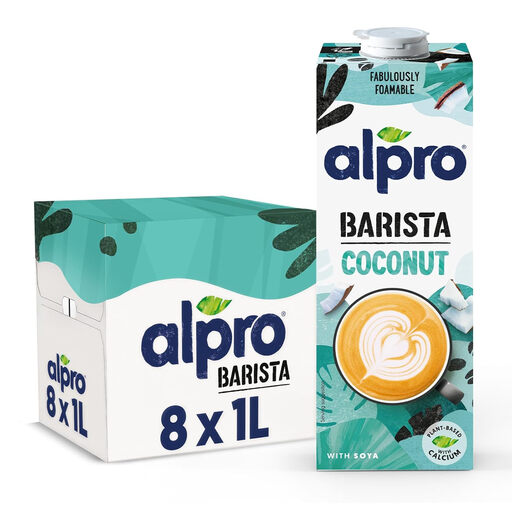
Alpro Barista Coconut Long Life Drink, 8 x 1L
For a coconut-flavoured addition to breakfast, check the current carton’s soya declaration and ingredients, particularly if the child has allergies or you want an unsweetened drink. Assess energy, protein and fortification separately before considering it as a main milk.
View on Joybuy
 No image available
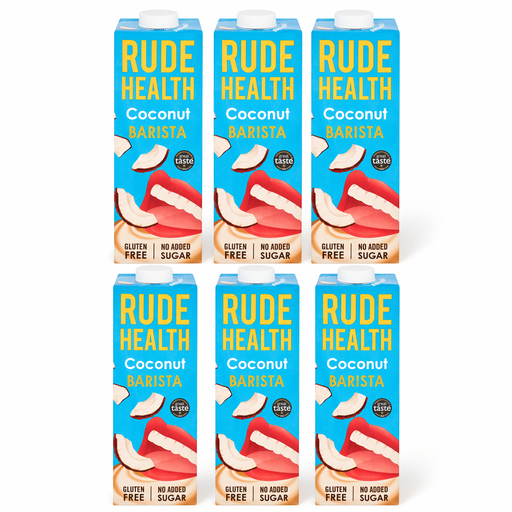
Rude Health Barista Coconut Drink, 1L
For breakfast use, check the carton’s oat allergen information and whether it has the fortification you need. Compare protein if the drink might replace cow’s milk, and confirm the pack contents before ordering.
View on Joybuy
Questions about toddler breakfast
Can a toddler have coconut drink at breakfast?
From age 1, the NHS says an unsweetened, calcium-fortified milk alternative can be included as part of a varied diet. Before 12 months, coconut drink should not replace breast milk or first infant formula as the main milk.
Can coconut drink replace cow’s milk for a toddler with a milk allergy?
Do not assume any coconut drink is a suitable main-milk replacement. Hertfordshire and West Essex Clinical Guidance advises looking for fortification, around 40 kcal per 100 ml or more and at least 1 g protein per 100 ml; the particular drink must also be suitable for the child’s allergies. Seek individual advice if growth or a restricted diet is a concern.
Does a vegan label mean a drink is suitable for milk allergy?
No. Check the current ingredients, allergen declaration and any milk free-from claim. M&S describes its Creamy Coconut Drink as vegan but explicitly says it is not suitable for people with a milk allergy.
Which label details matter for regular breakfast use?
For a child aged 1 or over, look for an unsweetened, calcium-fortified option and check the child’s allergens. If the drink will replace cow’s milk, also compare energy, protein and fortification with vitamins D and B12 and iodine, as advised by Hertfordshire and West Essex Clinical Guidance.
Does it matter whether a coconut drink is chilled or long-life?
The storage format does not replace checks of the specific carton’s nutrition and allergens. Follow its storage instructions, including after opening, and decide separately whether it is only for breakfast foods or will serve as a main milk.


