Shoppers making cold lunches
If coconut drink is going into cereal, a smoothie or a cold drink, compare the carton’s sugars and fortification rather than assuming that all plant-based drinks have the same composition.


Choose a coconut drink for cereal, smoothies or a cold drink; choose canned coconut milk when a cooked lunch needs its creamy texture. Compare sugars, saturates and fortification on drink labels, and the amount of canned milk your recipe uses. Six UK pints is about 3.41 litres, so plan the quantity around cartons or cans rather than expecting an exact six-pint pack.
If coconut drink is going into cereal, a smoothie or a cold drink, compare the carton’s sugars and fortification rather than assuming that all plant-based drinks have the same composition.
Canned coconut milk serves a different purpose in a cooked lunch. Check the recipe quantity and the can’s saturates per 100ml, particularly when comparing regular and light versions.
A six-UK-pint target is about 3.41 litres. Decide how much drink or cooking milk you will use, then check pack sizes and the storage instructions for each opened pack.
Start with what the coconut product needs to do at lunch, then compare labels within that format and choose a pack quantity you can use.
| Priority | What to check | Your needs |
|---|---|---|
| Drink or cooking milk | Check whether the pack is a pourable coconut drink or canned coconut milk. Choose according to whether it is going into a glass or cereal bowl, or into a cooked recipe. | I need a carton for a drink or smoothie, or a can to give a soup or curry coconut-milk texture. |
| Saturates | Tesco Groceries lists 1.2g saturates per 100ml for Koko Unsweetened drink and 5.2g per 100ml for Tesco Light Coconut Milk. Alpro UK lists 0.9g per 100ml for Coconut Original drink; Sainsbury’s lists 13.8g per 100ml for its regular canned coconut milk. Compare the label and the amount you will use. | When I cook with coconut milk, the portion going into each lunch matters as well as the figure per 100ml. |
| Sugars and nutrients | Compare sugars per 100ml and check the drink’s declared calcium and vitamins. Tesco Groceries lists 0.2g sugars and 120mg calcium per 100ml for Koko Unsweetened; UK government advisers note that plant-based drinks vary considerably in nutrient content. | If I regularly pour coconut drink over cereal or into coffee, I want its sugar and nutrient information, not just a plant-based description. |
| Pack quantity | Six UK pints is approximately 3.41 litres. Three 1L cartons provide 3 litres; four provide 4 litres. Check a bundle’s stated carton count and volume separately. | I’m buying for several lunches, so I want enough sealed packs without opening more than I can use. |
| Allergens and storage | Read the current allergen statement and post-opening instructions on the specific pack. Marks & Spencer labels its Creamy Coconut Drink as unsuitable for people with a milk allergy. | For an allergy, I need the exact product label. For a larger shop, I also need to know how to store each pack once opened. |
A coconut drink is suited to pouring or blending; canned coconut milk is used for texture in cooked dishes. Their nutrition labels can differ substantially: Tesco Groceries lists 1.2g saturates per 100ml for Koko Unsweetened drink and 5.2g for Tesco Light Coconut Milk.
Choose the format for the lunch you are making, then compare labels within that format.
UK government advisers note considerable variation in plant-based drinks’ nutrient content. A plant-based description alone cannot tell you which nutrients a particular carton provides.
When a drink regularly takes the place of milk at lunch, check its sugars and declared fortification on the current pack.
Four 1L cartons provide 4 litres, more than six UK pints. Opening several at once also leaves more product to use within each pack’s stated storage period.
Work out the quantity your lunches require and open cartons or cans as needed, following their individual storage instructions.
Allergen statements are product-specific. Marks & Spencer labels its Creamy Coconut Drink as unsuitable for people with a milk allergy.
Check the current pack’s ingredients and allergen statement for the exact drink you intend to buy.
Its checked 1L unsweetened coconut drink is a pourable option for cold drinks, cereal and smoothies, rather than a canned cooking milk.
Alpro Coconut Original is a 1L pourable drink, distinct from canned coconut milk used in cooking.
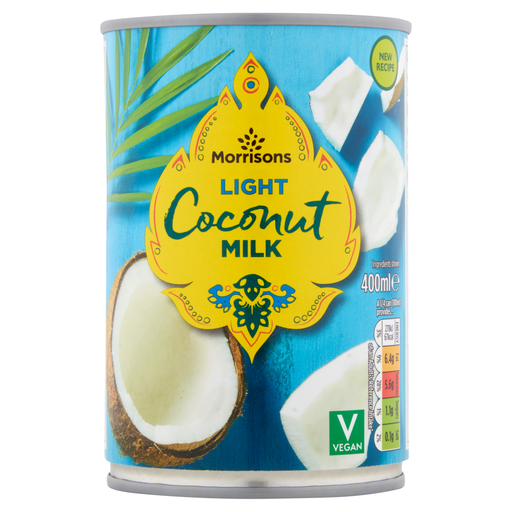
Its checked own-label products include a 1L coconut drink and a 400ml light canned coconut milk, serving different lunch uses.
Its checked 400ml coconut milk is a canned cooking ingredient for recipes requiring coconut-milk texture.
Its checked range illustrates the distinction between a creamy coconut drink and canned coconut milk for cooking.
These options include canned coconut milk for cooked lunches and coconut drinks for pouring or coffee. Check each pack’s quantity against the approximately 3.41 litres in six UK pints; a cooking can and a drink carton serve different purposes.
 No image available
A 400ml cooking can for a lunch recipe that calls for coconut milk, not a pourable drink. Check the recipe quantity and the pack’s saturates and post-opening instructions.
 No image available
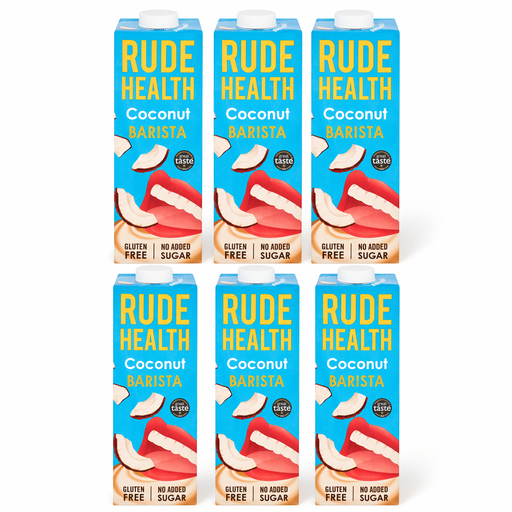
A barista coconut drink for pouring or coffee rather than a cooking can. Check the pack quantity, sugar label, oat allergen information and any fortification you require before buying.
 No image available
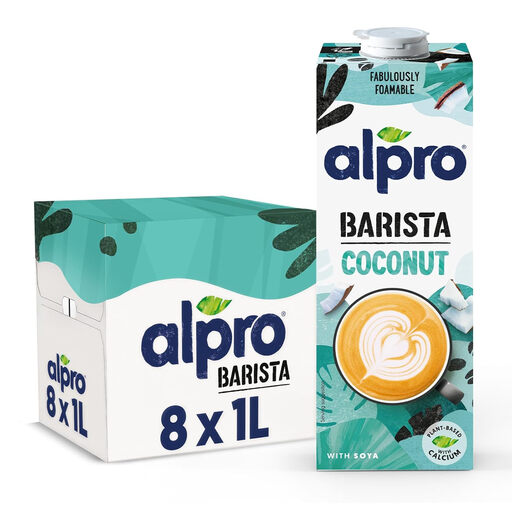
A coconut barista drink for a lunch coffee rather than a cooking ingredient. The 8 x 1L bundle exceeds a six-UK-pint target; check whether that quantity suits your use and read the soya allergen and storage information.
 No image available
A 400ml can for a cooked lunch recipe, not a pourable coconut drink. Compare the amount your recipe needs with the nutrition label, and follow the pack’s instructions for leftovers.
No. Choose a coconut drink for pouring or blending and canned coconut milk when a cooked recipe needs its texture. Check their separate nutrition labels rather than substituting one for the other on the basis of the word “coconut”.
Start with a pourable coconut drink and compare sugars, saturates and declared fortification per 100ml. UK government advisers note that the nutrient content of plant-based drinks varies considerably, so check the particular carton if it regularly takes the place of milk.
Use canned coconut milk when the recipe calls for it, and compare both saturates per 100ml and the amount going into each serving. Tesco Groceries says its Light Coconut Milk has 50% less fat than Tesco standard coconut milk, but the light version still lists 5.2g saturates per 100ml.
Six UK pints is approximately 3.41 litres, so neither three 1L cartons nor four 1L cartons matches it exactly: they provide 3 and 4 litres respectively. Choose the quantity you expect to use and follow each carton’s instructions after opening; for cooking cans, buy according to recipe volume instead.
No. Check the current allergen statement for the exact product. Marks & Spencer labels its Creamy Coconut Drink as unsuitable for people with a milk allergy, so a coconut-drink name alone is not enough to establish suitability.