Who is choosing?

Everyday dairy-free drink shoppers

If coconut drink is going into cereal, tea, coffee or smoothies, compare total carbohydrate, sugars, saturated fat and calcium fortification on the drink label rather than using cooking coconut milk as the reference point.

Home cooks managing diabetes

For curries, soups and sauces, the amount of coconut milk in each serving matters. Regular cooking products can have substantial saturated fat even when their declared sugars are relatively low.

Strict vegans and shoppers with allergies

Check the current pack for a vegan statement or the certification mark you require. Read ingredient and allergen information separately: a vegan claim is not an allergen-safety assessment.

What should you compare?

Carton coconut drink

Choose for: cereal or hot drinks when you want a dairy-free beverage; Diabetes UK advises looking for an unsweetened option fortified with calcium.

Bear in mind: check total carbohydrate for your serving as well as any no-sugar wording.

Regular cooking coconut milk

Choose for: a curry, soup or sauce that calls for concentrated coconut flavour and texture.

Bear in mind: the regular cooking products cited by Koko, Sainsbury's, M&S and Waitrose declare substantially more saturated fat per 100ml or 100g than the carton drinks cited here.

Reduced-fat cooking coconut milk

Choose for: a cooking recipe when you want to compare a reduced-fat version with a regular one.

Bear in mind: M&S declares 8.2g saturates per 100g for its Reduced Fat Coconut Milk, versus 15.1g for its regular version; 8.2g still exceeds the NHS high-saturated-fat threshold of more than 5g per 100g.

Priority What to check Your needs
Carbohydrate and sugars Compare total carbohydrate and sugars per 100ml or 100g, then check the amount in your drink or recipe serving. Diabetes UK advises checking total carbohydrate because carbohydrates affect blood glucose. I want to account for the amount I actually use, rather than relying on a no-sugar claim or a front-of-pack traffic light.
Saturated fat Compare saturates using the same units where possible, especially between cooking products. The NHS calls more than 5g saturated fat per 100g high; check the portion going into the recipe too. For a coconut-based sauce, I need to consider saturated fat as well as sugar, particularly if I use a substantial part of a can.
Vegan status and milk replacement Look for an explicit vegan statement or the certification you require, and check ingredients and allergens separately. For a regular milk replacement, Diabetes UK advises choosing a calcium-fortified plant-based drink. Replacing dairy milk means I care about what the drink provides, not just whether it contains coconut.
Format and storage Check whether the product is a carton drink or cooking coconut milk. Read its own refrigeration and use-after-opening instructions before choosing a pack size. I want a drink for cereal or coffee, or a cooking ingredient for a recipe, without leaving more opened product than I can use as instructed.

Mistakes to avoid

  • Choosing on sugar alone

    Sainsbury's declares 1.6g sugars and 13.8g saturates per 100ml for its Coconut Milk; Waitrose declares 1.4g sugars and 15.8g saturates per 100ml for Essential Coconut Milk.

    Check total carbohydrate, sugars and saturates together, then consider the amount your recipe uses.

  • Reading “reduced fat” as “low in saturated fat”

    M&S Reduced Fat Coconut Milk declares less saturated fat than its regular version, but its 8.2g per 100g remains above the NHS high-saturated-fat threshold of more than 5g per 100g.

    Compare the per-100g figures and the recipe portion when deciding whether that reduction meets your aim.

  • Treating vegan wording as an allergen check

    A vegan statement does not tell you everything you need to know about ingredients or allergens. A coconut product should not be assumed to carry a particular vegan certification mark either.

    Check the current pack for the dietary statement or mark you require, then read its ingredient, allergen and precautionary information separately.

  • Overlooking instructions after opening

    Opened-pack instructions differ: the listed Morrisons Reduced Fat Coconut Milk says to refrigerate and use within two days, while the listed Alpro Barista Coconut Drink says to refrigerate and use within five days.

    Choose a pack size that fits your plans and follow the instructions on the product you buy.

    A partially used pack may go to waste if it cannot be used within its stated opened life.

Brand and product references

These examples show why the exact drink or cooking product matters more than the brand name alone.

Alpro

Alpro Coconut Original is a carton drink labelled vegan on Alpro's UK product page.

  • Alpro declares 1.9g sugars, 0.9g saturates and 120mg calcium per 100ml for Coconut Original.
  • Those figures describe Coconut Original, not every Alpro coconut drink; check the label of the variant you choose.

Koko

Koko lists both carton coconut drink and coconut milk for cooking.

  • Koko declares 0.2g sugars, 1.2g saturates and 120mg calcium per 100ml for Unsweetened No Sugar Milk.
  • Koko Cuisine Coconut Milk is a different format and declares 15.7g saturates per 100ml.

M&S

M&S lists a vegan Creamy Coconut Drink alongside separate regular and reduced-fat cooking coconut milks.

  • Creamy Coconut Drink declares 2.1g sugars and 1.7g saturates per 100g, and lists calcium, iodine, vitamin B12 and vitamin D.
  • Reduced Fat Coconut Milk declares 8.2g saturates per 100g, compared with 15.1g for M&S regular Coconut Milk. Both figures exceed the NHS high-saturated-fat threshold of more than 5g per 100g.

Sainsbury's

Sainsbury's Coconut Milk is a canned product for cooking.

  • Its product page declares 1.6g sugars per 100ml.
  • The same page declares 13.8g saturates per 100ml. If vegan status is essential, check the current pack for an explicit dietary statement rather than assuming certification.

Waitrose

Waitrose describes Essential Coconut Milk as suitable for vegans and sells it as a cooking coconut milk.

  • Waitrose declares 1.4g sugars per 100ml for Essential Coconut Milk.
  • It also declares 15.8g saturates per 100ml, so consider the amount a recipe uses rather than choosing on its sugar figure alone.

Joybuy coconut products

These two options serve different uses: a coconut-and-soya drink for coffee and a reduced-fat canned coconut milk for cooking. Compare each label for the amount you plan to use.
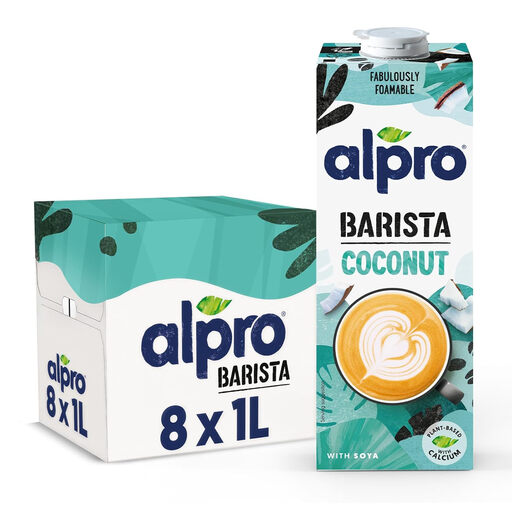
Alpro Barista Coconut Long Life Drink, pack of eight 1L cartons

Alpro Barista Coconut Long Life Drink, 8 × 1L

This coconut-and-soya drink is described for coffee and frothing, rather than cooking. It lists 3.3g carbohydrate, 3.3g sugars and 0.7g saturates per 100ml, so it is not an unsweetened choice. It contains soya; check the current pack if the calcium amount matters to you. Refrigerate after opening and use within five days.

View on Joybuy
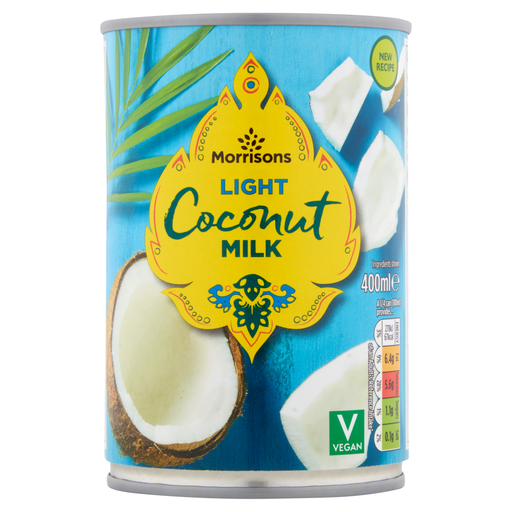
Morrisons Reduced Fat Coconut Milk, 400ml can

Morrisons Reduced Fat Coconut Milk, 400ml

This vegan-suitable canned coconut milk is described for curries, soups and baking, not as a carton drink. It lists 1.9g carbohydrate, 1.1g sugars and 5.6g saturates per 100ml; measure the recipe portion if you are limiting saturated fat. After opening, transfer it to a non-metallic container, refrigerate and use within two days.

View on Joybuy

Frequently asked questions

Is canned coconut milk the same as a coconut drink for cereal?

No. A carton coconut drink is intended as a beverage, while canned or cuisine coconut milk is used for richer cooking recipes. The Koko, Sainsbury's, M&S and Waitrose product declarations cited here show substantial differences in saturated fat, so check the format and nutrition panel before substituting one for the other.

Which label figures matter when managing diabetes?

Check total carbohydrate and sugars per 100ml or 100g, then work out the amount in your actual serving. Diabetes UK advises checking total carbohydrate because carbohydrates affect blood glucose; saturated fat is also worth comparing, particularly for cooking coconut milk.

Can I ignore carbohydrate if a coconut drink says “no sugar”?

No. Check total carbohydrate even when a drink is labelled no sugar or unsweetened. If you count carbohydrates as part of an individual insulin plan, use the amount in your serving; Diabetes UK notes that carbohydrate counting is particularly helpful for people using basal-bolus insulin.

Does a vegan label also cover allergies?

No. Check the current ingredient list, allergen statement and any precautionary information independently of the vegan claim. The Food Standards Agency has examined the risk of treating vegan labelling as a substitute for allergen information.

How long can I keep coconut milk after opening?

Follow the instructions on the exact pack. The listed Morrisons Reduced Fat Coconut Milk says to refrigerate and use within two days after opening, while the listed Alpro Barista Coconut Drink says five days; the Morrisons instructions also call for transferring leftovers to a non-metallic container.