Breakfast drink shoppers
If coconut drink is going over cereal or porridge, or into pancakes, compare carton labels for fat, sugars and calcium. Alpro UK suggests its Coconut No Sugars drink for pancakes and oats.


For cereal, porridge or pancakes, choose a pourable coconut drink and compare its fat, sugars and calcium per 100ml; Alpro Coconut No Sugars lists 1.2g fat, 0g sugars and 120mg calcium per 100ml. If brunch centres on lattes, Alpro describes its Coconut Barista drink as foamable, but it contains soya and is not a no-sugar option. Choose reduced-fat canned coconut milk when a cooked recipe calls for a coconut cooking ingredient rather than a breakfast drink.
The first choice is whether brunch calls for a pourable drink, a coffee drink or a canned cooking ingredient.
If coconut drink is going over cereal or porridge, or into pancakes, compare carton labels for fat, sugars and calcium. Alpro UK suggests its Coconut No Sugars drink for pancakes and oats.
If the drink needs to froth for a latte or cappuccino, look for a product with a stated coffee use. Alpro UK describes Coconut Barista as foamable; its ingredients include soya.
If a sauce or soup calls for coconut milk as a cooking ingredient, look at reduced-fat canned products rather than assuming a breakfast carton will serve the same purpose. Tesco lists Blue Dragon Light Coconut Milk for curries, soups and sauces.
Match the product to the recipe first, then compare labels per 100ml so that different pack sizes do not obscure the figures.
| Priority | What to check | Your needs |
|---|---|---|
| Pack format | Check whether the pack is a pourable coconut drink or canned coconut milk, and read its stated uses. Alpro UK suggests its Coconut No Sugars drink for pancakes and oats; Tesco lists Blue Dragon Light for curries, soups and sauces. | For cereal or porridge, I want a drink I can pour. For a cooked sauce, I need the coconut ingredient the recipe calls for. |
| Fat and sugars | Compare fat, saturates and sugars per 100ml rather than treating ‘light’ or ‘no added sugar’ as a complete nutrition description. Alpro UK lists 1.2g fat and 0g sugars for Coconut No Sugars; Sainsbury's lists 1.4g fat and 4.1g naturally occurring sugars for Rude Health Coconut High Calcium, both per 100ml. | If I am choosing a lower-fat breakfast drink or avoiding sugars, I want the relevant numbers on the current carton—not an assumption based on its name. |
| Calcium and protein | Read both figures separately if the drink regularly replaces dairy. Alpro UK lists 120mg calcium and 0.2g protein per 100ml for Coconut No Sugars; Sainsbury's lists 120mg calcium and 1.2g protein per 100ml for Koko Coconut UHT Drink. | When coconut drink is a regular breakfast choice, I want to know what its fortification and protein figures actually are. |
| Coffee use | Check for a stated frothing use and read the ingredients and sugars. Alpro UK calls Coconut Barista foamable for lattes and lists 3.4g sugars per 100ml; it contains soya. Sainsbury's advises letting hot water cool slightly when using its Sweetened Long Life Coconut Drink to reduce separation. | For a cappuccino, frothing matters to me; for a guest who avoids soya, the ingredient list matters just as much. |
| Allergens and storage | Read the current pack before serving guests and follow its opened-pack instructions. Tesco says Blue Dragon Light may contain peanuts and nuts and should be refrigerated in a suitable container and used within two days of opening; Sainsbury's gives Koko Coconut UHT Drink five days after opening when refrigerated. | I need a product that suits my guests and a pack I can use within its stated storage period. |
The products are presented for different jobs: Alpro UK suggests Coconut No Sugars drink for pancakes and oats, while Tesco lists Blue Dragon Light canned coconut milk for curries, soups and sauces.
Check which format the recipe specifies before comparing nutrition labels or pack sizes.
Sugars vary between drinks. Alpro UK lists 0g per 100ml for Coconut No Sugars, while Sainsbury's lists 4.1g per 100ml for Rude Health Coconut High Calcium, including naturally occurring sugars from rice.
Compare fat and sugars as separate entries on the per-100ml panel.
Two calcium-fortified drinks can have different protein figures: Alpro Coconut No Sugars lists 0.2g protein per 100ml, while Koko Coconut UHT Drink lists 1.2g, according to Alpro UK and Sainsbury's respectively.
If coconut drink regularly replaces dairy at breakfast, check protein as well as fortification.
A coconut product can still carry other allergen information. Tesco says Blue Dragon Light may contain peanuts and nuts; Alpro Coconut Barista contains soya.
Read the pack for each product you serve, then follow its own refrigeration and use-after-opening directions.
These are product-line examples to help distinguish carton drinks from canned options; a brand name alone does not establish the nutrition or intended use of every product it sells.
Alpro UK lists separate coconut drinks for breakfast use and for coffee frothing.
Koko Coconut UHT Drink is a long-life carton listed by Sainsbury's.
Tesco lists both carton coconut drinks and light canned coconut milk in its coconut-milk range.
Sainsbury's lists a sweetened long-life coconut drink and a separate Coconut Milk Light 400g can.
M&S lists a Creamy Coconut Drink and a separate Reduced Fat Coconut Milk for cooking.
Waitrose lists an Essential Reduced Fat Coconut Milk 400ml can alongside its Essential Coconut Milk 400ml.
These options cover coconut drinks for brunch coffee and a reduced-fat canned coconut milk for cooking. Choose by the job each product needs to do; the coffee drinks are not presented as substitutes for the cooking can.
 No image available
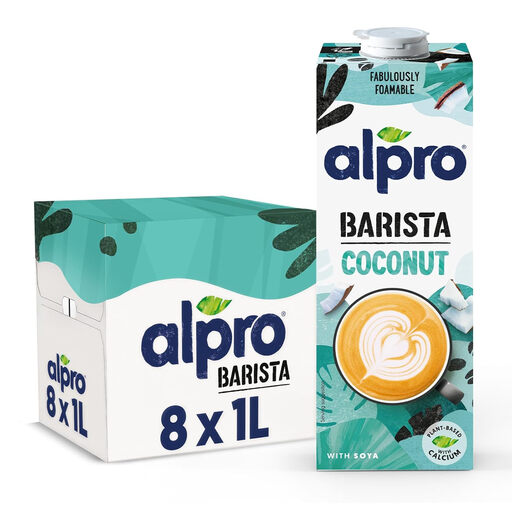
Consider this carton drink when coconut-flavoured brunch coffee is the priority: Alpro UK describes Coconut Barista as foamable for lattes. It contains soya. If sugars affect your choice, compare the figure on the current pack.
 No image available
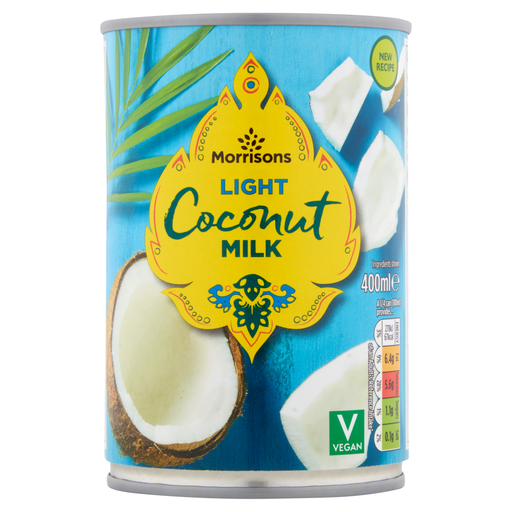
This canned option belongs with cooked brunch recipes rather than a pourable breakfast drink. Check its current fat and saturates per 100ml against other cans if those figures are central to your choice.
 No image available
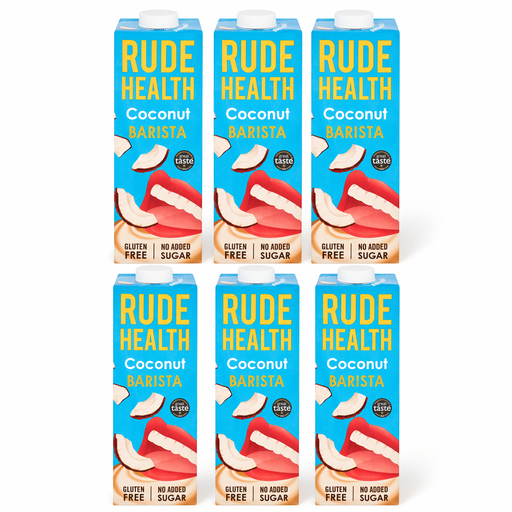
This coconut barista drink is an option to consider for brunch coffee. If frothing is essential, check the current product instructions before choosing it; also read the ingredient and allergen information before serving guests.
Choose a carton drink for a pourable breakfast use, and canned coconut milk when a cooked recipe calls for that ingredient. Alpro UK suggests Coconut No Sugars drink for pancakes and oats; Tesco lists Blue Dragon Light canned milk for curries, soups and sauces. Check the recipe before substituting one format for the other.
No. Sainsbury's lists Rude Health Coconut High Calcium as having no added sugar but 4.1g sugars per 100ml, including naturally occurring sugars from rice. If you want 0g sugars, check the sugars line: Alpro UK lists 0g per 100ml for Coconut No Sugars.
Do not assume it will. Alpro UK specifically describes Coconut Barista as foamable for lattes, whereas Sainsbury's advises letting hot water cool slightly when adding its Sweetened Long Life Coconut Drink to reduce separation. Check the particular drink's coffee instructions.
Follow the instructions for the product in hand. Sainsbury's says Koko Coconut UHT Drink should be refrigerated and consumed within five days of opening; Tesco says to move opened Blue Dragon Light Coconut Milk to a suitable container, refrigerate it and use it within two days.
Read each current pack's ingredients and allergen statements; coconut in the name does not describe every other ingredient or possible trace. Alpro Coconut Barista contains soya, Tesco says Blue Dragon Light may contain peanuts and nuts, and Sainsbury's says its Sweetened Long Life Coconut Drink is unsuitable for customers with a soya allergy due to manufacturing methods.