Guests stocking up for breakfast
If coconut drink is for cereal, smoothies or cold drinks, plan the quantity around the group’s stay and leave fridge space for any opened carton.


For a holiday cottage breakfast supply, three 1-litre cartons of coconut drink provide 3 litres, exceeding four UK pints (2.272 litres); choose culinary coconut milk instead when a recipe calls for it. Check the space and time available to refrigerate opened cartons, and read the current label for each guest’s dietary needs.
If coconut drink is for cereal, smoothies or cold drinks, plan the quantity around the group’s stay and leave fridge space for any opened carton.
Choose the exact coconut drink by its current nutrition and ingredient label: an unsweetened or no-sugars product is a different choice from a sweetened original drink.
If a meal calls for coconut milk or coconut cream, check for the culinary product and recipe quantity rather than picking up a breakfast-style coconut drink because the names sound similar.
Start with how you will use the coconut product, then work out the quantity and check what happens after opening.
Choose when: The cottage needs a plant-based drink for cereal, smoothies or cold drinks.
Plan for: Fridge space after opening; Tesco Groceries says to use its listed Koko carton within five days.
Choose when: A planned dish specifically calls for coconut milk or coconut cream.
Plan for: Recipe quantities rather than a breakfast-drink supply; Waitrose & Partners lists coconut milk in 400 ml tins.
| Priority | What to check | Your needs |
|---|---|---|
| Quantity | A UK pint holds 568 ml, according to nidirect, so four pints equal 2.272 litres. Three 1-litre cartons provide 3 litres. | I need enough drink for the group, but can plan when to open the extra volume. |
| Opened storage | Read each carton’s refrigeration and use instructions. Tesco Groceries lists five days after opening for Koko; Sainsbury’s lists four days for Plenish. | For a short stay, I would open cartons one at a time rather than take up fridge space with several opened packs. |
| Sugar label | Compare the exact product labels. Alpro UK describes Coconut No Sugars as sugar-free, while Tesco Groceries describes Coconut Original as sweetened. | I want the drink’s sugar label to match what the group intends to buy, without assuming all coconut drinks are alike. |
| Guest requirements | Check ingredients and precautionary allergen statements on the current pack. For cooking, also check that the product type matches the recipe. | If a guest has an allergy or another dietary requirement, I need to check the exact product before serving it. |
Four UK pints equal 2.272 litres, while the coconut drinks considered here are listed in 1-litre cartons.
Plan in litres: three 1-litre cartons exceed four pints. Consider how much the group will use before opening them all.
A plant-based drink and culinary coconut milk serve different shopping purposes; Waitrose & Partners lists coconut milk and cream among tins and packets.
Read the recipe first, then choose the named product type and quantity.
Long-life unopened packaging does not remove the need to refrigerate and use a carton within its stated period after opening.
Open cartons as needed and follow each pack’s storage instructions.
Unused drink may have to be discarded once its stated opened-pack use period has passed.
“Dairy-free” or “no sugars” does not answer every ingredient or allergy question about a particular carton.
Check its current ingredients and precautionary allergen statements before buying and serving it.
Tesco Groceries lists Koko Dairy Free Unsweetened as a 1-litre coconut drink.
Alpro Coconut No Sugars is a 1-litre coconut drink.
Tesco Long Life Coconut Original is a 1-litre drink for shoppers considering an own-label option.
Sainsbury’s lists a 1-litre long-life organic coconut drink from Plenish.
These options include larger coconut-drink packs for breakfasts or coffee and 400 ml culinary coconut milk for recipes. Choose by the cottage menu and the quantity you expect to use.
 No image available
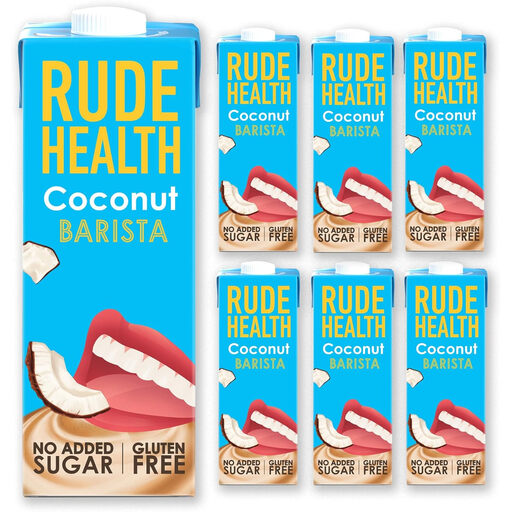
For cottage coffee or breakfasts, six 1-litre cartons provide more than the four-pint drink target. Check the carton’s product description and opened-pack storage instructions before buying.
 No image available
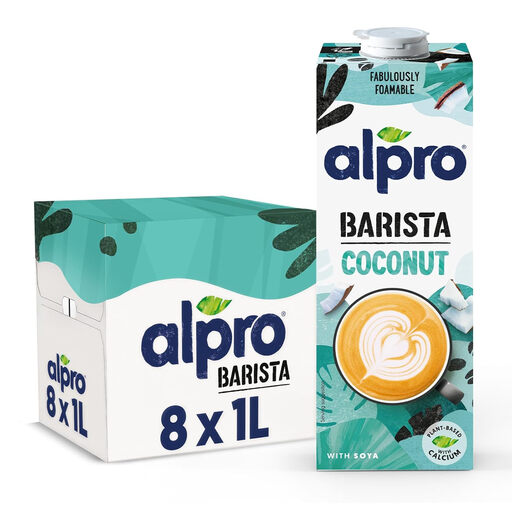
This eight-carton drink pack is substantially larger than a four-pint cottage shop. Check the current pack for soya, sugar and opened-carton instructions if these matter to your group.
 No image available
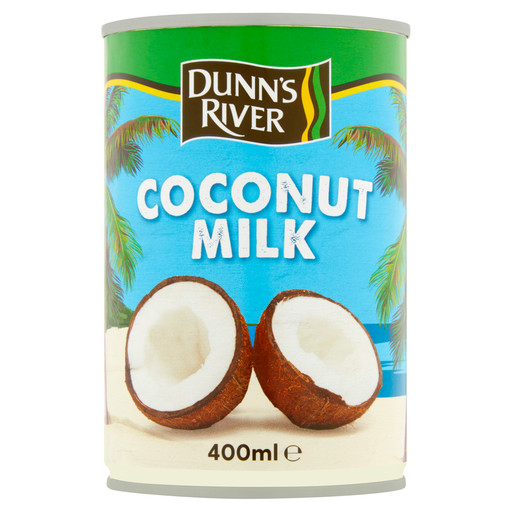
Choose this 400 ml culinary coconut milk when a cottage recipe calls for it, rather than as a four-pint drink supply. Check the recipe quantity and the tin’s instructions for storing any opened contents.
 No image available
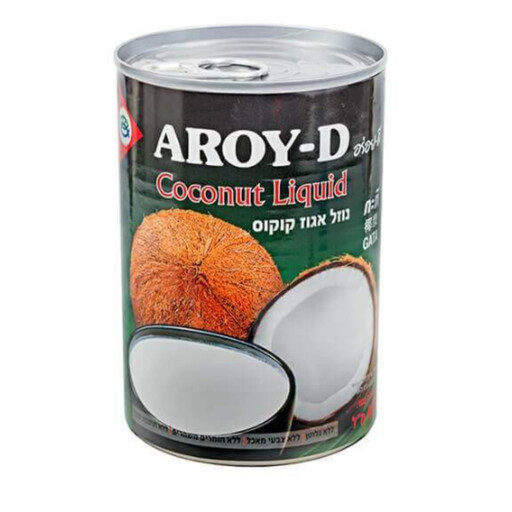
This 400 ml culinary coconut milk is a recipe purchase, not a four-pint breakfast-drink supply. Check the amount the dish requires and the current label if a guest has an allergy.
 No image available
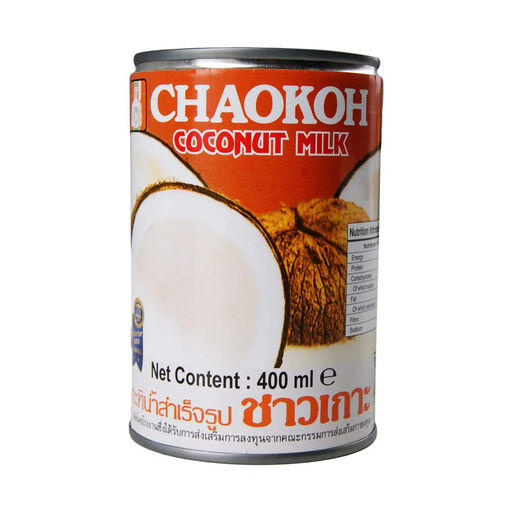
Use this 400 ml culinary coconut milk for a recipe that specifies coconut milk. Buy the number of tins the recipe calls for and check how to store any contents left after opening.
Three 1-litre cartons provide 3 litres, exceeding four UK pints by 728 ml. Nidirect states that a pint holds 568 ml, making four pints 2.272 litres; plan when to open the extra drink.
Buy a coconut drink for cereal or cold drinks, and culinary coconut milk when the planned recipe calls for it. Waitrose & Partners lists coconut milk and cream among tins and packets, so check the recipe before choosing a product.
Follow the instruction on the particular carton. Tesco Groceries says to refrigerate its listed Koko drink and use it within five days of opening; Sainsbury’s gives four days for its listed Plenish drink.
Do not assume it is suitable from a dairy-free claim alone. Check the current ingredients and precautionary allergen statements on the exact pack against each guest’s requirements before serving it.