Choose a carton coconut drink for drinking, oats or a smoothie; choose light or reduced-fat tinned coconut milk when a soup, curry or sauce needs a cooking ingredient. The British Heart Foundation distinguishes the two formats, and product labels show why the choice matters: Alpro Coconut No Sugars Drink lists 1.1g saturated fat per 100ml, while the Tesco and Waitrose reduced-fat cooking examples list 5.2g and 5.5g per 100ml respectively. Compare the pack you intend to use and the quantity your lunch recipe requires; a “light” label does not make a tin equivalent to a carton drink.
Who is choosing coconut milk for lunch?
Lunch cooks making coconut sauces
If a soup, curry or grain bowl needs a coconut cooking base but you want less richness than a standard tin, compare light or reduced-fat tins. Check saturated fat per 100ml and the amount the recipe uses; the British Heart Foundation notes that reduced-fat tinned coconut milk can still be high in fat.
People choosing a dairy-free lunch drink
For drinking, cereal, oats or a smoothie, start with carton coconut drinks rather than concentrated cooking milk. Check sugars and any calcium or vitamin declarations on the particular pack: UK government guidance says fortification varies between plant-based drinks.
Shoppers comparing saturated fat
Compare products by format as well as by their per-100ml figures. Alpro UK declares 1.1g saturated fat per 100ml for Coconut No Sugars Drink; Tesco Light Coconut Milk and essential Waitrose Reduced Fat Coconut Milk declare 5.2g and 5.5g per 100ml. Those figures describe three named products, not every carton or tin.
What should you check before buying?
Decide whether the coconut product is for pouring or cooking, then compare labels within the format that suits your lunch. A less rich flavour is a personal judgement, so nutrition figures cannot tell you which product will taste mildest.
| Priority |
What to check |
Your needs |
| Format and use |
Check whether the pack is a ready-to-pour coconut drink or tinned coconut milk for cooking. A drink will not give a sauce the same richness as a concentrated cooking product. |
I want something to pour over oats or drink with lunch; for a coconut soup or curry, I need a cooking ingredient instead. |
| Saturated fat and portion |
Compare saturated fat per 100ml, then consider how much the recipe uses. Tesco Groceries lists 5.2g per 100ml for Tesco Light Coconut Milk; Waitrose & Partners lists 5.5g for essential Waitrose Reduced Fat Coconut Milk. |
A “light” tin may suit my recipe, but I still want to account for the amount going into each lunch. The British Heart Foundation notes that reduced-fat tinned coconut milk remains a high-fat food. |
| Sugars and fortification |
Read sugars per 100ml and check for declared calcium and vitamins. Alpro UK lists 0g sugars, calcium and vitamins B12 and D for Coconut No Sugars Drink; UK government guidance says fortification differs between plant-based drinks. |
If a coconut drink regularly takes the place of dairy in my lunch, I want to know what this particular carton contains rather than assuming all plant-based drinks are alike. |
| Ingredients and storage |
Check the ingredient and allergen information, then follow the pack’s instructions after opening. Tesco Groceries and Waitrose & Partners instruct users to refrigerate their named light or reduced-fat tins and use them within two days. |
I may use one tin across several lunches, so the pack size and its instructions for leftovers matter to my plan. |
Which mix-ups matter?
-
Treating a carton drink and a cooking tin as interchangeable
The British Heart Foundation distinguishes concentrated tinned coconut milk from coconut drinks sold as plant-based dairy alternatives. Swapping one for the other changes what goes into a sauce or a drink.
Choose the format for the job before comparing brands: a pourable drink for oats or a smoothie, or tinned milk when the recipe calls for a coconut cooking base.
-
Reading “light” as a saturated-fat figure
“Light” does not tell you how much saturated fat your serving contains. Tesco Light Coconut Milk lists 5.2g per 100ml, and essential Waitrose Reduced Fat Coconut Milk lists 5.5g per 100ml, according to their retailers.
Read the per-100ml declaration and consider the quantity used in the recipe, rather than judging the finished lunch by the front-of-pack wording.
-
Assuming every coconut drink has the same nutrients
Plant-based drinks vary in fortification, according to UK government guidance. A dairy-free description alone does not tell you which nutrients a particular drink declares.
If the drink regularly replaces dairy at lunch, check its ingredient and nutrition information for calcium and relevant vitamins.
-
Planning several lunches without checking storage
Post-opening instructions differ by product: Tesco Groceries and Waitrose & Partners specify two days for the named tins, while Tesco Groceries lists three days for Laila Light Coconut Milk.
Choose a pack size you can use as directed, and check the specific tin for refrigeration and leftover-storage instructions.
A pack that cannot be used within its stated post-opening period may leave unused coconut milk to discard.
Which brand examples help with the choice?
These named products illustrate label differences between coconut drinks and cooking tins; they do not describe every product made by each brand.
Alpro
Alpro Coconut No Sugars Drink is a carton option for pouring or drinking, rather than a concentrated cooking tin.
- Alpro UK declares 0g sugars, 1.1g saturated fat and calcium plus vitamins B12 and D per 100ml for this drink.
- Those declarations apply to Coconut No Sugars Drink, not to every Alpro coconut product or to a coconut sauce recipe.
Tesco
Tesco Light Coconut Milk is a tinned option for a cooked coconut lunch.
- Tesco Groceries lists 6.0g fat and 5.2g saturated fat per 100ml, and describes it as having 50% less fat than Tesco standard coconut milk.
- The stated reduction is relative to Tesco’s standard product; the tin is not nutritionally interchangeable with a carton coconut drink.
essential Waitrose
Essential Reduced Fat Coconut Milk is another tinned option for a cooked lunch.
- Waitrose & Partners lists 6.2g fat and 5.5g saturated fat per 100ml for this product.
- Consider the amount added to each serving: a reduced-fat name does not specify the saturated fat in your finished recipe.
Joybuy options for lunch drinks and cooking
These options include drinks for pouring or serving alongside lunch and a reduced-fat tin for cooking. The Chunguang option is an individual canned drink, not a carton or a substitute for tinned cooking milk.
 No image available
Alpro Barista Coconut Long Life Drink 8 × 1L
A carton drink to consider for pouring or drinking with lunch, although this Barista product is presented primarily for coffee. It contains soya; check the ingredient information if you avoid soya, and do not assume it will give a cooked sauce the texture of tinned coconut milk.
View on Joybuy
 No image available
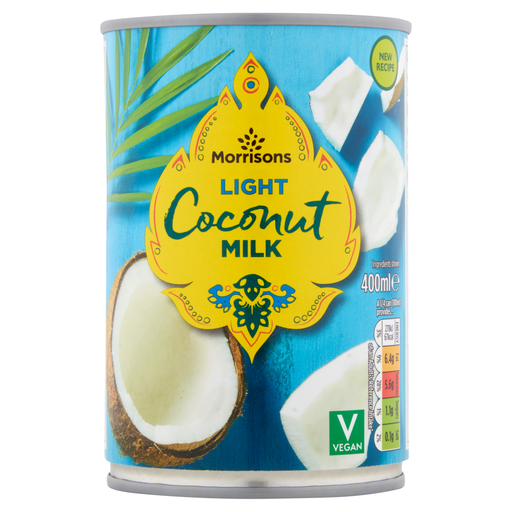
Morrisons Reduced Fat Coconut Milk 400ml
A tinned cooking option when lunch calls for a coconut soup, curry or sauce. Compare the saturated-fat declaration and the amount your recipe uses rather than assuming “reduced fat” means a small amount of saturated fat. After opening, follow the pack’s instructions for transferring, refrigerating and using leftovers.
View on Joybuy
 No image available
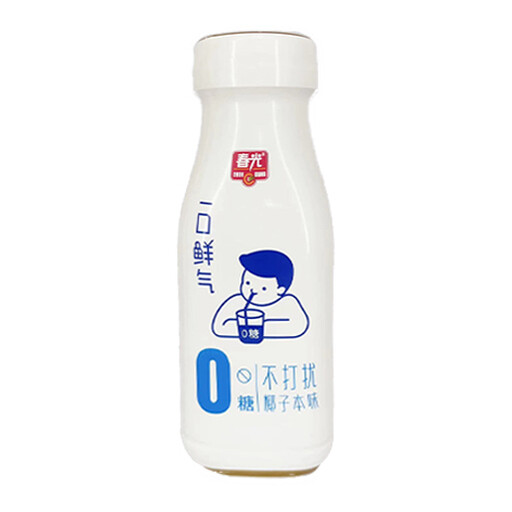
Chunguang 0 Sugar Coconut Milk 15 × 245ml
Individual cans offer a ready-to-drink coconut option alongside lunch. This product contains milk-derived sodium caseinate, so it does not suit someone avoiding milk. Check the pack’s nutrition and ingredients before comparing it with other drinks or choosing it in place of dairy.
View on Joybuy
Common questions
Is tinned coconut milk the same as a carton coconut drink?
No. The British Heart Foundation distinguishes concentrated tinned coconut milk for cooking from coconut drinks used as plant-based dairy alternatives. Choose according to whether lunch needs a sauce base or something to pour or drink.
Does light coconut milk make a lunch low in saturated fat?
Not necessarily. Tesco Groceries lists 5.2g saturated fat per 100ml for Tesco Light Coconut Milk, while Waitrose & Partners lists 5.5g per 100ml for essential Waitrose Reduced Fat Coconut Milk. Check the figure on your chosen tin and how much goes into each serving.
What matters if a coconut drink replaces dairy at lunch?
Check the particular drink’s sugars, ingredients and declared calcium and vitamins. UK government guidance says plant-based drinks vary in fortification, so a coconut-drink label alone does not establish its nutrient content.
How long can I keep an opened tin for another lunch?
Follow that tin’s instructions. Tesco Groceries and Waitrose & Partners say to refrigerate their named light or reduced-fat coconut milks and use them within two days; Tesco Groceries gives three days for Laila Light Coconut Milk. Check the label for any directions on transferring leftovers.


