Who is choosing a coconut drink?
The useful choice depends on whether the drink is meant to contribute to a post-exercise snack, provide a coconut-flavoured base or go into coffee.
People training for longer sessions
If exercise lasts more than an hour, check what protein and carbohydrate the drink contributes alongside the food you plan to eat afterwards. The British Heart Foundation discusses extra protein after sessions of this length.
People making a coconut-based snack
A plain coconut drink can provide the liquid for a smoothie or cereal. Check its protein content before relying on it for more than that, and choose accompanying food to suit your training schedule.
Coffee-first shoppers
If the drink is mainly for coffee, a barista variety addresses that use. Check its nutrition separately if you also intend to count it as part of a post-exercise snack.
What matters when choosing?
Start with when you next expect to eat or train, then compare the nutrition for the amount you will actually drink. Coffee use and allergy suitability need separate checks.
Coconut-based protein shake
Consider it when: You want a ready-to-drink option after a longer session and will not be eating a meal soon. Grounded declares 20.1 g protein and 25 g carbohydrate per 490 ml carton.
Bear in mind: This is a flavoured shake, not a plain milk alternative. Grounded says its drink is made in a facility that also handles milk, gluten and soya.
Plain coconut drink with food
Consider it when: You want coconut flavour in a smoothie or snack and can get protein and carbohydrate from accompanying food.
Bear in mind: Waitrose & Partners lists less than 0.5 g protein per 100 ml for Rude Health Chilled Coconut Drink, so do not treat that drink as the protein part of the snack.
Coconut barista drink
Consider it when: You primarily want a coconut drink for coffee around your training routine.
Bear in mind: Waitrose & Partners lists 1.5 g protein and 3.3 g carbohydrate per 100 ml for Alpro Coconut Barista With Soya; assess the portion you drink alongside your food.
| Priority |
What to check |
Your needs |
| Protein and carbohydrate |
Read both values for the portion you will drink, not just per 100 ml. The British Heart Foundation cites 15–30 g protein after exercise lasting longer than an hour; also consider what your food provides. |
After a longer session, I want to know what the drink adds to my snack rather than assuming every dairy-free coconut drink serves the same purpose. |
| Timing between sessions |
Consider when your next demanding session begins and whether food and fluids will be available. The British Dietetic Association advises starting carbohydrate-rich foods and fluids promptly when quick recovery is required. |
If I am training again soon, I need a practical way to eat and drink afterwards; a coconut drink alone may not cover what I have planned. |
| Allergens |
Read the specific product’s ingredients and allergy statements, including precautionary wording. M&S says its vegan Creamy Coconut Drink is not suitable for people with a milk allergy. |
A dairy-free or vegan description is not enough for me if I must avoid milk, soya or another allergen. |
| Sweetness preference |
Compare the sugar and carbohydrate entries on the nutrition panel. Waitrose & Partners lists Rude Health Chilled Coconut Drink as having no added sugar while declaring 11 g carbohydrate per 100 ml. |
I may prefer no added sugar, but I still want to know how the drink fits with the rest of my food after exercise. |
| Coffee use |
Check whether the variety is intended for coffee, then assess protein and carbohydrate for your usual portion if you also drink it after training. |
Coffee texture matters to me, but I do not want a barista label to stand in for a nutrition check. |
Brand and retailer references
These examples show why the formulation and nutrition panel matter more than the name on the carton or the retailer listing it.
Alpro
Alpro’s Coconut Barista With Soya is a coconut-and-soya option for coffee.
- Waitrose & Partners lists 1.5 g protein and 3.3 g carbohydrate per 100 ml for this variety.
- The listing says it contains soya and may contain nuts. Its per-100 ml figures are not the nutrition for a complete post-exercise snack.
Koko
Koko offers an unsweetened long-life coconut drink listed by Tesco.
- Tesco describes that variety as made with coconut milk, calcium and vitamins D2 and B12.
- Check its current nutrition panel for protein and carbohydrate before deciding what food to have with it.
Tesco
Tesco lists own-label long-life coconut drinks as well as other coconut-drink brands.
- Tesco describes its Long Life Coconut Original as a sweetened drink with added calcium, iodine, vitamin B12 and vitamin D2.
- Fortification does not tell you how much protein and carbohydrate your portion provides; check the carton.
M&S
M&S Plant Kitchen Creamy Coconut Drink is an everyday coconut drink with added nutrients.
- M&S lists calcium, iodine and vitamins B12 and D among its added nutrients.
- M&S declares 0.2 g protein per 100 g and says this vegan product is not suitable for people with a milk allergy.
Waitrose
Waitrose & Partners lists different kinds of coconut-based drinks; the retailer name does not identify a single formulation.
- Its listings include a Grounded chocolate protein shake and Rude Health Chilled Coconut Drink.
- Waitrose & Partners lists 20 g protein per 490 ml Grounded bottle, but less than 0.5 g per 100 ml for the Rude Health drink. Compare the exact product and portion.
Coconut drink options at Joybuy
This coconut barista option is relevant if you want a drink for coffee around your training routine. Assess the portion you use alongside any food you plan to eat after exercise.
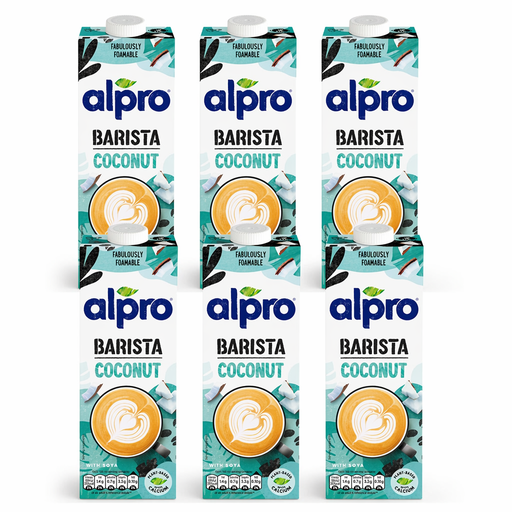 Image unavailable
Alpro Coconut Barista 6
A coconut barista drink to consider if you mainly want a coffee option around training. If it will also form part of a post-exercise snack, check the nutrition for the amount you pour and plan accompanying food accordingly.
View at Joybuy
Questions about coconut drinks after exercise
Can a plain coconut drink be my only post-workout drink?
Do not assume it supplies the protein you want after a longer session. The British Heart Foundation cites 15–30 g protein after exercise lasting more than an hour, while Waitrose & Partners lists less than 0.5 g per 100 ml for Rude Health Chilled Coconut Drink and M&S lists 0.2 g per 100 g for Creamy Coconut Drink. Consider the drink alongside protein- and carbohydrate-containing food.
When should I think about prompt carbohydrate refuelling?
It matters particularly when another demanding training session or competition is close. The British Dietetic Association advises starting carbohydrate-rich food and fluids as soon as possible when quick recovery is required; your schedule helps determine how promptly you need to organise a snack or meal.
Does dairy-free or vegan mean suitable for a milk allergy?
No; read the allergy advice for the exact product. M&S says its vegan Creamy Coconut Drink is not suitable for people with a milk allergy, and Grounded says its dairy-free shake is made in a facility handling milk, gluten and soya.
Is a coconut barista drink a protein shake?
Not simply because it is a barista drink. Waitrose & Partners lists 1.5 g protein and 3.3 g carbohydrate per 100 ml for Alpro Coconut Barista With Soya. Check what your actual portion contributes, and consider it alongside the rest of your food if recovery nutrition is your reason for choosing it.
How should I store a coconut drink after opening?
Follow the refrigeration and use-after-opening instructions on the specific pack. Do not apply another coconut drink’s storage period to the one you have bought.


