People making dairy-free hot drinks
If you want coconut flavour in tea, coffee or hot chocolate, start with a carton labelled dairy-free. For regular use in place of dairy, compare calcium fortification and the nutrition panel per 100 ml.


For tea, hot chocolate or coffee without a need for foam, an unsweetened, calcium-fortified coconut drink such as Koko Unsweetened is a practical starting point; Koko lists 120 mg calcium and 0.2 g sugars per 100 ml. If you want froth for a latte, Alpro Barista Coconut is made for coffee, but its listed ingredients include soya. For an allergy, check the ingredients and precautionary allergen wording on the exact carton rather than relying on a dairy-free or vegan claim.
If you want coconut flavour in tea, coffee or hot chocolate, start with a carton labelled dairy-free. For regular use in place of dairy, compare calcium fortification and the nutrition panel per 100 ml.
A barista-style drink is the relevant option for a frothy latte or cappuccino. Check its heating directions and ingredients: the Alpro Barista Coconut product listed by Waitrose contains soya.
A vegan label is not a substitute for reading ingredients and precautionary allergen statements when milk allergy is a concern. If a child cannot consume dairy, check fortification and seek advice appropriate to the child’s diet.
Decide whether the drink needs to froth, then compare the exact carton’s ingredients, fortification and nutrition information.
| Priority | What to check | Your needs |
|---|---|---|
| Allergens | Read the current ingredients, highlighted allergens and precautionary wording. Check for soya in barista formulas; a vegan label does not settle cross-contact concerns. | I need to avoid milk, and may need to avoid another ingredient too. I cannot use a dairy-free claim alone to assess an allergy. |
| Fortification | Look for calcium on the nutrition panel and compare amounts per 100 ml. The NHS includes unsweetened, calcium-fortified plant drinks among dairy alternatives. | If this will regularly replace a dairy drink, I want to know whether the carton is fortified rather than choosing by coconut flavour alone. |
| Coffee preparation | Check whether the product is intended for steaming or frothing, and follow its heating directions. Do not assume a standard coconut drink will produce latte foam. | For a cappuccino, foam matters to me; in tea or hot chocolate, I may not need a barista formula. |
| Nutrition per 100 ml | Compare sugars, fat and saturates on the cartons you are considering. Koko Dairy Free lists 0.2 g sugars per 100 ml for its Unsweetened No Sugar Milk; Waitrose lists 3.3 g for Alpro Barista Coconut Chilled Drink. | I want to compare the drinks I would actually use, rather than assume an unsweetened carton and a barista recipe have the same nutrition. |
The Food Standards Agency cautions that vegan labelling alone does not replace allergen information: cross-contact can still matter.
Read the exact carton’s ingredients and any precautionary allergen statement, particularly if the recipe or packaging has changed.
Waitrose lists hulled soya beans in Alpro Barista Coconut Chilled Drink, despite its dairy-free coconut formulation.
If you need to avoid soya, check the current ingredients of any barista or standard carton before choosing it.
Coconut flavour does not tell you how much calcium a drink provides. Koko Dairy Free lists 120 mg calcium per 100 ml for its Unsweetened No Sugar Milk.
When using a plant drink regularly instead of dairy, compare fortification and nutrition per 100 ml on the exact products.
A drink intended for tea or everyday use does not necessarily make coffee foam. Alpro’s barista product is specifically presented for steaming and frothing.
For a latte or cappuccino, look for coffee-preparation directions and follow the carton’s heating instructions.
Koko makes coconut-based dairy-alternative drinks, including an unsweetened carton.
Alpro’s Barista Coconut range is presented for coffee preparation.
Marks & Spencer includes Plant Kitchen Creamy Coconut Drink 1L in its milk-alternatives range.
These options include coconut barista drinks for coffee and a coconut drink described for tea or coffee. Check each carton’s ingredients and preparation directions against the hot drink you plan to make.
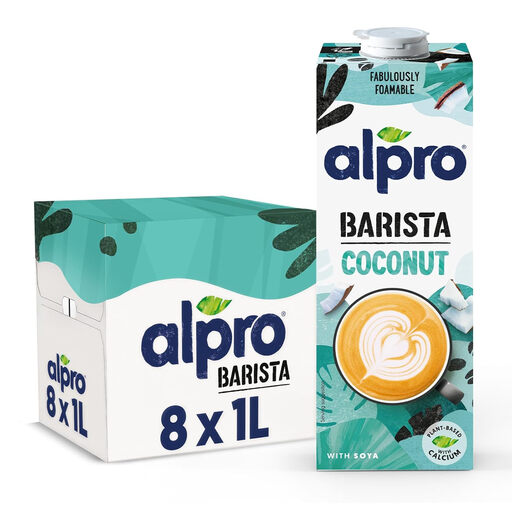 Image unavailable
A coconut-and-soya drink for coffee when frothing is the aim. The Joybuy product information lists calcium and vitamins; it also lists soya, so this is not a choice for someone avoiding soya. Check the carton’s precautionary allergen wording if cross-contact matters to you.
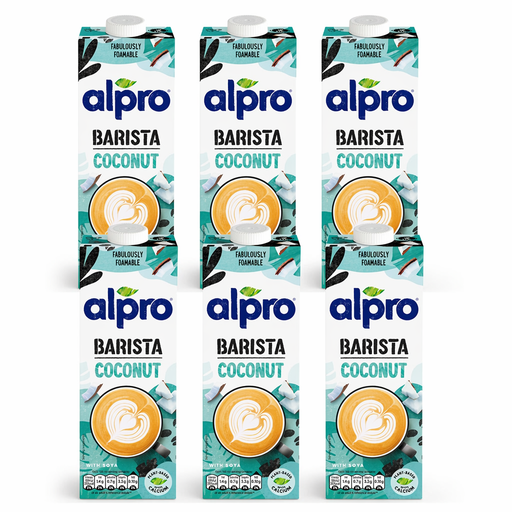 Image unavailable
A coconut barista option for frothy coffee drinks. Its product information identifies soya as an allergen, so check the current carton if you need to avoid soya or assess precautionary allergen wording.
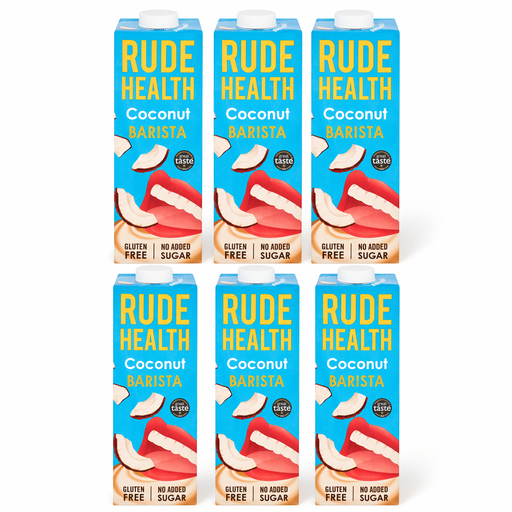 Image unavailable
A barista-style option for coconut-flavoured coffee drinks. Its listed ingredients include oats; check the carton’s allergen statement and calcium information if either affects your choice.
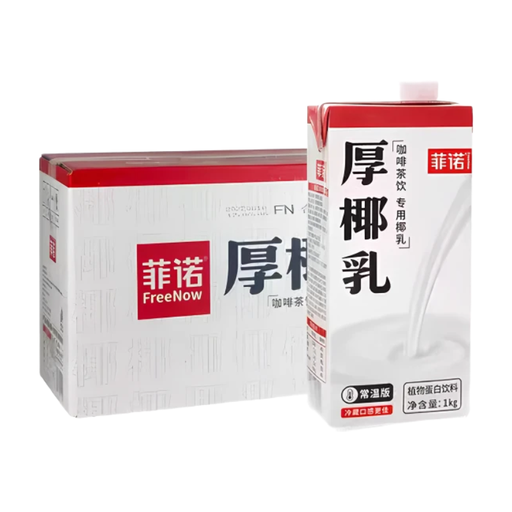 Image unavailable
Described for adding to tea or coffee when latte foam is not the deciding factor. Check the carton’s nutrition, fortification and allergen information if you need to compare it with a regular dairy alternative.
Not on its own. The Food Standards Agency advises against treating vegan labelling as a substitute for allergen information, because cross-contact may matter. Check the exact carton’s ingredients and precautionary allergen statement.
No. The NHS distinguishes intolerance to lactose, the sugar found in animal milk, from food allergy. If milk allergy is a concern, use the product’s allergen information rather than assuming a lactose-free dairy product is milk-free.
Yes. Waitrose presents Alpro Barista Coconut Chilled Drink for steaming and coffee foam; follow the heating directions on the variant you buy. Its listed ingredients include soya, so it does not suit a soya-free requirement.
Check fortification as well as ingredients. Kingston and Richmond NHS Foundation Trust advises calcium- and iodine-fortified substitutes for children who cannot consume dairy and identifies 120 mg calcium per 100 ml as its preferred amount. Seek advice suited to the child’s diet before choosing a drink as their main milk source.