Cereal and granola eaters
If you want coconut flavour without a sweeter pour, compare unsweetened cartons. Check the nutrition table if added calcium or vitamins matter to your choice.


For cereal, granola or a cold drink, start with a carton labelled coconut drink: compare sugars per 100ml, added nutrients and allergens on the individual pack. Choose a barista coconut drink when foamed coffee is the main use. Tinned coconut milk and cream are cooking ingredients rather than direct substitutes for a breakfast drink carton.
If you want coconut flavour without a sweeter pour, compare unsweetened cartons. Check the nutrition table if added calcium or vitamins matter to your choice.
If the carton is mainly for a latte or cappuccino, a barista coconut drink addresses a different use from a straightforward cereal pour. Check its ingredients and sugars per 100ml before choosing.
If milk or soya ingredients affect your purchase, read the full allergen statement on the exact product. Coconut in the name does not establish that a drink is suitable for every dairy-free or soya-free routine.
Choose the format for what you will make at breakfast, then compare the individual labels for sweetness, added nutrients, allergens and storage.
| Priority | What to check | Your needs |
|---|---|---|
| Pouring or cooking | Look for a carton sold as a coconut drink for pouring. Check whether a tin is described as an ingredient for cooking or desserts instead. | I want something to pour over cereal, porridge or granola, rather than a rich ingredient intended for a recipe. |
| Sweetness | Compare sugars on the same per-100ml basis. Sainsbury’s lists less than 0.5g for Koko Unsweetened and 1.7g for its own Sweetened Long Life Coconut Drink. | I want to decide how sweet my breakfast drink should be, rather than rely on wording on the front of the carton. |
| Added nutrients | Check the exact carton for calcium, iodine and vitamins. Sainsbury’s lists 120mg calcium per 100ml for Koko Unsweetened; its sweetened own-label drink lists added calcium, iodine, vitamin D and B12. | If I use a coconut drink regularly, I want to know what is added to this particular product, not assume all cartons have the same formulation. |
| Coffee use | Check whether the drink is sold for foaming in coffee, then read its sugars and ingredients. Sainsbury’s describes Alpro Barista Coconut as a coconut drink with soya. | Foamed coffee is the main reason I am buying a carton; a cereal pour is a secondary use. |
| Allergens | Read the current ingredients and allergy warning. Sainsbury’s says its Sweetened Long Life Coconut Drink is unsuitable for customers with a soya allergy because of manufacturing methods. | I need to check the exact pack for milk or soya information before treating a coconut-named product as suitable. |
| After opening | Check the refrigeration instruction and number of days on the pack. Sainsbury’s lists five days after opening for Koko Unsweetened; Marks & Spencer lists five days for its Creamy Coconut Drink and two days for its tinned Coconut Milk. | I use coconut products only occasionally, so I want a pack I can finish within its stated period after opening. |
A carton coconut drink and tinned coconut milk have different intended uses. Marks & Spencer describes its tinned Coconut Milk for curries, soups and sundaes and lists 17.3g fat per 100g.
For a breakfast pour, start with products labelled coconut drink. Choose a tin when the dish calls for a richer cooking ingredient.
Ingredients differ between coconut-named products. Alpro Barista Coconut contains soya, while Joybuy’s Coconut Palm Coconut Juice lists sodium caseinate and identifies milk as an allergen.
Check the full ingredients and allergen statement for the precise product, particularly when shopping for someone with an allergy.
Unsweetened and sweetened cartons can have different sugar values: Sainsbury’s lists less than 0.5g per 100ml for Koko Unsweetened and 1.7g per 100ml for its Sweetened Long Life Coconut Drink.
Compare the per-100ml nutrition panels, then check whether the nutrients you want are listed on that same carton.
Post-opening instructions vary by product. The cited Koko and Marks & Spencer drink cartons say to refrigerate and use within five days, while Marks & Spencer’s tinned Coconut Milk says to refrigerate and use within two days.
Read the instruction before choosing a pack size, particularly if you will not use the product at every breakfast.
A pack left unfinished beyond its stated post-opening period may have to be discarded.
These examples show why the product line and individual label matter more than the brand name alone.
Its Coconut No Sugars carton and Barista Coconut carton address different breakfast uses.
Its Unsweetened Coconut UHT is a breakfast-carton option for shoppers comparing sugars and added nutrients.
Its Sweetened Long Life Coconut Drink is an own-label fortified carton.
Marks & Spencer lists both a Creamy Coconut Drink and a separate tinned Coconut Milk for cooking.
Its coconut-drinks category lists own-label cartons alongside branded unsweetened and barista options.
Its listed coconut products include a sweetened drink and separate tinned cooking formats.
These coconut barista cartons are options to compare when coffee is central to your continental breakfast. For cereal or granola, use the carton-label checks above rather than treating a coffee-focused drink as the default choice.
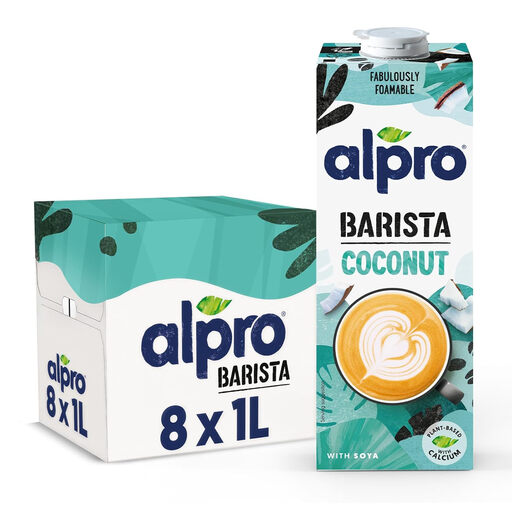 Image unavailable
A coconut drink intended for foamed coffee. Sainsbury’s describes Alpro Barista Coconut as containing soya and added calcium; check the current carton for its full nutrition and allergen information. Keep refrigerated after opening and use within five days.
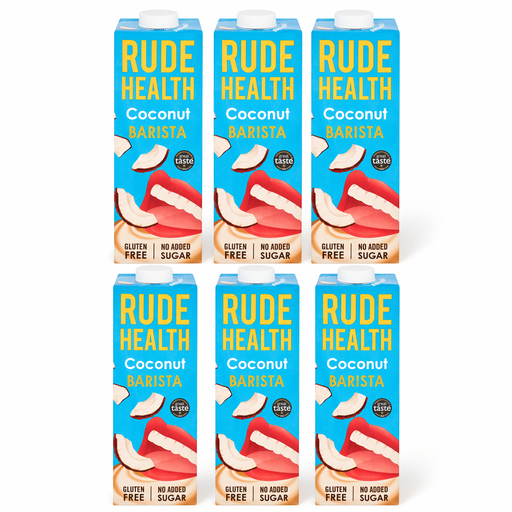 Image unavailable
A barista coconut drink for coffee-focused breakfasts. Check its oat allergen information and current nutrition label, including any added nutrients relevant to your choice. Keep refrigerated after opening and use within five days.
Start with a carton sold as coconut drink for a cereal or granola pour. Marks & Spencer positions its tinned Coconut Milk for curries, soups and sundaes; choose that format when you need a cooking ingredient instead. Check the individual carton for your preferred sweetness and added nutrients.
Do not assume it is: compare the exact carton’s nutrition table and added nutrients. Sainsbury’s lists 120mg calcium per 100ml for Koko Unsweetened, while Marks & Spencer lists added calcium, iodine, vitamin B12 and vitamin D for its Creamy Coconut Drink. Cambridgeshire and Peterborough Children’s Health notes that coconut and nut-based milks often contain less protein and fewer calories than some other plant-based alternatives.
No. Check the current ingredients and allergen statement for the exact product: Alpro Barista Coconut contains soya, Sainsbury’s Sweetened Long Life Coconut Drink carries a soya-allergy warning, and Joybuy’s Coconut Palm Coconut Juice identifies milk as an allergen.
Follow the instruction on its own pack. The cited Koko Unsweetened and Marks & Spencer Creamy Coconut Drink cartons say to refrigerate and consume within five days after opening; Marks & Spencer’s tinned Coconut Milk gives two days after opening.