Students stocking a shared kitchen
Unopened long-life cartons can be useful during move-in when fridge space is limited, provided the individual pack permits cupboard storage. Check its instructions for storage after opening too.


Four UK pints are about 2.27 litres, using the pint definition in the Product Regulation and Metrology Act 2025. The coconut drinks shown in the reviewed Tesco, Sainsbury’s and M&S ranges are 1L cartons rather than an exact four-pint pack. For a student moving in, choose a long-life carton if its label permits cupboard storage before opening, a chilled drink if fridge space is ready, or tinned coconut milk if the purchase is for cooking.
The right format depends on whether the coconut product needs to fit into a shared kitchen, go into drinks or work in a recipe.
Unopened long-life cartons can be useful during move-in when fridge space is limited, provided the individual pack permits cupboard storage. Check its instructions for storage after opening too.
Look for a ready-to-drink coconut product, then compare sweetened and no-sugar variants and the nutrients listed on each carton.
Look at tinned coconut milk sold for cooking rather than assuming a beverage carton will give a recipe the same result.
Start with the intended use and pack quantity, then check storage and the individual label before choosing between cartons.
| Priority | What to check | Your needs |
|---|---|---|
| Pack quantity | Four UK pints equal about 2.27L under the pint definition in the Product Regulation and Metrology Act 2025. Check the total volume and whether a multipack contains separate cartons. | I want enough for move-in without opening more than the household can use. Two 1L cartons fall short of four pints; three exceed it. |
| Drinking or cooking | Check whether the product is a ready-to-drink coconut alternative or tinned coconut milk intended for cooking. Compare the recipe’s requirements with the product label. | For cereal or tea, I’m shopping for a drink. For a curry or sauce, I need to check a cooking tin instead. |
| Storage | Check whether an unopened carton may be kept cool and dry or must stay chilled. Read its refrigeration and use instructions for after opening. | If the shared fridge is not ready on move-in day, a suitable unopened long-life carton gives me more flexibility. |
| Sugars and added nutrients | Compare sugars per 100ml and the listed calcium, iodine, vitamin D and vitamin B12 on the actual cartons. The Office for Health Improvement and Disparities’ July 2025 SACN/COT summary notes that plant-based drinks vary considerably in nutrient content. | I want to compare what is in the cartons rather than assume two coconut drinks have the same nutrition. |
| Allergens | Read the product-specific allergen and precautionary statements. Sainsbury’s says its sweetened long-life coconut drink is unsuitable for customers with a soya allergy; M&S gives a milk-allergy warning for its creamy coconut drink. | When an allergy matters in our kitchen, a vegan or dairy-free description alone is not enough for my choice. |
A beverage carton and a cooking tin serve different purposes. Sainsbury’s lists 19g fat per 100ml for its Aroy-D cooking coconut milk, so the type of product matters to a recipe.
Choose a coconut drink for cereal or hot drinks; for a curry or sauce, check a cooking tin’s label against the recipe.
Three 1L cartons exceed four UK pints. Sainsbury’s Koko carton and the M&S creamy coconut drink both instruct users to refrigerate after opening and consume within five days.
If buying several cartons for move-in, keep eligible long-life cartons unopened and follow each pack’s instructions as you use them.
Alpro describes its Coconut No Sugar Long Life drink as containing no sugars or sweeteners, while Sainsbury’s offers a sweetened coconut drink. Their nutrient listings also need checking product by product.
Compare the per-100ml nutrition panel and any listed added nutrients on the cartons you are considering.
Sainsbury’s gives a soya-allergy warning for its own-label coconut drink, and M&S gives a milk-allergy warning for its creamy coconut drink.
Read the current pack’s allergen statement and precautionary information before buying for someone with an allergy.
These examples show why the label and format matter; a brand name alone does not establish storage instructions, nutrition or allergen suitability across its products.
Sainsbury’s lists both a long-life Coconut No Sugar drink and a chilled Coconut Original drink in 1L cartons.
Sainsbury’s lists Koko Coconut UHT Drink as a 1L beverage carton.
Tesco Groceries lists own-label long-life Original and sweetened coconut drinks alongside branded 1L cartons.
Its own-label Sweetened Long Life Coconut Drink is a 1L UHT carton.
M&S lists a 1L creamy coconut drink separately from tinned coconut milk and cream for cooking.
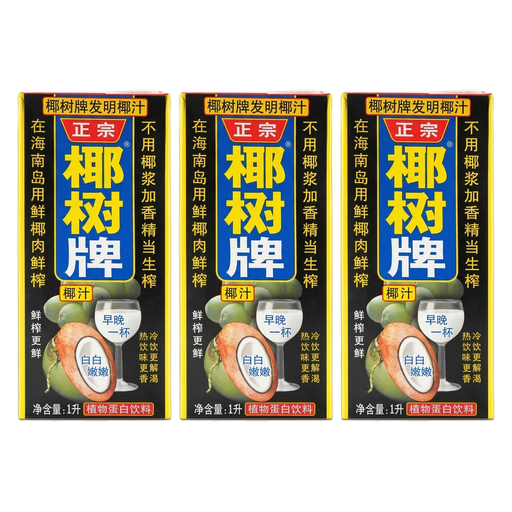
This three-carton coconut drink pack suits a move-in shop where separate cartons are useful; its total volume is not exactly four UK pints.
 No image available
Three separate 1L cartons allow a shared household to open them one at a time. The 3L total exceeds four UK pints. The product information calls for refrigeration after opening and use within 24 hours; check the pack’s allergen statement if allergies matter.
The reviewed Tesco, Sainsbury’s and M&S listings show 1L coconut drinks, not an exact four-pint pack. Under the UK pint definition in the Product Regulation and Metrology Act 2025, four pints are about 2.27L; two 1L cartons fall short and three exceed that amount. Check a product’s stated volume if an exact quantity matters.
Choose a long-life carton if its label permits cool, dry storage before opening and fridge access may be delayed. Choose a chilled drink when you can keep it refrigerated from purchase. Follow the specific pack’s instructions after opening; the Sainsbury’s Koko and M&S drinks listed here both specify refrigeration and use within five days.
Do not assume a ready-to-drink carton is a like-for-like cooking substitute. M&S presents tinned coconut milk and cream as cooking ingredients, and Sainsbury’s lists 19g fat per 100ml for its Aroy-D cooking coconut milk. Check what the recipe calls for before choosing a carton or tin.
No. The Office for Health Improvement and Disparities’ July 2025 SACN/COT summary says the nutrient content of plant-based drinks varies considerably. Compare sugars per 100ml and the listed calcium, iodine and vitamins on each carton rather than assuming the category is uniform.
No; suitability depends on the specific product’s allergen information. Sainsbury’s warns that its own-label sweetened long-life coconut drink is unsuitable for customers with a soya allergy, while M&S gives a milk-allergy warning for its creamy coconut drink. Read the current pack before buying.