What should you check before buying?
First distinguish a pourable coconut drink from a cooking ingredient. Then compare cartons on the features that matter for how you will use them.
| Priority | What to check | Your needs |
|---|
| Product type |
Check whether the pack is a long-life drink, a barista drink or culinary coconut milk or cream. Waitrose & Partners lists culinary coconut milk separately among tins, cans and packets. |
I need something pourable for cereal or drinks, rather than a coconut ingredient for a recipe. |
| Fortification |
Read the calcium, iodine, vitamin D and B12 declarations, plus protein and energy per 100ml where given. The reviewed M&S and Sainsbury's drinks declare calcium, iodine, vitamin D and B12; the cited Koko drink declares calcium, D2 and B12. |
If this regularly replaces dairy milk in my shopping, I want to compare the nutrients on the exact carton, not assume all coconut drinks are alike. |
| Sugar and ingredients |
Compare the ingredients with the ‘of which sugars’ line. Waitrose & Partners lists 4.1g sugars per 100ml for Rude Health's no-added-sugar coconut-and-rice drink; ‘no added sugar’ does not mean zero total sugar. |
A short ingredients list matters to me, but I also want to know how much sugar the drink contains. |
| Coffee use |
Look for the intended hot-drink use and read any temperature advice. Alpro describes its coconut-and-soya Barista drink in terms of foamability; Sainsbury's warns that its standard sweetened drink can separate in hot drinks. |
For a latte, I would check a barista formulation; for a splash in a hot drink, I would check the standard carton's directions. |
| Allergens |
Read the current ingredients and allergy statements, including ‘may contain’ wording. Marks & Spencer states that its Creamy Coconut Drink is not suitable for those with a milk allergy. |
Whether I avoid milk, soya, nuts or another ingredient, I need the particular pack to meet that requirement. |
Which brand ranges are relevant?
These examples show why the exact product matters more than a brand name: standard, organic and barista cartons can have different ingredients and label declarations.
Alpro
Alpro has a No Sugar long-life coconut drink and a separate coconut-and-soya Barista product.
- Tesco Groceries lists the No Sugar drink as UHT, with no sugars or sweeteners and with added calcium and vitamins B12 and D.
- The Barista product contains soya and sugar; its coffee positioning should not be applied to the No Sugar carton.
Koko
Koko's cited UHT coconut drink is a long-life option with declared fortification.
- Sainsbury's lists calcium at 120mg per 100ml, protein at 1.2g per 100ml, and added vitamins D2 and B12 for the cited carton.
- For an infant under two, follow the product label's advice to consult a GP or qualified dietitian before using it as a main milk source.
Sainsbury's
Its own-label range includes a standard sweetened long-life coconut drink and a separate coconut-and-soya Barista drink.
- The cited standard drink declares calcium, iodine, vitamin D and B12.
- The standard drink may separate in hot drinks; check the Barista product's soya and sugar ingredients if considering it instead.
M&S
Creamy Coconut Drink is an own-label option for shoppers comparing fortified coconut drinks.
- Marks & Spencer lists calcium, iodine, vitamin B12 and vitamin D for the cited product.
- Its product page says ‘Not suitable for those with a Milk allergy’. Do not infer allergy suitability from a vegan label.
Rude Health
Its cited organic, unsweetened long-life coconut-and-rice drink suits an ingredients-led comparison.
- Waitrose & Partners describes the product as organic and having no added sugar.
- Its cited panel lists 4.1g sugars and less than 0.5g protein per 100ml; check the carton separately if fortification is important.
Joybuy options for coffee
These coconut barista drinks address the coffee-use part of the choice. Compare their ingredients and pack details rather than treating them as substitutes for every fortified or short-ingredient-list coconut drink.
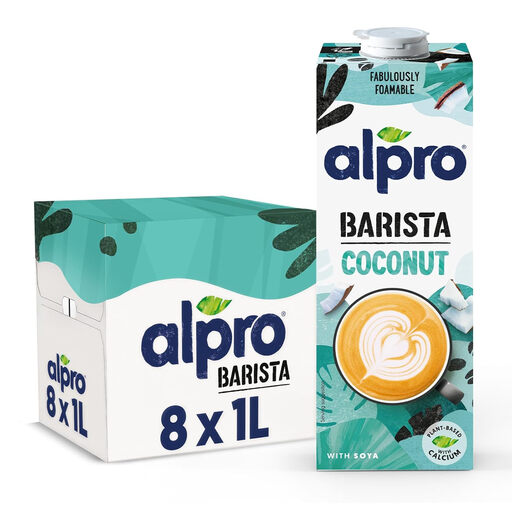 Image unavailable
Alpro Barista Coconut Long Life Drink, 8 × 1L
A coconut-and-soya barista drink for coffee; Alpro describes the formula in terms of foamability. The listing title specifies 8 × 1L. It contains soya and sugar, so check the current ingredients if avoiding either.
View on Joybuy
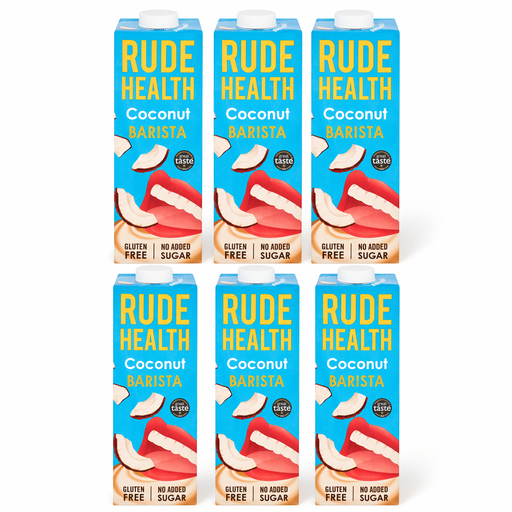 Image unavailable
Rude Health Barista Coconut 1L
A coconut barista drink described for coffee, including cortados and cappuccinos. Its listed ingredients include oats; check the current pack if avoiding them. Confirm how many cartons the listing includes before ordering.
View on Joybuy
Common questions
Is ‘filtered’ a useful way to choose a coconut drink?
Compare the product label instead. The reviewed UK cartons are identified as coconut drinks, including UHT and long-life products; their ingredients, fortification, sugar declarations, allergens and intended uses give you more concrete points to compare than the search term ‘filtered’.
Is a long-life coconut drink the same as tinned coconut milk?
No. The reviewed long-life products are pourable drinks, while Waitrose & Partners lists culinary coconut milk and coconut cream separately among tins, cans and packets. Choose according to whether you need a drink for cereal or coffee or a coconut ingredient for a recipe.
What should I compare if a coconut drink regularly replaces dairy milk?
Check the exact carton's calcium, iodine, vitamin D, vitamin B12, protein and energy declarations. The reviewed products differ in fortification; North East London NHS Foundation Trust also identifies energy density and vitamin fortification as considerations for parents choosing plant-based milk.
Will any long-life coconut drink work in a latte?
Do not assume so. Sainsbury's warns that its standard sweetened coconut drink can separate in hot drinks, while Alpro markets its separate coconut-and-soya Barista drink for foamability. Check both the intended coffee use and the ingredients.
Can I rely on a vegan label if I have a milk allergy?
No. Read the current product's allergy statement: Marks & Spencer says its Creamy Coconut Drink is not suitable for those with a milk allergy. Other coconut drinks can carry different ingredient and precautionary statements, so a category name or vegan description is not a substitute for checking the pack.


