Parents buying for themselves
A long-life coconut drink can be convenient for cereal, hot drinks or cooking. Compare sugars, fortification and instructions for use after opening: these details differ between products.


For a parent’s drinks, cereal or cooking, an unsweetened, fortified long-life coconut drink may suit a dairy-free household, but check the exact carton’s nutrition and storage instructions rather than relying on the word ‘filtered’. An ordinary coconut drink must not replace breast milk or infant formula as a baby’s main drink during the first year; using one regularly for a child after age one calls for closer attention to the child’s wider diet.
A long-life coconut drink can be convenient for cereal, hot drinks or cooking. Compare sugars, fortification and instructions for use after opening: these details differ between products.
Frimley Healthier Together NHS guidance allows plant-based milk alternatives in cooking from six months, but not as a baby’s main milk drink before age one. Keep that distinction in mind when planning family meals.
If a child will have a plant drink regularly, look beyond its coconut flavour to its fortification, protein and place in the wider diet. Ask a health visitor or dietitian for individual advice where dairy is excluded.
Decide who will use the drink first, then compare the exact product’s nutrition label and storage instructions.
| Priority | What to check | Your needs |
|---|---|---|
| Who will drink it | Check whether it is an ordinary plant drink or infant formula. Frimley Healthier Together NHS guidance distinguishes cooking with plant drinks from using them as a main milk drink before age one. | I’m choosing a drink for myself, not a replacement for my baby’s breast milk or infant formula. |
| Fortification | Read the exact carton for calcium and vitamin D, and consider vitamin B12 and iodine in the context of the wider diet. The UK government’s plant-drinks assessment says nutrient content varies considerably. | If dairy is excluded from our household diet, I want to know which nutrients this particular drink declares rather than assuming all coconut drinks are alike. |
| Sugars and ingredients | Compare sugars per 100ml and the ingredient list. ‘No added sugar’ and ‘no sugars’ make different claims: Alpro UK lists 0g sugars per 100ml for Coconut No Sugars, while Koko Dairy Free lists 0.2g per 100ml for Unsweetened. | I’d like to compare what is in drinks we may use routinely, rather than choose by ‘filtered’, ‘organic’ or coconut wording alone. |
| Storage | Confirm UHT or long-life status for unopened storage, then read the refrigeration and use-by instructions after opening. Waitrose lists four days after opening for Plenish Organic Unsweetened Long Life Coconut Drink. | Several of us may use the same carton, so a size we can finish within its stated open-life period matters. |
An ordinary plant drink does not replace breast milk or infant formula as a baby’s main drink during the first year, according to NHS guidance.
Continue breast milk or the formula advised for the baby. Seek advice from a health professional if cow’s-milk protein allergy is suspected; an appropriate specialist formula may be needed.
Long-life describes storage before opening, not nutrient content. The UK government’s plant-drinks assessment notes considerable variation in nutrients between products.
Check the exact pack for declared calcium, vitamin D, vitamin B12 and iodine where these matter to your household diet.
Coconut drinks differ in protein and fortification. For example, Alpro UK lists 0.2g protein per 100ml for Coconut No Sugars; that figure alone cannot establish whether a drink fits a child’s wider diet.
If a child aged one or over will use a plant drink regularly and dairy is excluded, discuss the wider diet with a health visitor or dietitian.
A long-life carton still has instructions for storage after opening. Waitrose says its Plenish Organic Unsweetened Long Life Coconut Drink should be refrigerated and consumed within four days once opened.
Choose a carton size that fits expected use and mark the opening date if several carers share the kitchen.
An unfinished carton may mean avoidable food waste.
These named products illustrate why it is worth comparing individual labels; a brand name alone does not tell you the fortification or sugar content of every variant.
Alpro UK lists both Coconut Original and Coconut No Sugars drinks.
Koko Dairy Free offers coconut drinks including an Unsweetened variant.
Waitrose lists Plenish Organic Unsweetened Long Life Coconut Drink as a UHT coconut-and-rice drink with no added sugar.
These coconut barista drinks are options for a parent’s household coffee use. Check each carton against the long-life, sugar and fortification needs discussed above; neither is an infant-milk substitute.
 Image unavailable
The long-life 8 × 1L pack is an option for stocking a parent’s household barista drink. Check the exact carton’s sugars, fortification, allergens and instructions after opening before deciding whether this pack size suits your use.
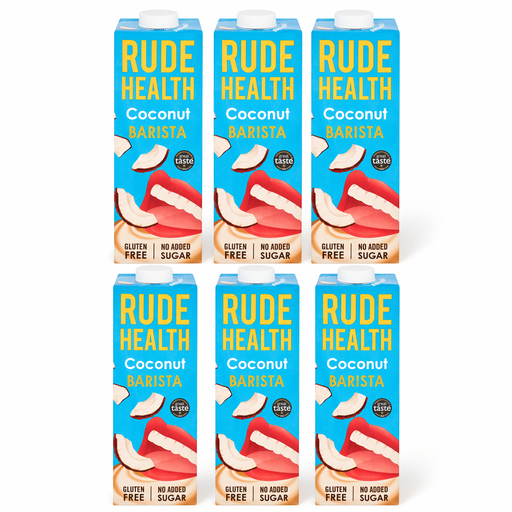 Image unavailable
This six-carton barista pack is another option for household coconut drinks. If unopened ambient storage is important, confirm UHT or long-life status on the carton; also check its sugars, fortification and allergen declaration.
No. NHS guidance says ordinary plant drinks should not be a baby’s main milk drink before age one. Frimley Healthier Together NHS guidance says plant-based milk alternatives can be used in cooking from six months; seek professional advice if cow’s-milk protein allergy is suspected, as a specialist formula may be needed.
Check the exact drink for calcium and vitamin D fortification. NHS breastfeeding advice also highlights iodine when following a vegan diet; if your diet is restricted, ask a GP or health visitor about vitamin B12 provision across your wider diet.
No: use the ingredients and nutrition panel to compare the actual drink. The UK government’s plant-drinks assessment says nutrient content varies considerably and notes that organic plant drinks in the UK cannot be fortified with nutrients.
Follow the particular carton’s instructions, because long-life refers to storage before opening. For example, Waitrose instructs shoppers to refrigerate Plenish Organic Unsweetened Long Life Coconut Drink after opening and use it within four days.