Families planning several holiday lunches
If you need coconut drink for cereal, smoothies or cold drinks, work out how much you will use before opening several cartons. Choose a drinkable carton, not canned coconut milk for cooking.


For cereal or a cold lunch drink, choose a pourable coconut drink rather than canned coconut milk intended for cooking. Four UK pints is about 2.3 litres, so three 1L cartons cover that quantity with some left over; check the child’s allergens and the opened-carton instructions before buying. If the drink will replace a young child’s usual milk, its energy, protein and fortification matter as well as its flavour.
The key distinction is whether coconut drink is an occasional lunch ingredient or a child’s regular replacement for milk.
If you need coconut drink for cereal, smoothies or cold drinks, work out how much you will use before opening several cartons. Choose a drinkable carton, not canned coconut milk for cooking.
A plant-based or vegan description does not settle a child’s allergy suitability. Check the current carton’s ingredients and allergen statement against the child’s requirements.
If a young child relies on a plant drink instead of cow’s milk, compare its energy, protein and added nutrients, not just its sugar wording. NHS child-dietetics guidance treats these as important checks for a non-dairy replacement.
Start with the intended use and quantity, then check the individual carton’s nutrition, allergens and storage instructions.
| Priority | What to check | Your needs |
|---|---|---|
| Drink or cooking milk | Look for a pourable coconut drink for cereal or a cold drink. Check that a canned coconut milk is intended for your recipe instead; M&S describes its 400ml can for cooking and desserts. | I want something I can pour with lunch, rather than an ingredient intended for a curry or soup. |
| Quantity and storage | Four UK pints is about 2.3 litres. Three 1L cartons exceed that amount; follow each pack’s instructions before and after opening. | There are several lunches to cover, but I would rather keep spare cartons unopened until needed. |
| Energy and protein | Compare values per 100ml if the drink replaces a young child’s usual milk. Hertfordshire and West Essex NHS guidance for children needing a non-dairy replacement uses around 40 kcal and at least 1g protein per 100ml as checks. | If this will be a regular replacement drink for my child, no-sugar wording alone will not answer the nutrition question. |
| Added nutrients | Read the current label for calcium, vitamin D, vitamin B12 and iodine. The inspected Sainsbury’s and M&S coconut drinks list iodine; do not assume another variant does. | I need to know what the particular carton contains when a dairy-free drink is used regularly. |
| Allergens | Check the physical pack’s ingredient and allergen statements. M&S states that its Creamy Coconut Drink is not suitable for people with a milk allergy. | A vegan label is not enough for me to decide whether a drink fits a child’s diagnosed allergy. |
| Sugars | Compare the sugar value per 100ml and distinguish sweetened from no-sugars variants. Sainsbury’s lists 1.7g sugars per 100ml for its Sweetened Long Life Coconut Drink. | For frequent lunches, I want to compare cartons using the same per-100ml measure, without overlooking their other nutrients. |
Canned coconut milk and pourable coconut drinks have different intended uses. A cooking can should not automatically take the place of a drink carton for cereal or a cold drink.
Check the pack description for “coconut drink” when you need something to pour or drink; choose canned coconut milk when the recipe calls for it.
M&S says its Plant Kitchen Creamy Coconut Drink is not suitable for people with a milk allergy. Suitability can differ between products.
Read the current carton’s allergen statement and follow the child’s allergy plan before putting a drink in a lunchbox.
Koko Unsweetened lists 19 kcal and 1.2g protein per 100ml. Its energy value is below the around 40 kcal per 100ml check in Hertfordshire and West Essex NHS guidance for young children needing a non-dairy replacement milk.
If a young child relies on the drink as a milk replacement, compare the full nutrition and fortification labels and seek individual advice from their GP or dietitian.
Opened-carton instructions are product-specific. M&S says to refrigerate its Creamy Coconut Drink after opening and consume it within five days.
Open cartons as needed and follow the storage period printed on each pack.
Opening more than the household can use within those periods can mean throwing drink away.
These examples show why the exact variant and current label matter; a brand name alone does not establish a carton’s nutrients or allergen suitability.
Sainsbury’s lists an Alpro Coconut No Sugar long-life drink in a 1L carton.
Sainsbury’s lists a Koko Unsweetened Coconut UHT drink in a 1L carton.
Tesco’s coconut-drink category lists own-label Long Life Coconut Original and Sweetened Coconut Drink 1L cartons.
Sainsbury’s Sweetened Long Life Coconut Drink is a 1L carton with listed calcium, iodine, vitamin D and vitamin B12.
M&S Plant Kitchen Creamy Coconut Drink is a 1L product listing calcium, iodine, vitamin B12 and vitamin D.
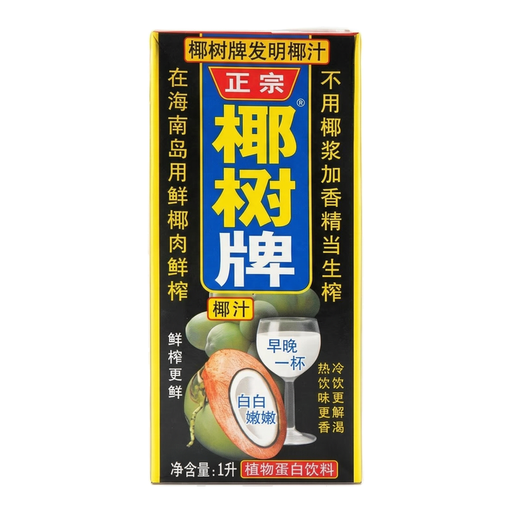
This 1L coconut product is an option to consider for pouring at lunch. Three 1L cartons would cover roughly four UK pints with some left over; check the pack’s intended use and child-specific requirements before choosing it.
 No image available
Consider this 1L carton for a lunch stock-up after checking that the current pack is intended as a drink rather than cooking milk. The product information calls for refrigeration after opening and use within 24 hours, so open cartons as needed. Check the current nutrition and allergen labels before using it as a child’s regular milk alternative.
Three 1L cartons cover four UK pints, which is about 2.3 litres, and leave some drink over. Keep spare cartons unopened and follow their pack instructions; four 1L cartons would provide considerably more than four UK pints.
No. The 1L coconut drinks considered here are intended for pouring, while M&S describes its 400ml canned coconut milk as an ingredient for curries, soups and desserts. Check the pack’s intended use before buying for a lunch drink.
Do not assume that any coconut drink is suitable as a main replacement. NHS child-dietetics guidance advises checking energy, protein and added nutrients for children needing a non-dairy milk alternative; ask the child’s GP or dietitian for individual advice where a milk allergy or restricted diet is involved.
Check the current carton for calcium, vitamin D, vitamin B12 and iodine, alongside its energy and protein values if it replaces milk for a young child. The inspected Sainsbury’s and M&S own-label drinks list iodine, but that does not establish the content of other coconut drinks.
Check the school or club’s own food and allergy procedure before packing it, as well as the drink’s current allergen statement. For children with food allergies, Department for Education allergy-safety guidance says drinks and lunchboxes taken to school should be clearly labelled with the child’s name.