Dairy-free runners making porridge or smoothies
A coconut drink can provide the flavour and liquid base. Check the carbohydrate and protein supplied by the rest of the meal rather than relying on the drink alone.


Choose a coconut drink as an ingredient in a planned training meal or smoothie, not as the sole fuel for a long run or recovery meal. Carbohydrate and protein amounts differ between cartons, so check what the whole meal provides. Four UK pints is 2.272L; if you are buying 1L cartons, plan how many you will use and how you will store them after opening.
A coconut drink can provide the flavour and liquid base. Check the carbohydrate and protein supplied by the rest of the meal rather than relying on the drink alone.
The British Dietetic Association identifies carbohydrate as the main fuel for exercising muscles. Compare the drink’s carbohydrate per serving with the food and drink you plan to have around training.
Tesco labels its four-pint dairy milk as 2.272L. If you are buying coconut drink in 1L cartons, consider how much you will use before opening several and follow each carton’s storage instructions.
Start with the role of the drink in your meal, then compare the exact carton’s nutrition, ingredients and pack size.
| Priority | What to check | Your needs |
|---|---|---|
| Carbohydrate | Compare grams per 100ml and the amount you intend to use. Waitrose lists 11g per 100ml for Rude Health Chilled Coconut Drink; Sainsbury's lists 0.9g per 100ml for Koko Coconut UHT Drink. These are different products, not interchangeable portions. | For a smoothie or breakfast around a demanding session, I want to know what the drink contributes alongside the food. The British Dietetic Association identifies carbohydrate as the main fuel for exercising muscles. |
| Protein | Read the protein figure for the exact variant and check the other ingredients in the meal. Waitrose lists less than 0.5g per 100ml for Rude Health Chilled Coconut Drink and 1.5g per 100ml for Alpro Coconut Barista with Soya. | If I use coconut drink after a run, I need to account for protein from the accompanying food rather than assume the drink supplies it. |
| Ingredients and fortification | Check the ingredients, allergens and listed calcium, iodine and vitamins on the carton. Tesco lists calcium and iodine for its Sweetened Coconut Drink; Waitrose lists soya in Alpro Coconut Barista with Soya. | When replacing dairy in everyday meals, I want to know which nutrients this particular drink contains and whether its ingredients suit me. The UK Office for Health Improvement and Disparities notes that plant-based drinks vary considerably in composition. |
| Quantity and storage | Compare the pack size with 2.272L, which Tesco labels as four UK pints. Check whether cartons need chilling before opening and follow the instructions for use after opening. | I may need several cartons for repeated breakfasts, but would rather open them as I use them than have several open at once. |
Coconut drinks differ in carbohydrate and are often modest in protein. The British Dietetic Association identifies carbohydrate as the main fuel for exercising muscles, so the drink’s place in a meal matters more than its coconut flavour.
Plan the accompanying food as well as the drink, and try the combination during training rather than changing your routine on race day.
The UK Office for Health Improvement and Disparities reports considerable variation in plant-based drink composition. Product listings also show differences between coconut-and-rice and coconut-and-soya drinks.
Compare the nutrition panel, fortification and allergens for the exact carton you intend to buy.
They are distinct product types. Marks & Spencer lists 3.4g carbohydrate and less than 0.1g protein per 100g for its Coconut Water; creamy coconut drinks can also contain ingredients such as rice or soya.
Decide whether you want a beverage or an ingredient for porridge or a smoothie before comparing labels.
Four UK pints is 2.272L, while the Tesco and Waitrose coconut drinks discussed here are listed in 1L cartons. Instructions for keeping opened products differ.
Plan the quantity you will use, leave other cartons unopened and follow each pack’s storage directions.
Opening more than you can use within the stated period can lead to food waste.
Tesco Sweetened Coconut Drink is a 1L own-label option for use as an ingredient in meals and drinks.
The cited Alpro products include Coconut Original and a separate Coconut Barista with Soya drink.
Koko Coconut UHT Drink is listed by Sainsbury's in a 1L carton.
Waitrose lists a chilled Rude Health coconut-and-rice drink with calcium.
These multi-carton barista drinks are options for coconut flavour alongside meals or in coffee. Their pack sizes are larger than a four-pint quantity; compare the exact label and your likely use before buying.
 No image available
For coconut-flavoured coffee alongside a training meal, this barista drink comes as eight 1L cartons. Check the current ingredients if you avoid soya, and plan how you will use the pack rather than treating the drink alone as training fuel.
 No image available
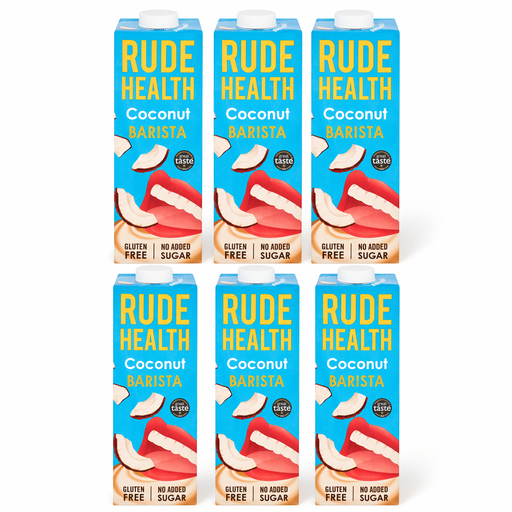
This six-carton barista pack is an option for coconut flavour alongside food or in coffee. Check the exact carton’s nutrition and ingredients, including oats if you avoid them; do not apply figures for Rude Health’s other coconut drinks to this variant.
Do not assume it can. The British Dietetic Association identifies carbohydrate as the main fuel for exercising muscles, while coconut drinks differ substantially in the carbohydrate and protein they provide. Consider the whole meal and your planned food and drink around the session.
Four UK pints is 2.272L, as labelled on Tesco’s four-pint milk. Two 1L cartons fall short of that volume; three provide 3L, so buy according to what you will actually use rather than treating three cartons as an exact four-pint pack.
Check the exact carton for its listed calcium, iodine and vitamins, alongside carbohydrate, protein and ingredients. The UK Office for Health Improvement and Disparities reports that plant-based drinks vary considerably in nutrient composition, so fortification on one product does not establish what another contains.
No. A drink can contain carbohydrate from its ingredients: Waitrose lists 11g carbohydrate per 100ml for Rude Health Chilled Coconut Drink, which is labelled no added sugar. Use the nutrition panel and your intended serving size when planning a meal.
Follow the instructions on the particular pack and open cartons as you need them. Storage periods differ between products: Marks & Spencer instructs customers to drink its Coconut Water within 24 hours of opening, which should not be applied to a different coconut drink.