Families stocking holiday lunches
An unopened long-life carton can fit a cupboard-stocking plan. Think ahead to where it will be kept after opening and whether the carton can be used within its stated refrigerated period.


Choose a long-life coconut drink if you want to stock unopened cartons for school-holiday lunches; a chilled drink needs fridge space from the outset. Once opened, follow the exact pack’s refrigeration and use-by instructions. Compare sugars, protein, fortification, ingredients and allergen statements by variant rather than assuming coconut drinks have the same composition.
An unopened long-life carton can fit a cupboard-stocking plan. Think ahead to where it will be kept after opening and whether the carton can be used within its stated refrigerated period.
Coconut drinks differ in sugars, protein and added calcium or vitamins. Compare the exact variant’s nutrition and allergen labels, especially when choosing a drink for a child’s lunch.
Some coconut-and-rice drinks have short ingredient lists and no added sugar, yet still list sugars on the nutrition panel. Check fortification, protein and allergen statements as well as the ingredients.
Start with where the carton will be stored, then compare the labels of the variants that fit your lunch plans.
| Priority | What to check | Your needs |
|---|---|---|
| Storage | Check whether the exact carton is long-life or chilled. Read its refrigeration and use-within instructions for after opening; the Waitrose listings for Plenish and Rude Health specify four and five days respectively. | I want to stock unopened drinks ahead of the holidays, but need fridge space and a plan to use each carton once it is open. |
| Sugars | Compare sugars per 100 ml, not just “no added sugar” wording. Alpro UK lists 0.0 g for Coconut No Sugars; Waitrose lists 3 g for Plenish and 4.1 g for Rude Health, although both are described as having no added sugar. | If I am looking specifically for a drink with no sugars, I need to check the nutrition panel rather than treat “no added sugar” as the same claim. |
| Protein and fortification | Compare protein, calcium and listed vitamins per 100 ml on the exact variant. Alpro UK lists 0.2 g protein and 120 mg calcium for Coconut No Sugars; Sainsbury’s lists 1.2 g protein and 120 mg calcium for the cited Koko Unsweetened drink. | For a family lunch, I want to know what this particular drink contributes without assuming every coconut drink has the same nutrition figures. |
| Ingredients and allergens | Read the current pack’s ingredients and allergen declaration. Waitrose lists “may contain nuts” and “may contain soya” for the cited Plenish drink; claims on another coconut drink do not apply to it. | Where an allergy or a holiday club’s food rules affect the choice, I need the declaration for the exact pack being served. |
Protein and fortification differ by variant. The cited Sainsbury’s Koko Unsweetened listing gives 1.2 g protein per 100 ml, while Alpro UK lists 0.2 g for Coconut No Sugars.
Compare sugars, protein, calcium and vitamins per 100 ml on the cartons you are considering.
Waitrose lists 3 g sugars per 100 ml for Plenish and 4.1 g for Rude Health, despite their no-added-sugar descriptions.
If no sugars is the requirement, check the sugars figure on the nutrition panel.
Long-life describes unopened storage. The cited Plenish carton requires refrigeration at 3–8°C and use within four days after opening; Rude Health specifies refrigeration and use within five days.
Open a carton when you can refrigerate it and follow its stated use-within period.
A 1-litre carton may go unused if your household cannot finish it within that period.
Allergen declarations are product-specific: the cited Plenish carton carries may-contain-nuts and may-contain-soya information.
Check the current physical pack and exact variant before serving, particularly when an allergy or venue policy matters.
Alpro UK lists Coconut Original and Coconut No Sugars as separate coconut drink variants.
Koko has coconut-based unsweetened drinks; check whether the particular listing is chilled or long-life.
Waitrose lists a UHT, long-life Plenish coconut-and-rice drink with four ingredients.
Waitrose lists an organic long-life Rude Health coconut-and-rice drink with no added sugar.
Tesco Groceries lists its own-label Long Life Coconut Original alongside branded coconut drinks.
These Alpro Coconut Barista options are relevant to unopened cupboard storage, but they are coconut-and-soya barista blends rather than plain coconut drinks. Check the exact pack before choosing one for a family lunch.
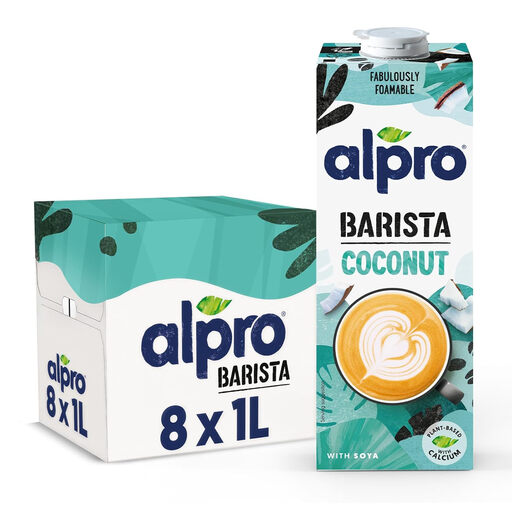 No image available
The stated long-life format fits unopened cupboard stocking. This barista blend contains soya and is not a no-sugars option; refrigerate after opening and use within the stated five-day period.
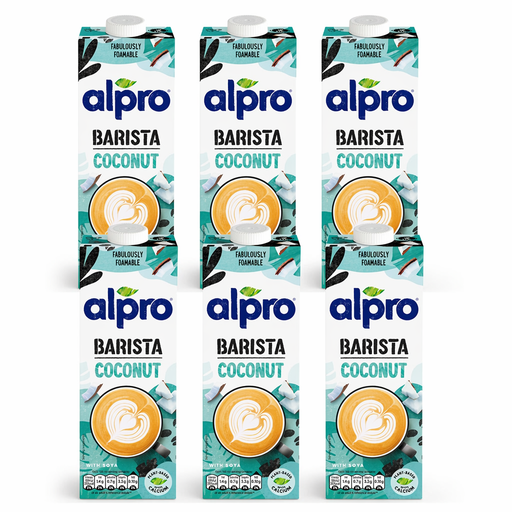 No image available
Ambient storage before opening can suit advance lunch planning. This coconut-and-soya barista drink needs refrigeration and use within five days after opening. Its description advises consulting a healthcare professional before introducing it into children’s diets.
No. Alpro UK lists 0.0 g sugars per 100 ml for Coconut No Sugars. Waitrose lists 3 g for the cited Plenish drink and 4.1 g for Rude Health, although both are described as having no added sugar. Compare the sugars figures on the packs.
No: follow the opened-pack instructions, not the unopened storage description. Waitrose says to refrigerate the cited Plenish drink at 3–8°C and use it within four days; its Rude Health listing specifies refrigeration and use within five days. Check the carton you buy.
Do not assume so. Even the cited coconut drinks differ: Alpro UK lists 0.2 g protein per 100 ml for Coconut No Sugars, while Sainsbury’s lists 1.2 g for its Koko Unsweetened drink. Check protein and any listed calcium or vitamins on the exact pack when planning the lunch.
Check the current physical pack for the exact variant before serving it. Waitrose lists may-contain-nuts and may-contain-soya information for the cited Plenish drink; another coconut drink’s allergen statement cannot stand in for that one.
Ask the particular club, school or venue about its packed-lunch and allergen policies. The Department for Education’s school-food guidance concerns food and drink provided in state-funded schools in England; it does not set out a general rule for every school-holiday activity or privately packed lunch.