What should you check first?
Start with the person’s nutritional and allergen requirements, then choose the sweetness and serving style that fit the drink being made.
| Priority | What to check | Your needs |
|---|
| Fortification |
Compare calcium, vitamin D and vitamin B12 on the carton; check iodine separately if relevant. Tesco Groceries lists 120mg calcium, 0.75µg vitamin D2 and 0.38µg vitamin B12 per 100ml for Koko Unsweetened. |
For a regular afternoon drink, I want to know which nutrients it contributes rather than assume all coconut drinks are fortified alike. The British Dietetic Association highlights calcium and vitamin B12 for people over 65. |
| Protein and energy |
Read protein and energy per 100ml, as well as the likely serving size. Tesco Groceries lists 1.2g protein per 100ml for Koko Unsweetened; Sainsbury’s lists less than 0.5g per 100ml for its Sweetened Long Life Coconut Drink. |
If someone has a poor appetite or unplanned weight loss, I would not rely on a coconut drink swap to address that concern. Hertfordshire and West Essex Integrated Care Board guidance calls for person-centred nutritional care when malnutrition risk is involved. |
| Sugars |
Compare sugars per 100ml rather than judging by the word “barista”. Tesco Groceries lists 0.2g for Koko Unsweetened, while Waitrose & Partners lists 3.3g for Alpro Coconut Barista. |
An unsweetened drink suits my preference for everyday tea; for an occasional frothy coffee, I may choose a different style after checking its label. |
| Hot-drink use |
Look for the product’s instructions on adding it to hot drinks or frothing it. Sainsbury’s says to let water cool slightly before adding its Sweetened Long Life Coconut Drink because it can separate. |
I want the drink to work in the tea or coffee I am serving, without assuming that a coconut drink intended for frothing is necessary for plain tea. |
| Allergens |
Check the current ingredients and precautionary statements for the individual product. Sainsbury’s Coconut Barista contains soya, while Marks & Spencer labels its Creamy Coconut Drink as unsuitable for people with a milk allergy. |
When serving a guest with an allergy, I need the specific carton’s information, not an assumption based on “coconut”, “vegan” or “dairy-free”. |
| Storage |
Check refrigeration and use-within instructions after opening, then choose a carton quantity that fits likely use. Waitrose & Partners says to consume Plenish Organic Unsweetened Coconut Drink within four days of opening. |
If coconut drink is used only at afternoon tea, I want to finish an opened carton within its stated period. |
Relevant brand references
These examples show label differences worth checking; a brand name alone does not establish the composition of every drink it sells.
Koko
Koko Unsweetened is a long-life coconut drink to compare when fortification and an unsweetened style both matter.
- Tesco Groceries lists 120mg calcium, 0.75µg vitamin D2 and 0.38µg vitamin B12 per 100ml.
- The same product lists 1.2g protein and 0.2g sugars per 100ml; check its contribution against the rest of the person’s diet.
Alpro
Alpro Coconut No Sugar and Coconut Barista serve different preferences: an unsweetened drink or one described for frothing.
- Tesco Groceries describes Coconut No Sugar as containing no sugars or sweeteners and as a source of calcium and vitamins B12 and D.
- Waitrose & Partners lists 3.3g sugars per 100ml for Coconut Barista. Check its current ingredients for soya when serving someone with a soya allergy.
M&S Plant Kitchen
M&S Creamy Coconut Drink is an example to check when iodine fortification matters alongside calcium and vitamins.
- Marks & Spencer lists added calcium, iodine, vitamin B12 and vitamin D for this drink.
- Its nutrition panel lists 0.2g protein per 100g, and its product page says it is not suitable for people with a milk allergy.
Sainsbury’s
Sainsbury’s lists both a sweetened long-life coconut drink and a coconut-and-soya barista drink with added nutrients.
- Both product listings state added calcium, iodine, vitamin D and vitamin B12.
- Sainsbury’s lists 1.7g sugars per 100ml for the sweetened drink and 3.3g per 100ml for the soya-containing barista drink.
Plenish
Plenish Organic Unsweetened Long Life Coconut Drink is a reference for shoppers comparing short ingredient lists.
- Waitrose & Partners lists coconut milk, rice, spring water and sea salt as its ingredients.
- The listing gives less than 0.5g protein per 100ml. Check the carton if added calcium or vitamins are important to the choice.
Joybuy coconut barista drinks
These Alpro coconut barista listings are relevant when frothing a drink for afternoon coffee or chai is the priority. Compare their carton quantities, sugars and allergen information before choosing; the article’s everyday unsweetened and iodine-fortified options are separate buying considerations.
 No image available
Alpro Barista Coconut Long Life Drink 8 x 1L
A coconut barista drink described for frothing when serving afternoon coffee. The listing states added calcium and vitamins B12 and D, with 1.5g protein and 3.3g sugars per 100ml. It contains soya; check the carton’s nutrient amounts and allergen information for the person being served. Refrigerate after opening and follow the stated five-day use-within instruction.
View on Joybuy
 No image available
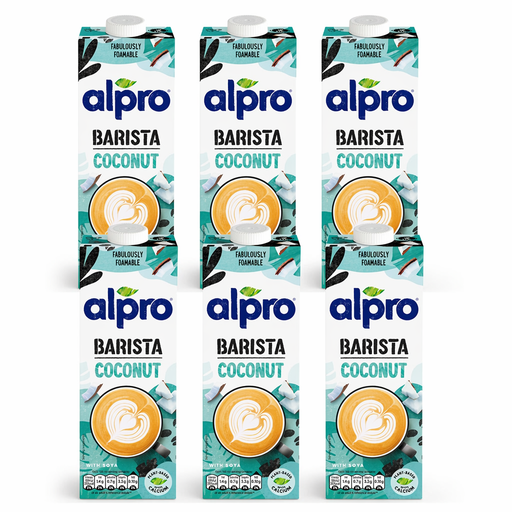
Alpro Coconut Barista (6)
A foamable coconut barista drink listed for coffee use. Its product information states added calcium, 1.5g protein and 3.3g sugars per 100ml. It contains soya; check the current carton for allergens, the amount of calcium and whether vitamins D and B12 are added before comparing its nutritional contribution. Follow its five-day refrigerated use-within instruction after opening.
View on Joybuy
Questions about serving and choosing
Can a coconut drink replace milk nutritionally for an older person?
Not automatically. The British Dietetic Association highlights protein, calcium and vitamin B12 for people over 65, while coconut drinks vary in protein and added nutrients. Compare the carton with the person’s wider diet; seek individual advice from a GP or dietitian if poor appetite, unplanned weight loss or malnutrition risk is a concern.
Which nutrients should I compare for an everyday coconut drink?
Check calcium, vitamin D and vitamin B12 on the current carton, then iodine if it matters to the person’s diet. The NHS states that adults need 700mg calcium a day; a drink’s contribution depends on its labelled amount and the serving used. Check protein separately rather than assuming fortification makes it a substantial protein source.
How can I reduce the chance of coconut drink separating in tea?
Follow the particular drink’s hot-serving instructions. Sainsbury’s advises letting water cool slightly before adding its Sweetened Long Life Coconut Drink because separation can occur. A barista description indicates a different intended serving style, not a guarantee about every hot drink.
Are coconut drinks automatically suitable for milk or soya allergies?
No. Sainsbury’s Coconut Barista contains soya, and Marks & Spencer labels its Creamy Coconut Drink as unsuitable for people with a milk allergy. Check the current carton’s ingredients and precautionary allergen statements for the individual product.
How long can I keep an opened carton?
Follow that carton’s refrigeration and use-within directions, as they differ between drinks. Waitrose & Partners, for example, says to consume Plenish Organic Unsweetened Long Life Coconut Drink within four days of opening. Consider how much the household will use before choosing a carton quantity.


