Gym-goers looking for a dairy-free drink
A long-life coconut drink can be a convenient part of a snack, but check its protein contribution before treating it as the snack's main protein component.


For a post-gym snack, choose a UHT or long-life coconut drink by checking its protein, sugars, allergen information and instructions for storage after opening; do not assume that 'filtered' means long life. If protein is the reason for your snack, have the drink alongside protein-containing food rather than relying on the drink alone. When quick refuelling is needed, the British Dietetic Association also advises carbohydrate-rich foods and fluids after exercise.
A long-life coconut drink can be a convenient part of a snack, but check its protein contribution before treating it as the snack's main protein component.
Compare no-sugar and unsweetened cartons with sweetened ones, then read the sugars line on the nutrition panel. You can choose the drink separately from the food you have after exercise.
An unsweetened long-life coconut drink may suit a smoothie or cereal snack. Check its ingredients and protein separately: a simpler formulation does not establish its value as a protein source.
Start with the role the drink needs to play in your snack, then compare the nutrition panel with the storage and allergen instructions on the carton.
| Priority | What to check | Your needs |
|---|---|---|
| Protein and carbohydrate | Read protein per 100 ml and for the amount you plan to drink. If quick refuelling matters, consider what carbohydrate-containing food or drink accompanies it; the British Dietetic Association advises carbohydrate-rich foods and fluids when quick recovery is required. | I want the whole post-gym snack to provide protein, rather than assuming the coconut drink will do that on its own. Sainsbury's lists 1.2 g protein per 100 ml for Koko Unsweetened Coconut UHT. |
| Sugars | Compare 'no sugar', 'unsweetened' and sweetened wording with the ingredients and sugars per 100 ml. No added sugar does not mean a drink contains no sugars. | For coconut flavour without added sugar, I would check the current carton rather than judge by flavour or a single front-of-pack phrase. |
| Storage | Look for UHT or long-life wording and follow the unopened storage directions. Check how to refrigerate and use the drink after opening; 'filtered' is not a substitute for those instructions. | I want to keep an unopened carton for later, but need a realistic plan for using it once opened. |
| Added nutrients | Check which nutrients are listed on the carton and their amounts, rather than assuming every coconut drink has the same fortification. Tesco describes its Long Life Coconut Original as containing added calcium, iodine and vitamins B12 and D2. | If fortification matters to me, I want to compare the nutrients in the drinks I am considering. |
| Allergens | Read the ingredients and precautionary allergen wording on the current pack. A vegan label does not resolve suitability for a particular allergy. | With a milk, nut or soya allergy, I need the specific carton's allergen information, not just a dairy-free description. |
UHT describes processing for storage; it does not tell you how much protein or sugar a coconut drink contains.
Read the nutrition panel separately from the UHT or long-life wording when putting together a post-gym snack.
Protein needs to be considered across the snack. For comparison, Sainsbury's lists 1.2 g protein per 100 ml for Koko Unsweetened Coconut UHT, while the British Heart Foundation's exercise guidance discusses 15–30 g protein.
If protein is your priority, pair the drink with protein-containing food; consider carbohydrate-containing food as well when quick refuelling matters.
A no-added-sugar description does not, by itself, tell you the total sugars in the drink.
Check both the ingredients and the 'of which sugars' figure per 100 ml on the current carton.
Vegan status does not settle every allergen concern. Sainsbury's warns that its own-label sweetened long-life coconut drink is not suitable for customers with a soya allergy because of manufacturing methods.
Check the current pack's allergen and precautionary wording, as well as its instructions for storage after opening.
These examples illustrate different long-life drink formulations; compare the particular carton rather than assuming the description applies to every product from a brand or retailer.
Tesco describes Alpro Coconut No Sugar as a UHT drink with no sugars or sweeteners.
Sainsbury's lists Koko Unsweetened Coconut UHT with 1.2 g protein and 120 mg calcium per 100 ml.
Tesco describes its Long Life Coconut Original as a sweetened UHT drink with added calcium, iodine and vitamins B12 and D2.
Sainsbury's describes its own-label sweetened long-life coconut drink as ultra heat treated.
M&S lists a Creamy Coconut Drink among its coconut drink options.
Waitrose lists Plenish Organic Unsweetened Long Life Coconut Drink as a UHT coconut and rice drink with no added sugar.
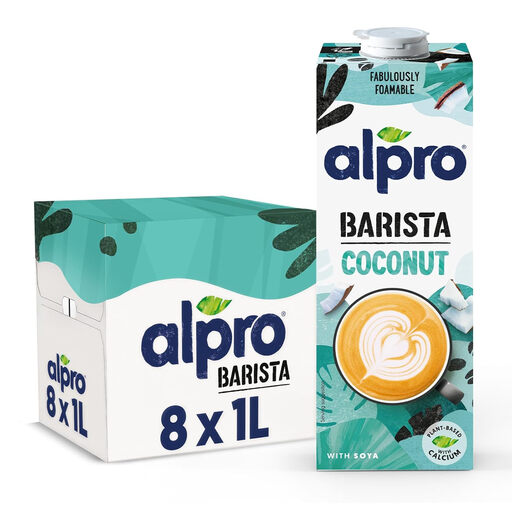
This long-life barista coconut drink is an option if you want a coconut-flavoured drink alongside a post-gym snack; check its label against your sugar, protein and allergen needs.
 No image available
For a post-gym snack, use this barista coconut drink alongside food if you need the snack to include protein. The pack contains eight 1L cartons. It contains sugar and soya; check the current carton's nutrition, allergen and storage instructions before choosing it.
Do not use 'filtered' as a substitute for a long-life label. Check for UHT or long-life wording and follow the carton's storage instructions. Tesco describes Alpro Coconut No Sugar as UHT for a longer shelf life, for example.
If protein is your reason for having a post-gym snack, check the drink's contribution and include protein-containing food as needed. Sainsbury's lists 1.2 g protein per 100 ml for Koko Unsweetened Coconut UHT; the British Heart Foundation's exercise guidance discusses 15–30 g protein. When quick refuelling is needed, the British Dietetic Association also advises carbohydrate-rich foods and fluids.
Long-life wording concerns the unopened drink; after opening, follow the carton's refrigeration and use-within instructions. Check those directions when choosing a carton size you can use in time.
No. M&S says its Creamy Coconut Drink is not suitable for people with a milk allergy, while Sainsbury's warns that its own-label sweetened long-life coconut drink is not suitable for customers with a soya allergy because of manufacturing methods. Check the current pack for the allergy relevant to you.