What should you check before choosing?
Canned coconut milk
Choose it when: Coconut flavour and texture matter in a curry, sauce or dessert, and another ingredient will provide the meal’s protein.
Bear in mind: Tesco Groceries lists 12g saturates per 100ml for Pride Coconut Milk and per 100g for Blue Dragon Coconut Milk; neither is a substantial protein ingredient.
Everyday coconut drink
Choose it when: You need a dairy-free drink for coffee, cereal or smoothies rather than an ingredient for coconut-rich cooking.
Bear in mind: Sainsbury’s lists 1.2g protein per 100ml for Koko Unsweetened; Waitrose & Partners lists 1.5g per 100ml for Alpro Coconut Barista, which contains soya.
Coconut-based protein drink
Choose it when: You want a ready-to-drink product that makes a larger stated protein contribution per bottle.
Bear in mind: Waitrose & Partners lists Grounded’s mint-chocolate drink at 20g protein per 490ml bottle and 4.9g sugars per 100ml; its allergy notice says it is unsuitable for people with a soya allergy.
Once you have chosen the format for the job, compare the exact product and the amount you expect to use.
| Priority |
What to check |
Your needs |
| Protein contribution |
Read protein per 100ml or 100g, then check the amount in your intended serving. Keep those measurement bases distinct when comparing products. |
I want to know how much protein the portion I will actually use contributes, rather than assuming a dairy-free coconut product supplies a substantial amount. |
| Intended use |
Check whether the product is canned for cooking, formulated as an everyday drink or sold as a flavoured ready-to-drink beverage. |
For a curry, coconut flavour and texture matter. For coffee, I need a drink that fits that use; a flavoured shake serves a different purpose. |
| Allergens |
Read the current ingredients, allergen declaration and any precautionary statement. Dairy-free does not establish suitability for a separate soya or nut allergy. |
Even if I avoid dairy, another ingredient or manufacturing warning could rule out a particular product. |
| Sugars and saturates |
Compare the stated values on the same per-100ml or per-100g basis, as well as the quantity you plan to consume. Check flavoured drinks and canned products separately. |
I want the coconut product’s nutrition information to fit how often and how much I use it, not just its protein figure. |
| Fortification |
Look for the named nutrients and their quantities on the individual drink’s panel. The UK Scientific Advisory Committee on Nutrition and Committee on Toxicity note that plant-based drinks vary in fortification. |
If added calcium or vitamins matter to me, I need to compare the particular drinks rather than assume every coconut drink contains the same nutrients. |
Relevant brand references
These examples show how product formats and formulations differ; a brand name alone does not establish the nutrition or allergen profile of every product it sells.
Koko
Coconut-based drinks include an unsweetened option and a Super Milk formulation containing faba bean protein.
- Sainsbury’s lists Koko Unsweetened at 1.2g protein and 120mg calcium per 100ml.
- Koko Dairy Free’s own panel also lists 1.2g protein per 100ml for Super Milk; the added protein ingredient does not, by itself, tell you how much protein a serving provides.
Alpro
Its coconut drinks include a Barista product intended for coffee and a No Sugar drink.
- Waitrose & Partners lists Alpro Coconut Barista at 1.5g protein per 100ml.
- The Barista product contains soya and may contain nuts, according to the Waitrose & Partners listing; check the exact product if either matters to you.
Blue Dragon
Its standard and light canned coconut milks are cooking options rather than ready-to-drink protein products.
- Tesco Groceries lists the standard product for coconut-based cooking, with 0.6g protein per 100g.
- The standard product lists 12g saturates per 100g; the light version lists less than 0.5g protein per 100ml. Check each version on its own measurement basis.
Grounded
Its listed mint-chocolate coconut drink contains added sunflower-seed and pea protein.
- Waitrose & Partners lists 20g protein per 490ml bottle.
- The same listing gives 4.9g sugars per 100ml and says the product is unsuitable for people with a soya allergy because of manufacturing methods.
Tesco
Tesco Groceries lists own-label standard and light canned coconut milks in 400ml sizes.
- The two listed formats give cooks a choice between standard and light coconut milk.
- Tesco advises shoppers to read the current food label because ingredients, nutrition and allergen information can change.
Coconut drinks on Joybuy
These coconut-based drinks are options for coffee or other everyday uses. Compare their current labels if protein contribution or a particular allergen determines your choice; this selection is not a comparison of cooking milks and protein shakes.
 No image available
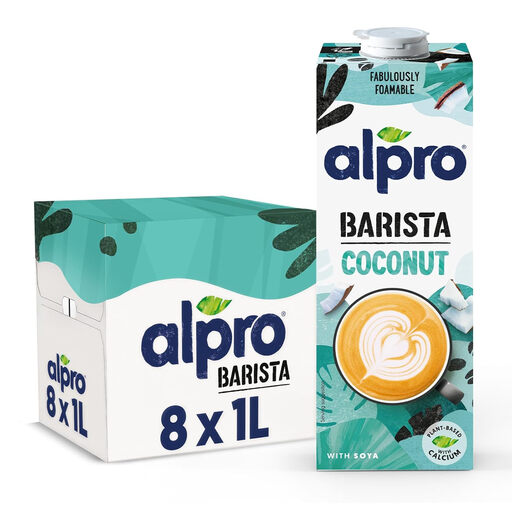
Alpro Barista Coconut Long Life Drink, 8 × 1L
A dairy-free coconut-based barista drink for coffee use. It contains soya, and its listed protein contribution is modest rather than a reason to rely on it as a protein drink; check the current pack for nutrition and allergens.
View on Joybuy
 No image available
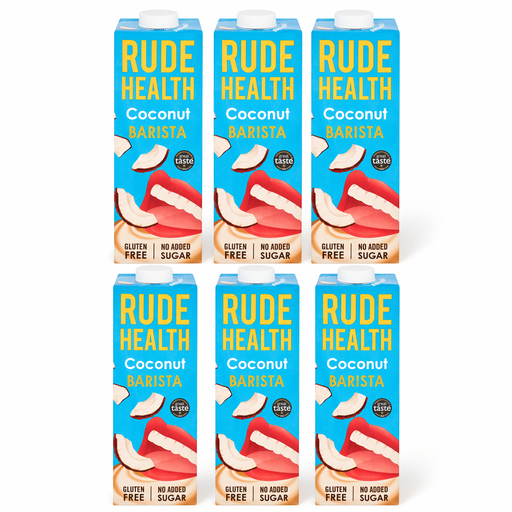
6 Rude Health Barista Coconut 1L
A dairy-free coconut barista drink described for coffee. It contains oats, and its listed protein contribution is small; check the current pack if oat avoidance or protein per serving is important to you.
View on Joybuy
 No image available
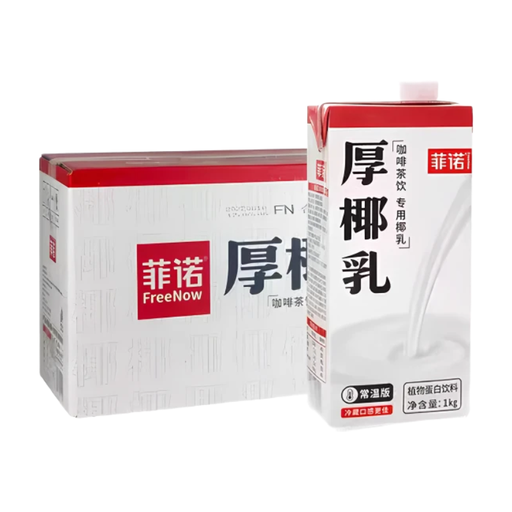
FreeNow Thick Coconut Milk, 200g × 24 cartons
Individual cartons described for drinking and for use in coffee, smoothies, cereal or cooking. Do not rely on it as the protein component of a meal; check the current pack’s nutrition and allergen information for your intended use.
View on Joybuy
Questions about coconut milk and protein
Does ordinary coconut milk provide much protein?
The examples listed by Tesco Groceries provide 0.6g protein per 100g for Blue Dragon Coconut Milk and 1.0g per 100ml for Pride Coconut Milk. If protein contribution is the reason for buying, check the amount in your serving rather than treating ordinary coconut milk and a drink with added plant protein as interchangeable.
Can I use canned coconut milk in a protein-rich curry?
Yes. Use canned coconut milk for coconut flavour and texture, and choose a separate ingredient to provide the meal’s protein. Tesco Groceries lists 12g saturates per 100ml for Pride Coconut Milk and per 100g for Blue Dragon Coconut Milk, so check the pack and the amount your recipe uses.
Is a dairy-free coconut drink suitable if I also avoid soya?
Not automatically. Waitrose & Partners lists soya as an ingredient in Alpro Coconut Barista, while its Grounded protein drink listing says that product is unsuitable for people with a soya allergy because of manufacturing methods. Read the current pack’s ingredients and allergy statements for the exact drink.
Are coconut drinks fortified in the same way?
No uniform formulation can be assumed. Sainsbury’s lists 120mg calcium per 100ml for Koko Unsweetened, and the UK Scientific Advisory Committee on Nutrition and Committee on Toxicity note that plant-based drinks vary in the type and amount of fortification. Compare the named nutrients and quantities on the packs you are considering.
How should I store coconut milk after opening?
Follow the instructions for the particular product and format. Tesco Groceries’ listing for Blue Dragon Light Coconut Milk says to refrigerate it after opening and consume it within two days; do not apply that timeframe to every canned milk or coconut drink.


