For a school-age child avoiding milk, Tesco Groceries lists Koko Dairy Free Unsweetened as free from dairy, soya, nuts and gluten, making it a relevant coconut option when all four exclusions apply; check the current carton and the child’s school plan. M&S says its Plant Kitchen Creamy Coconut Drink is not suitable for people with a milk allergy, while Waitrose lists a may-contain nuts and soya warning for Plenish. If a coconut drink will regularly replace milk, Frimley Health NHS Foundation Trust advises checking added calcium and iodine and notes that coconut drinks tend to be low in protein and energy.
Who needs to check what?
The right label check depends on which allergens a child must avoid and whether the drink is an occasional choice or a regular milk replacement.
Parents managing a milk allergy at school
Check the exact drink’s current allergen information and the child’s school arrangements. A vegan description does not establish suitability for milk allergy: M&S explicitly says its Plant Kitchen Creamy Coconut Drink is not suitable for people with a milk allergy.
Families avoiding several allergens
Look for statements covering each allergen the child must avoid, including any relevant may-contain wording. Tesco Groceries lists Koko Unsweetened as free from dairy, soya, nuts and gluten; Waitrose lists a may-contain nuts and soya warning for Plenish.
Parents choosing a regular milk replacement
Compare calcium, iodine, protein and energy on the carton rather than treating all coconut drinks as nutritionally alike. Frimley Health NHS Foundation Trust notes that coconut drinks tend to be low in protein and energy; seek individual dietetic advice if the child’s diet is restricted.
What matters when choosing?
Start with the child’s allergen requirements and school plan, then compare nutrition and how the carton will be used.
| Priority |
What to check |
Your needs |
| Milk allergy |
Read the exact carton’s ingredients and allergen statement. Check the child’s school arrangements and Individual Healthcare Plan, where applicable; a vegan label is not an allergy-suitability statement. |
If my child has a milk allergy, I need the drink and its use at school to fit their individual plan. M&S says its Plant Kitchen Creamy Coconut Drink is not suitable for people with a milk allergy. |
| Other allergens |
Check each required exclusion and any may-contain statement. Tesco Groceries lists Koko Unsweetened as free from dairy, soya, nuts and gluten; Waitrose lists may-contain nuts and soya for Plenish. |
When nuts or soya must also be avoided, I need to check precautionary wording, not just whether the drink is coconut-based. |
| Regular use |
Compare calcium, iodine, protein and energy per 100 ml on the current carton. Tesco Groceries lists 120 mg calcium per 100 ml for Koko Unsweetened, but calcium alone does not establish nutritional equivalence to milk. |
If this will be my child’s main milk replacement, I need to consider the rest of their diet. Frimley Health NHS Foundation Trust notes that coconut drinks tend to be low in protein and energy. |
| Sugars and storage |
Distinguish a no-sugars claim from no added sugar, and read the nutrition panel. Check the carton’s instructions for storage after opening. |
For cereal at home or a school-morning routine, I want to know what the sugars claim means and whether the carton can be used as planned after opening. |
Mistakes to avoid
-
Assuming plant-based means suitable for milk allergy
M&S labels its Plant Kitchen Creamy Coconut Drink vegan but explicitly says it is not suitable for people with a milk allergy.
Check the exact carton’s allergen information and follow the child’s clinical and school plan.
-
Overlooking may-contain wording
Waitrose lists Plenish Organic Unsweetened Coconut Drink as may contain nuts and soya. The Food Standards Agency explains that precautionary wording communicates possible unintentional presence of an allergen.
Match ingredients and precautionary statements to the child’s avoidance requirements and individual advice.
-
Checking calcium but not the wider nutrition panel
Frimley Health NHS Foundation Trust notes that coconut drinks tend to be low in protein and energy, even though individual products may contain added nutrients.
For a regular milk replacement, compare protein, energy, calcium and iodine on the pack. Discuss a restricted diet with a qualified dietitian or clinician.
-
Using an old listing instead of the carton
Ingredients and allergen information can change; Tesco Groceries advises reading the product label rather than relying solely on its website information.
Read the carton each time, including its allergen panel and storage instructions, before using it for school.
Product and retailer references
These examples illustrate why the wording on a particular drink matters more than a brand’s general plant-based positioning.
Koko
Koko Dairy Free Unsweetened is an option to examine when several allergen exclusions apply.
- Tesco Groceries lists this drink as free from dairy, soya, nuts and gluten, with 120 mg calcium per 100 ml.
- Check the current carton and consider the child’s wider diet if it will regularly replace milk.
Alpro
Alpro Coconut No Sugars is a separate product from the Alpro Barista Coconut drink shown below.
- Alpro UK lists Coconut No Sugars as dairy-free and gluten-free, with 0.0 g sugars and 120 mg calcium per 100 ml.
- If nuts or soya must also be avoided, check the exact product carton against the child’s requirements.
M&S
Plant Kitchen Creamy Coconut Drink shows why a vegan description cannot settle a milk-allergy decision.
- M&S lists calcium, iodine, vitamin B12 and vitamin D for this drink.
- M&S explicitly says it is not suitable for people with a milk allergy.
Plenish
Organic Unsweetened Long Life Coconut Drink may interest households comparing ingredient lists and sugars claims.
- The Waitrose listing describes it as having no added sugar.
- Waitrose lists may-contain nuts and soya wording and less than 0.5 g protein per 100 ml.
Tesco
Tesco Groceries provides product-specific listings for coconut drinks, including Koko.
- Its Koko listing states the drink’s named allergen exclusions and calcium value.
- Tesco advises checking the product label because ingredients, nutrition and allergen information can change.
Coconut drinks on Joybuy
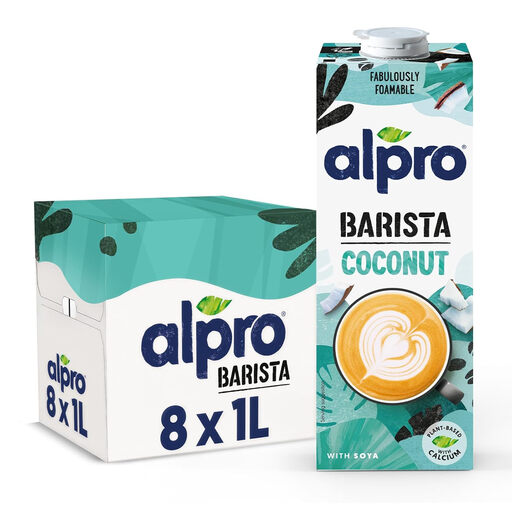
The Alpro Barista Coconut drink below is a long-life coconut option for a school-morning routine; it is not the Alpro Coconut No Sugars drink discussed above. Check its soya information against the child’s requirements before choosing it.
 No image available
Alpro Barista Coconut Long Life Drink 8 x 1L
This coconut drink is described as dairy-free for a school-morning routine, but its product information identifies soya. The pack contains 8 x 1L long-life cartons. Check the current carton and the child’s allergy plan before use, particularly if soya must be avoided; assess the wider diet if the drink will regularly replace milk.
View on Joybuy
Common questions
Is a vegan coconut drink automatically suitable for a child with a milk allergy?
No. M&S says its vegan Plant Kitchen Creamy Coconut Drink is not suitable for people with a milk allergy. Check the exact carton’s allergen statement and follow the child’s clinical and school plan.
What if milk, soya, nuts and gluten all need avoiding?
Look for product-specific information covering every required exclusion and check the physical carton. Tesco Groceries lists Koko Unsweetened as free from dairy, soya, nuts and gluten; Waitrose lists a may-contain nuts and soya warning for Plenish.
Can a coconut drink routinely replace dairy milk for a child?
Do not assume it is nutritionally equivalent. Frimley Health NHS Foundation Trust notes that coconut drinks tend to be low in protein and energy and advises checking added calcium and iodine. If it will be a main replacement in a restricted diet, discuss the child’s wider intake with a qualified dietitian or clinician.
Does school guidance set one rule for every packed lunch?
Do not assume one packed-lunch rule applies at every school. The Department for Education’s England guidance dated 6 July 2026 addresses identifying pupils who need Individual Healthcare Plans to manage allergies; ask the child’s school about its own arrangements and plan.
What does a may-contain warning mean for this choice?
The Food Standards Agency explains that precautionary allergen labelling communicates possible unintentional presence of an allergen. If the child avoids that allergen, interpret the warning in line with their individual advice and school plan rather than treating a coconut base as sufficient reassurance.


