Parents packing dairy-free lunches
If your child can have coconut, compare the current pack's dairy-free label, ingredients and nutrition panel rather than treating all coconut drinks as interchangeable.


For a child who can have coconut, start with a drink labelled dairy-free on its current pack, then check its other allergens against the child's needs and the school's arrangements. If the drink will be a regular or main milk drink, compare calcium fortification, protein and energy too: NHS guidance for children aged 1 and over with cow's-milk protein allergy notes that some coconut-based alternatives are very low in energy and protein.
If your child can have coconut, compare the current pack's dairy-free label, ingredients and nutrition panel rather than treating all coconut drinks as interchangeable.
Check every ingredient and allergen against the child's allergy plan. A dairy-free label does not establish suitability if the child must avoid coconut or another ingredient.
If a child aged 1 or over will rely on the drink regularly, calcium fortification, protein and energy matter alongside its suitability for a lunchbox. NHS guidance for children with cow's-milk protein allergy distinguishes fortified soya- and pea-based alternatives from some lower-energy, lower-protein coconut drinks.
Check allergy suitability first, then compare the nutrition panel and whether the carton can be handled according to its storage instructions during the school day.
| Priority | What to check | Your needs |
|---|---|---|
| Allergens | Read the current dairy-free claim and full ingredient and allergen declaration. Compare them with the child's allergy plan, including any coconut, soya or nut restrictions. | I need a drink that avoids dairy without introducing another ingredient my child must avoid. |
| Nutrition | Compare calcium per 100 ml, other listed fortification, protein and energy. An NHS South West London parent leaflet advises looking for at least 120 mg calcium per 100 ml when choosing a calcium-fortified alternative. | If this is a regular or main milk drink, I need to consider what it contributes to my child's wider diet, not just whether it is dairy-free. |
| Sugars | Compare sugars per 100 ml on the nutrition panel. Read the ingredients as well: no added sugar does not necessarily mean no sugars. | I want to distinguish a drink with no sugars from one that contains sugars from its ingredients. |
| School day | Check the carton's storage and use instructions and ask the school about its allergy arrangements for packed lunches. In England, Department for Education guidance says schools should consider food brought from home in those arrangements. | The drink needs to fit both our lunchbox storage arrangements and the school's procedures. |
Dairy-free status does not address an individual child's coconut or other allergies.
Check the current carton against the child's allergy plan and the school's lunchbox arrangements before packing it.
Coconut drinks differ in fortification, protein and energy. NHS guidance for children aged 1 and over with cow's-milk protein allergy cautions that some coconut-based alternatives are very low in energy and protein.
Compare the nutrition panels, particularly if the drink will be used regularly or as a main milk drink. Seek advice from the child's clinician or dietitian about a restricted diet.
A drink can contain sugars from ingredients such as rice without having added sugar.
Use the sugars figure per 100 ml to compare drinks, then check the ingredients to understand the difference.
Ingredients and formulations can change, so a familiar product name does not replace the allergen declaration on the pack being used.
Read the physical carton each time, particularly after a packaging change or substitution.
These examples show why the exact drink and its current label matter; a brand name alone does not establish an allergy or nutrition match.
Koko Dairy Free Unsweetened is a fortified coconut-based drink to compare when a child can have coconut.
Alpro Coconut No Sugars is a dairy-free coconut drink for comparing a no-sugars option.
Rude Health Coconut with Calcium is a coconut-and-rice drink with no added sugar.
Plenish Organic Coconut Drink combines coconut and rice in a short ingredient list.
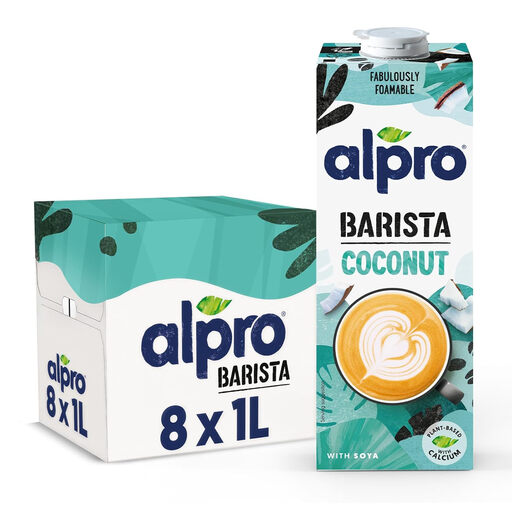
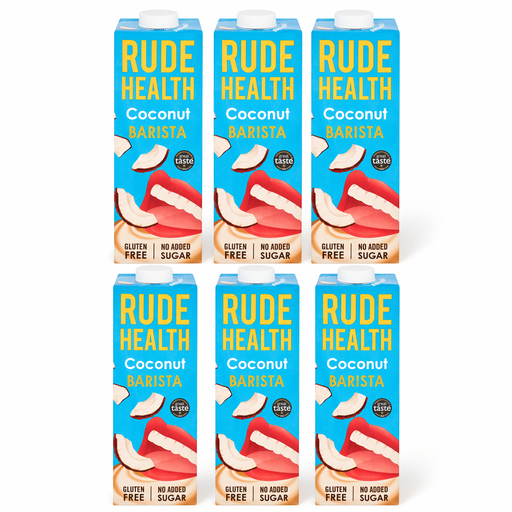
These are two barista-style coconut drink multipacks. Check each current carton for dairy-free status, allergens and nutrition before choosing one for a child's school lunch.
 No image available
The long-life format may suit households arranging storage before packing a school lunch. Check the current carton's dairy-free claim, soya declaration and opened-pack instructions against the child's needs and the school's arrangements.
 No image available
For this barista-style coconut drink, check the current carton's dairy-free claim and whether its oat ingredients fit the child's allergy plan. Compare its nutrition panel and storage instructions before using it for a school lunch.
No. Check the current pack's dairy-free claim and full allergen declaration against the child's allergy plan, including any need to avoid coconut or other ingredients. Do not rely solely on a previous carton or an online listing.
No. NHS guidance for children aged 1 and over with cow's-milk protein allergy notes that some coconut-based alternatives are very low in energy and protein. If the drink will be a main milk drink, compare its fortification, protein and energy, and discuss a restricted diet with the child's clinician or dietitian.
An NHS South West London parent leaflet advises looking for calcium-fortified products with at least 120 mg calcium per 100 ml. That label check does not establish whether a drink meets all of a child's nutritional needs.
Read the school's allergy safety policy and ask how it applies to packed lunches. In England, Department for Education guidance says schools must publish an allergy safety policy and should consider food brought from home in their allergy arrangements.
Not on its own. Choose a format you can handle according to the current carton's instructions and the school's storage arrangements; long-life packaging does not remove the need to follow instructions after opening.