Parents packing dairy-free school-day food
If you are choosing a drink for breakfast or a home-prepared lunchbox, check the carton’s allergen information, storage instructions and the school’s current policy before sending it in.


A coconut drink can be an option for a school-day breakfast or lunchbox when its label is suitable for the child and the school permits it. Check ingredients and allergen warnings on the exact carton; if the drink regularly replaces dairy, compare its calcium and iodine fortification, protein and energy too. Canned coconut milk is a separate cooking product, not an automatic substitute for a coconut drink.
If you are choosing a drink for breakfast or a home-prepared lunchbox, check the carton’s allergen information, storage instructions and the school’s current policy before sending it in.
When a child cannot consume dairy, the exact ingredients and precautionary allergen wording matter more than a front-of-pack vegan claim. If a plant drink regularly replaces dairy, compare its fortification and nutrition as well.
Check whether the carton says unsweetened or no added sugar, then compare its nutrition and allergen information. The product’s storage instructions also matter if a carton will be used over several days.
Start with the child’s allergen requirements and the intended use, then compare nutrition and storage on the exact product.
| Priority | What to check | Your needs |
|---|---|---|
| Allergens | Read the ingredients and precautionary allergen wording on the carton. Check other allergens the child must avoid, not just milk. | I need a product that fits this child’s specific allergen requirements. The Food Standards Agency warns that vegan labelling alone does not settle cross-contact concerns for people with food hypersensitivities. |
| Product type | Distinguish a coconut drink intended for pouring from canned coconut milk used in cooking. Check fortification on the individual product. | For cereal or a drink, I want a coconut drink rather than assuming a can labelled coconut milk serves the same purpose. Tesco lists these as distinct product types. |
| Regular dairy replacement | Compare calcium and iodine fortification, then protein and energy per 100ml. Check the needs of a young child with an appropriate clinician or dietitian. | If this will regularly replace dairy for my child, coconut flavour alone is not enough to make the choice. Kingston and Richmond NHS Foundation Trust advises attention to calcium and iodine in dairy substitutes. |
| Sugar and storage | Check whether the drink is unsweetened or has no added sugar, and read the nutrition panel. Follow its refrigeration and use-after-opening instructions. | I may want an unsweetened drink for breakfast, but I also need a carton size I can use within the period stated on its label. |
| School rules | Ask the school about its current allergy policy and any requirements for food or drinks brought from home. | Before packing a coconut drink, I need to know how this school handles my child’s allergens and lunchbox food. The Department for Education says schools in England must publish an allergy safety policy. |
A vegan product can still present a cross-contact concern for someone with a food hypersensitivity, as the Food Standards Agency explains.
Read the exact carton’s ingredients and precautionary allergen statement. For a diagnosed allergy, follow the child’s allergy plan and the school’s policy.
Tesco lists canned coconut milk separately from coconut drinks. A cooking product should not be assumed to have the fortification wanted in a regular dairy alternative.
Choose by use: check coconut drinks for cereal or pouring, and use canned coconut milk when the recipe calls for it.
When a drink regularly replaces dairy for a child, its nutrient profile matters too. Kingston and Richmond NHS Foundation Trust advises checking calcium and iodine fortification in dairy substitutes.
Compare the nutrition panels, including protein and energy, and seek individual advice if a young child relies on dairy alternatives because of an allergy or restricted intake.
Opening a carton changes how it must be stored, while school arrangements can affect what may be sent in or how it is handled.
Follow the purchased carton’s refrigeration and use-after-opening instructions, and check the school’s current allergy policy before packing it.
Tesco lists Alpro Coconut Original Chilled as a dairy-free coconut drink with no added sugars, calcium and vitamins B2, B12 and D.
Sainsbury’s lists Koko Unsweetened Coconut UHT as a coconut drink fortified with calcium and vitamins D2 and B12.
Tesco’s listings distinguish coconut drinks from canned coconut milk, including own-label products.
These coconut Barista drinks are options for home use, including school-day breakfasts. Check each carton against the child’s allergen requirements and, if it will regularly replace dairy, its full nutrition information.
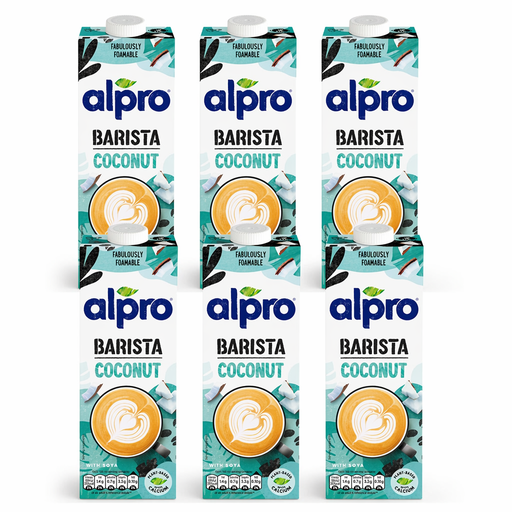 No image available
A coconut Barista drink for home use. Check the carton’s milk and soya allergen information before serving it to a child, and compare its nutrition if it will regularly replace dairy.
 No image available
The long-life carton format may suit households keeping drinks for school-day breakfasts. Check milk and soya allergen wording on the exact carton, along with its storage instructions after opening.
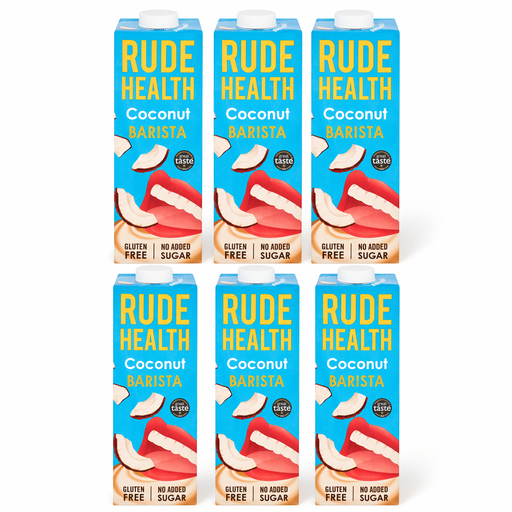 No image available
A coconut Barista drink for home use. Check the carton’s oat and milk allergen information if either matters for the child, and compare fortification before using it as a regular dairy replacement.
Do not rely on the name alone. Read the exact product’s ingredients and allergen information: Tesco lists coconut drinks and canned coconut milk as different products, while its listing for Alpro Coconut Original Chilled specifically describes that drink as dairy-free.
No. The Food Standards Agency explains that a vegan product can still pose a cross-contact concern for someone with a food hypersensitivity. Check the ingredients and any precautionary allergen wording on the carton.
Check calcium and iodine fortification, protein and energy, rather than choosing by coconut flavour alone. Kingston and Richmond NHS Foundation Trust advises attention to calcium and iodine in dairy substitutes when a child cannot consume dairy.
Do not assume it can. The child’s age, dietary needs and the drink’s full nutrition profile matter; seek advice from a GP or dietitian if a young child needs a regular dairy replacement.
Check the child’s allergen plan and the individual school’s current arrangements for food brought from home. The Department for Education says schools in England must publish an allergy safety policy setting out how they reduce contact with known allergens.